· Operations · 13 min read
Restaurant Waitlist Management: How to Improve It
How to improve restaurant waitlist management step by step: accurate quote times, text-when-ready, walk-ins vs reservations, and the metrics to track.

Good restaurant waitlist management comes down to four things: quote a wait you can actually hit, let guests wait somewhere other than your doorway, text them the moment the table is ready, and track who walks away. To improve it, calculate quotes from your real turn times by party size, hold reservation tables by rule rather than instinct, and review quote accuracy and walk-away rate every week.
Most restaurants get the first part wrong. The host glances at the room, says “about 20 minutes,” and hopes. That guess is where walk-aways start.
Why Guests Walk Away From a Waitlist
The average wait per party is 23 minutes, and 86% of customers will leave if the wait is perceived as too long, per Chowbus. Toast’s diner survey found that 72% of diners won’t wait more than 30 minutes for a table (as reported by Chowhound). Toast’s own platform data for Q3 2024 showed waitlist guests who got seated waited about 9 minutes on average, while guests who gave up stayed around 20 minutes before leaving (Toast).
The word that matters is “perceived.” David Maister’s 1985 paper The Psychology of Waiting Lines still explains it better than anything since: occupied time feels shorter than unoccupied time, uncertain waits feel longer than known ones, unexplained waits feel longer than explained ones, and unfair waits feel longer than equitable ones. Every step below attacks one of those.
Guests don’t leave because 30 minutes is long. They leave because they stopped believing your number, they can’t see progress, and the couple who arrived after them just got seated.
How to Improve Waitlist Management: 10 Steps
Work through these in order. The first two fix quoting, which is where most of the damage happens. The rest build on accurate quotes.
1. Measure Your Turn Times by Party Size
You can’t quote accurately without knowing how long each table type takes to turn. Pull seat-to-close times from your POS or table management system and split them by party size and daypart. A two-top on a Tuesday lunch and a six-top on a Saturday night are different animals, and a single “average turn” hides that.
Add your reset time (bussing, wiping, resetting) on top. If the POS only records check open to check close, time a handful of resets during a busy shift and add the average.
Also record your party mix: the share of walk-in parties that are 2s, 3–4s and 5+ on each shift. If most Friday walk-ins are couples and half your floor is four-tops, you will have long waits next to empty seats. That’s a floor plan problem, not a host problem.
2. Calculate Quote Times From Table Status, Not Gut Feel
A quote is a prediction of when the next suitable table frees up for this party, after everyone ahead of them is served. The reliable way to build it:
- For each table that fits the party, take the time it was seated, add the average turn time for that party size, then add reset time. That’s its expected free time.
- Sort those times. Count the parties ahead on the list who need the same table type, plus any reservations due in that window.
- The new party gets the next free table after those. The quote is that time minus now.
- Adjust for what you can see: a table on dessert with the check dropped frees early; a table that just ordered a second bottle doesn’t.
A worked example. It’s 7:30 PM on a Friday. You have six four-tops, and parties of 3–4 take 75 minutes on Fridays including reset. A party of four walks in. Two four-top parties are already waiting, and a four-top reservation is due at 8:00.
| Four-top seated at | Expected free (+75 min) | Goes to |
|---|---|---|
| 6:25 | 7:40 | Waiting party A |
| 6:40 | 7:55 | 8:00 reservation |
| 6:50 | 8:05 | Waiting party B |
| 7:05 | 8:20 | New party: quote ~50 minutes |
| 7:15 | 8:30 | Next walk-in |
| 7:25 | 8:40 | Next walk-in |
When you don’t have live table data, a rough shortcut gets you close: wait ≈ (parties ahead + 1) × (turn time ÷ number of suitable tables). Here that’s 4 × (75 ÷ 6) = 50 minutes. The shortcut assumes tables were seated evenly over time, so it breaks down right after a big seating wave.
Then quote one specific number with a small buffer. “Fifty-five minutes” is better than “45 to 60,” because a range tells the guest you don’t know. A quote of 55 that turns into 48 is a pleasant surprise. A quote of 30 that turns into 50 is a complaint before anyone has sat down.
3. Move the Line Onto Guests’ Phones
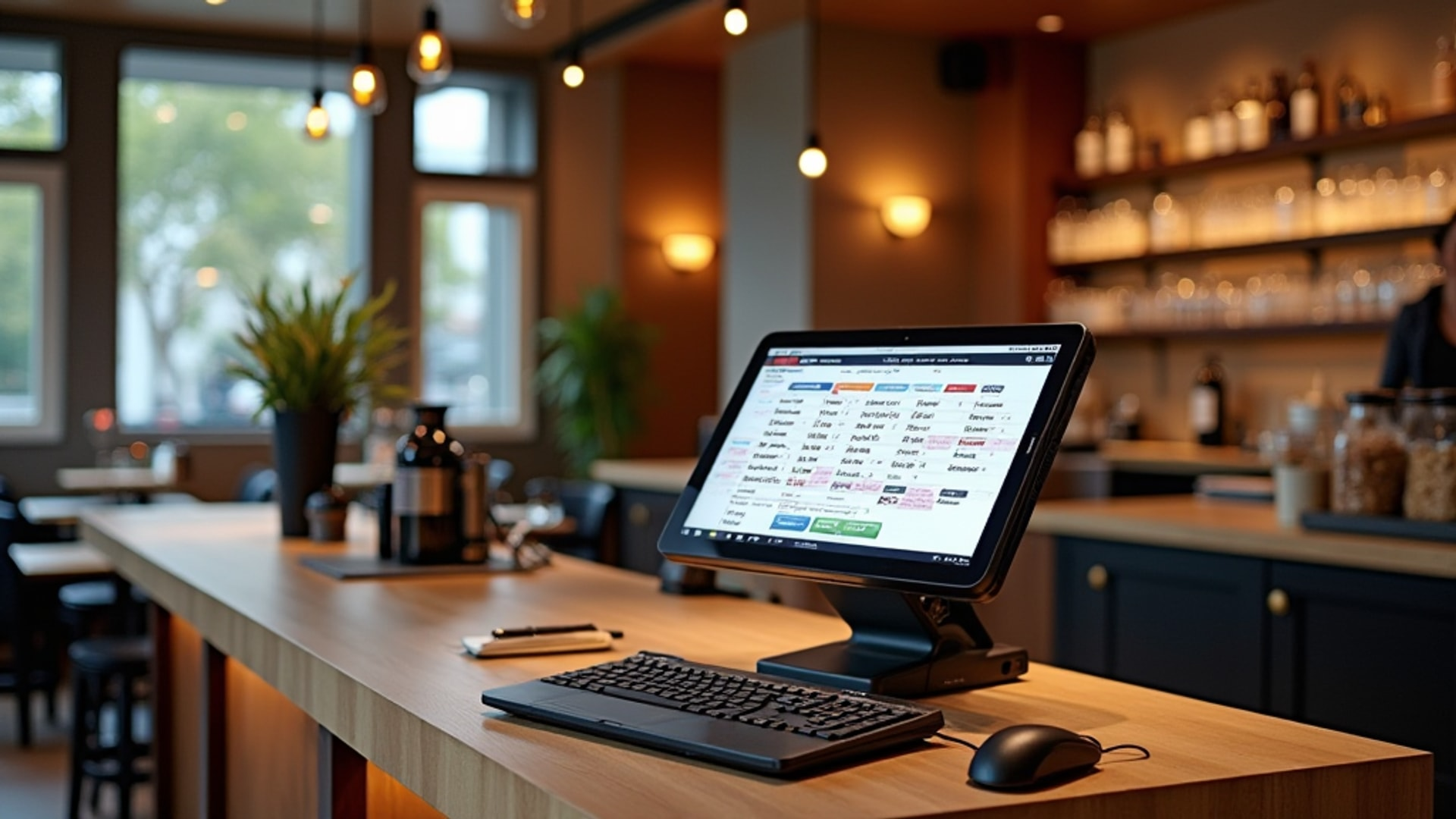
A paper list and a verbal estimate rely on host memory, fall apart during a rush, and give you no data afterward. A virtual waitlist lets guests join at the host stand, from a QR code at the door, or from your website, then shows them their position and an estimated time on their own phone.
The real win is that guests can leave. They can get a drink down the street or wait in the car instead of crowding the entrance. Maister’s “uncertain waits feel longer” problem mostly disappears when the guest can check their place in line whenever they like.
Keep a fallback for guests without a mobile phone: a pager, or the host keeping their name on the same digital list.
4. Text When Ready, and Set a Response Window
Text the guest when their table is ready, and send a heads-up a few minutes earlier if your system allows it, so they are walking back as the table is being reset. Two-way texting helps: a guest who replies “5 min away” or “we’ll pass” saves you from holding a table for nobody.
Decide how long you hold a table after the ready text, train every host on the same number, and say it in the first message (“We’ll hold your table for 10 minutes”). Without a stated window, hosts either hold too long and the line stalls, or skip parties inconsistently and the line feels unfair.
Keep waitlist numbers separate from your marketing list. A guest who gave their number for a table-ready text has not agreed to promotions. US telemarketing rules (the TCPA) require separate, explicit consent for marketing texts, so ask for the opt-in on its own. If you do want to grow an SMS list, see SMS marketing for restaurants.
5. Manage Walk-Ins Against Reservations by Rule
Most waitlist friction comes from walk-ins and reservations competing for the same tables. Handle it with explicit rules your hosts don’t have to improvise:
- Remove tables needed for upcoming reservations from walk-in availability, as in the worked example above.
- Seat a walk-in at a table with a later reservation only when your turn time for that party size fits the gap with room to spare.
- Set a fixed grace period for late reservations, state it in the booking confirmation, then release the table to the waitlist when it runs out.
- Hold back a share of tables from online booking on nights when walk-in demand is reliable, so you aren’t fully booked while turning away a line.
- Flag tables by reservation status on the floor plan so every host sees the same picture.
6. Seat the Right Party at the Right Table
Restaurant table management is the other half of reducing customer waiting times. Every two-top seated at a four-top when a two-top was free costs you two seats for a full turn. Intelligent table assignment considers:
- Party size, so small parties don’t occupy large tables when a better fit is free
- Expected dining duration, so a long anniversary dinner doesn’t land on a fast-turning table
- Server load, so covers spread evenly and service doesn’t slow in one section
- Turn patterns, so walk-ins go to the tables that turn fastest
Chowbus reports that restaurants using data-driven seating strategies see 10 to 15% efficiency gains in table utilization. For a 100-seat room doing two turns a night, 10% is 20 more covers without adding a seat.
Faster turns on the back end shorten the line too. Pre-bussing, prompt check drops and fast payment cut minutes per table without rushing anyone; speed of service benchmarks shows where those minutes usually hide.
7. Give Waiting Guests Somewhere to Be
Occupied time feels shorter, so give people something to do. If your bar sits near the host stand, invite waiting parties to grab a drink and transfer the tab to the table when they’re seated. That turns dead time into revenue, provided the bar doesn’t get so crowded it slows service for bar diners.
For the lobby itself:
- Seating or a bar-height ledge along a wall, away from the door
- A clear sightline to the host stand, so guests can see they haven’t been forgotten
- Menus or specials on display, so guests arrive at the table ready to order
- A separate pickup area for takeout, so delivery drivers don’t stand in the waitlist crowd
Some restaurants go further and let waiting guests browse or order from the menu on their phone. Chowbus reports that mobile ordering integration has cut customer wait times by 30%, mostly by removing the gap between sitting down and placing the first order.
8. Communicate at Fixed Touchpoints
Guests who hear from you feel managed. Guests who don’t feel abandoned. Set the touchpoints so they don’t depend on how busy the host is:
- At the initial quote, give one specific number and tell them how they’ll be notified.
- Halfway through, confirm they’re still on the list and give a revised time.
- A few minutes before the table is ready, send a heads-up text or walk over.
- When the table is ready, call the guest by name, not by number.
If a wait runs past the quote, the host should find the party and acknowledge it before they come back to ask. An apology delivered before the guest is annoyed is worth far more than one delivered after. This is the same habit that runs through good customer service generally.
9. Track No-Shows and Walk-Aways
Every party that joins the list ends one of three ways: seated, walked away before being called, or didn’t respond when called. Log all three. Most digital waitlists record this automatically. On paper, a strike-through code works.
Then look at walk-aways by quoted wait. If parties quoted under 20 minutes almost all stay and parties quoted over 40 minutes mostly leave, you’ve found your patience threshold. That tells you when to start offering a reservation for later in the evening, or another night, instead of a long quote.
10. Use Waitlist Data for Staffing
A waitlist is a free record of demand you couldn’t seat. Pull arrivals by 15-minute interval and by day for the last four to six weeks, and you’ll see exactly when the door gets busier than the floor can absorb.
Use that to schedule an extra host or server for the real peak instead of the guessed one, to open an extra section earlier, or to move prep so the kitchen isn’t the bottleneck. Multiply walk-away covers by your average check to put a dollar figure on the problem when you’re deciding whether that extra shift pays for itself. The scheduling and labor optimization guide covers how to turn demand data into a schedule.
How Can You Manage Long Walk-In Lines Without Losing Guests to Competitors?
Get every arriving party acknowledged within a minute and onto the list, give them a specific quote you can beat, let them leave and text them back, and give them something to do while they wait, such as a bar seat or the menu on their phone. Guests drift to the place next door when the wait feels uncertain or unfair, not simply when it’s long.
On the busiest nights, a few extra habits help:
- Offer parties facing a long wait a reservation later that evening or another night, and capture their number either way.
- Seat parties in strict list order unless a table only fits a different party size, and explain it when that happens. Visible line-jumping is the fastest way to lose the whole lobby.
- Watch your patience threshold from step 9. When quotes pass it, say so honestly rather than shading the number down.
- Have the host walk the waiting area every 10 to 15 minutes. Being seen counts for a lot.
What Is Intelligent Waitlist Management?
Intelligent waitlist management means the software predicts each quote from live table status and historical turn times, rather than leaving the estimate to the host. It typically learns how long each party size takes by day and time, factors in upcoming reservations, texts guests automatically, and suggests which table to seat next.
It works only as well as the data going in. If hosts don’t mark tables as cleared, or servers leave paid checks open, the predictions drift and the quotes become wrong in ways that are hard to spot. Treat the software as a better calculator for step 2, not a replacement for a host who watches the room.
Waitlist Metrics That Matter
Review these weekly, by shift. The point is to compare against your own baseline, because published benchmarks for waitlists are thin and mostly come from software vendors’ own customer data.
| Metric | How to calculate it | Target or benchmark |
|---|---|---|
| Quote accuracy | Share of seated parties called within 5 minutes of their quote, or earlier | No industry standard; raise it from your baseline every month |
| Average actual wait | Total minutes from joining to seating ÷ seated parties | Toast Q3 2024 data: about 9 minutes for seated waitlist guests |
| Walk-away rate | Parties that left before being called ÷ parties that joined | Track by quoted-wait band; Toast data shows guests who left stayed about 20 minutes |
| No-response rate | Parties called or texted who never returned ÷ parties called | Low enough that your hold window isn’t costing turns |
| Waitlist conversion | Parties seated ÷ parties that joined | Higher is better; falls when quotes pass the patience threshold |
| Table turn time | Seat to reset, by party size and daypart | Your own baseline; feeds every quote |
| Seat utilization | Guests seated ÷ seats at the tables they used | Falling numbers mean small parties on big tables |
Put the top three on your operations KPI dashboard so the manager sees them alongside sales and labor, not in a separate report nobody opens.
What to Look for in Waitlist Software
Waitlist tools come as standalone apps, as modules inside reservation platforms, and as features of POS systems. Whatever you choose, check it against this list during a demo or trial:
- Quotes predicted from live table status and your own turn-time history, by party size
- Two-way SMS, so guests can reply that they’re running late or cancel
- Remote joining from your website or a QR code at the door
- One shared floor plan for reservations and walk-ins, with server sections
- POS integration, so the system knows when a check is dropped or paid
- Reporting on quoted vs actual waits, walk-aways and arrivals by hour, exportable
- Guest notes and visit history that you can export if you leave the platform
- Transactional texts kept separate from marketing opt-ins
- Clear pricing: flat monthly fee vs per-cover or per-text charges, and any SMS limits
- Runs on the hardware you already have at the host stand, and a fallback if the connection drops
Run it in parallel with your current method for a week or two of real service before switching fully. Hosts will find the gaps faster than any demo.
The Bottom Line
Waitlist management is a communication and process problem that technology helps with. Start this week by pulling turn times by party size from your POS and building your quotes from them. Then add text-when-ready, set a hold window, and start logging walk-aways. After a month of that data, you’ll know your patience threshold, your real peak, and how many covers the line is costing you.