· Culture & Sustainability · 7 min read
The Food Waste Crisis: What It Costs You and How to Fix It
Restaurants waste between 5% and 15% of their annual food spend — here is a data-backed playbook for cutting waste and converting losses into profit.

The food waste problem in restaurants is not an environmental abstraction. It is a direct leak in your P&L that compounds every shift, every day, every year.
According to a YouTube knowledge extract synthesizing sources from Vox and NationSwell, roughly 40% of food produced in the United States never gets eaten — over 365 million pounds per day. A typical commercial kitchen generates approximately 8 gallons of garbage per hour. On a $200,000 annual food budget, wasting even 10% of purchases means $20,000 thrown in the bin. Fix the waste, and you fix the margin.
The Scale of the Problem
The numbers are staggering at every level:
| Level | Waste figure |
|---|---|
| US food system | ~40% of all food produced never consumed |
| Typical restaurant garbage | ~8 gallons per hour |
| Restaurant food waste range | 5–15% of annual food spend |
| Annual cost on $200K food budget | $10,000–$30,000 |
| Return on waste reduction investment | $8–$14 saved per $1 invested |
According to research cited by TouchBistro involving 114 restaurant sites across 12 countries, implementing a structured waste-reduction program produced an average 26% reduction in food waste after 12 months. After three years, the average reduction reached 58% by weight, with the best-performing sites achieving over 95% reduction.
The environmental case is equally clear. According to the Vox and NationSwell knowledge extract, if global food waste were a country, it would be the third largest greenhouse gas emitter on earth, behind only China and the United States.
Why Waste Happens: The Root Causes
Before you can fix waste, you need to know where it comes from. Most operators are surprised by the distribution:
Back-of-house sources:
- Over-preparation based on guesswork rather than demand data
- Improper storage accelerating spoilage
- Excessive trim waste from poor knife technique
- Ingredients purchased for one dish that don’t get used
Front-of-house sources:
- Oversized portions generating plate waste
- Dishes that don’t sell well sitting until expiry
- Garnishes and sides that are routinely discarded
According to TouchBistro, 60% of waste often comes from just a few items. A simple waste audit — tracking what gets thrown away and why over one week — typically reveals exactly where the largest opportunities are.

Step 1: Conduct a Waste Audit
You cannot manage what you do not measure. A basic audit requires:
- Designate a waste tracking station in the kitchen
- Separate waste into categories: trim waste, expired stock, plate waste, prep waste
- Weigh and record each category daily for one week
- Assign a dollar value to each category using actual ingredient costs
- Identify the top three waste contributors
This one week of data will tell you exactly where to focus first. Many operators find that a single ingredient — often a protein — accounts for 30-40% of total waste value.
Step 2: Tighten Inventory Management
Inventory discipline is the foundation of waste reduction. According to TouchBistro, implementing FIFO (First In, First Out) combined with inventory management software dramatically reduces spoilage from forgotten or misplaced stock.
Core inventory practices:
- Label everything with date of receipt and expected use-by date
- Store items by date so older stock is used first
- Conduct counts at the same time each week for consistency
- Set par levels based on actual sales data, not intuition
- Generate a daily “use it or lose it” list of items approaching expiry
According to the James Beard Foundation’s 2026 Independent Restaurant Industry Report, supply chain issues rank among the top five concerns for one in four independent restaurant owners — making tight inventory practices even more critical when supply is unpredictable.

Step 3: Right-Size Your Portions
According to TouchBistro, average restaurant portions in the United States are between two and eight times larger than USDA-recommended standards. Plate waste reflects this: customers leave what they cannot eat, and you paid for every bite.
The plate size problem runs deep. According to the food waste YouTube extract, plate size has grown 36% since 1960, directly driving over-portioning. Proper portioning is both a cost-saving and waste-reduction strategy — customers leave less food on smaller, properly sized plates.
Specific portion tactics:
- Use scales and standardized portioning tools — do not eyeball proteins
- Train kitchen staff on portion standards during onboarding and refresh quarterly
- Track plate waste by table section to identify dishes consistently generating leftovers
- Consider offering half-portions at reduced prices for smaller-appetite customers
Step 4: Design Menus Around Waste Reduction
Menu engineering is not just about margin — it is about ingredient utilization. According to TouchBistro, stocking ingredients that work across multiple dishes is one of the highest-leverage waste reduction strategies. An ingredient used in three dishes has one-third the waste risk of an ingredient used in one.
Whole-ingredient cooking principles:
- Vegetable trimmings become stock, not garbage
- Bread past its prime becomes croutons, breadcrumbs, or panzanella
- Protein trim becomes staff meals, soups, or specials
- Citrus rinds become candied garnishes or cocktail elements
Weekly specials are your overflow valve. According to TouchBistro, featuring ingredients that need immediate use in rotating specials converts potential losses into revenue. The best operators run a standing “chef’s special” built entirely from surplus ingredients approaching peak.
Step 5: Leverage Technology
Technology is accelerating what used to require months of observation. According to the food waste YouTube extract, AI-powered waste tracking systems using cameras and digital scales can cut kitchen food waste by 50% on average.
How these systems work:
- A camera mounted above the waste bin photographs each item discarded
- A digital scale records the weight and estimated value
- Machine learning identifies the item type automatically
- Data uploads to a cloud dashboard for daily and weekly analysis
- The system identifies patterns — which items are wasted most, at which meal periods, and by how much
Across global deployments, AI waste tracking systems have collectively saved approximately 36 million meals per year. The cost of these systems has dropped significantly, making them accessible for mid-sized operations.
For operators not ready for AI systems, POS data is an underused resource. Use your sales mix reports to identify dishes with poor velocity — items that sell fewer than 10 covers per week are waste waiting to happen.
Step 6: Train Your Team
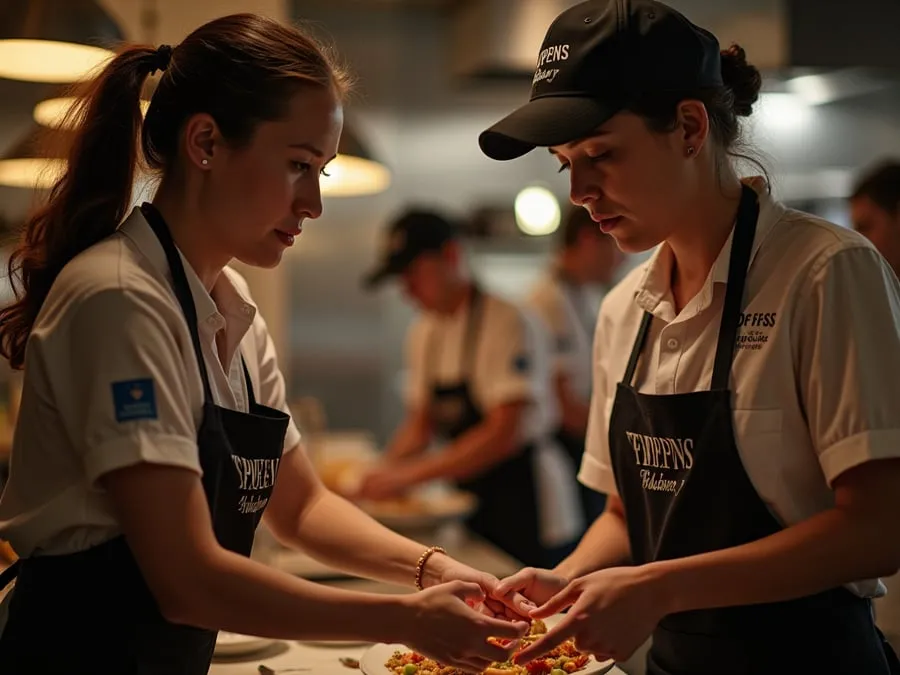
Waste reduction only works if the entire team understands why it matters. According to TouchBistro, many operators find that once kitchen staff see the dollar value of what they are discarding, behavior changes immediately.
Staff training priorities:
- Share waste cost data transparently — show the team what the numbers mean in wages or equipment
- Train on sustainable prep techniques: thaw on racks rather than running water, wash produce in batches
- Create a culture where repurposing is celebrated, not seen as cutting corners
- Reward waste reduction milestones — a kitchen that cuts food waste by 20% has earned recognition
Step 7: Manage Surplus Strategically
Not all waste can be eliminated through kitchen technique. Some surplus is inevitable. The question is what happens to it.
Options for unavoidable surplus, in priority order:
- Staff meals — Use surplus ingredients for employee meals before discarding. This builds morale and reduces food costs simultaneously.
- Daily specials — Move perishable surplus through specials before service.
- Food rescue partnerships — Organizations like Too Good To Go or local food banks accept surplus food. According to TouchBistro, for every dollar invested in waste reduction programs, restaurants see $8–$14 in savings; donation programs often generate tax benefits that add to this return.
- Composting — Food that cannot be used should be composted rather than landfilled. Several zero-waste operators have turned composting into a feature — returning compost to the farms that supply them.
The Business Case in Numbers
Let’s make the ROI concrete:
| Investment | Estimated annual saving |
|---|---|
| Waste audit (staff time) | $5,000–$15,000 in identified losses |
| Inventory management software ($150/month) | $10,000–$30,000 in reduced spoilage |
| Portion training program | $5,000–$10,000 in food cost reduction |
| AI waste tracking system ($500–$1,000/month) | 50% reduction in kitchen waste |
The return is not theoretical. Research cited by TouchBistro documents an average $8–$14 saved for every $1 invested in structured waste reduction. For most restaurants, this is the highest-ROI operational improvement available — exceeding most marketing investments, equipment upgrades, and menu changes.
Where to Start
If you do nothing else this month, do these three things:
- Run a waste audit for one week. Track everything that gets thrown away and assign a dollar value.
- Pull your POS sales mix report. Identify your bottom five dishes by volume. Ask whether each justifies its place on the menu.
- Implement FIFO labeling in your walk-in. This costs nothing and typically reduces spoilage by 10–15% immediately.
The food waste crisis is real — but for individual restaurant operators, it is also the most fixable problem on the table. Every pound of food you stop wasting is money that stays in your business.
-> Read more: Sustainable Restaurant Practices: What Actually Works
-> Read more: Zero-Waste Restaurant Movement