· Finance · 8 min read
Restaurant Revenue Streams: Diversifying Beyond the Dining Room
Single-stream restaurants are vulnerable to every disruption the industry throws — here is how to build multiple revenue sources that stabilize income and improve margins.

The pandemic made permanent what smart operators had always understood: a restaurant that depends entirely on in-house dining is fragile. When dining rooms close, or January arrives, or a competitor opens next door, a single-revenue-stream restaurant has no buffer. Every sales variance hits the full P&L with nothing to absorb it.
Diversification is not a defensive strategy born from crisis. It is an offensive one rooted in math. Multiple revenue streams smooth the seasonal volatility inherent to restaurant operations, generate incremental revenue from existing infrastructure, and often produce margins higher than core dine-in. The restaurants consistently outperforming their peers in profitability are almost always the ones generating revenue from more than one source.
Here is how to evaluate and build additional revenue streams intelligently.
Catering: The Highest-Margin Extension
Catering is the most natural revenue stream extension for most restaurants and, according to NetSuite’s analysis of restaurant revenue streams, typically generates 7-8% average profit margins — often higher than dine-in operations. Fine dining catering can achieve profit margins of 15% or more.
The margin advantage is structural. When you cater an event, you are generating revenue without proportionally increasing your overhead. The kitchen, equipment, recipes, and management capacity are already paid for. Incremental catering costs are primarily additional food, packaging, transportation, and temporary labor — all variable costs that scale directly with the revenue generated. This favorable cost structure produces contribution margins that most restaurants cannot achieve on their dine-in business.
Catering also offers two additional advantages beyond margin:
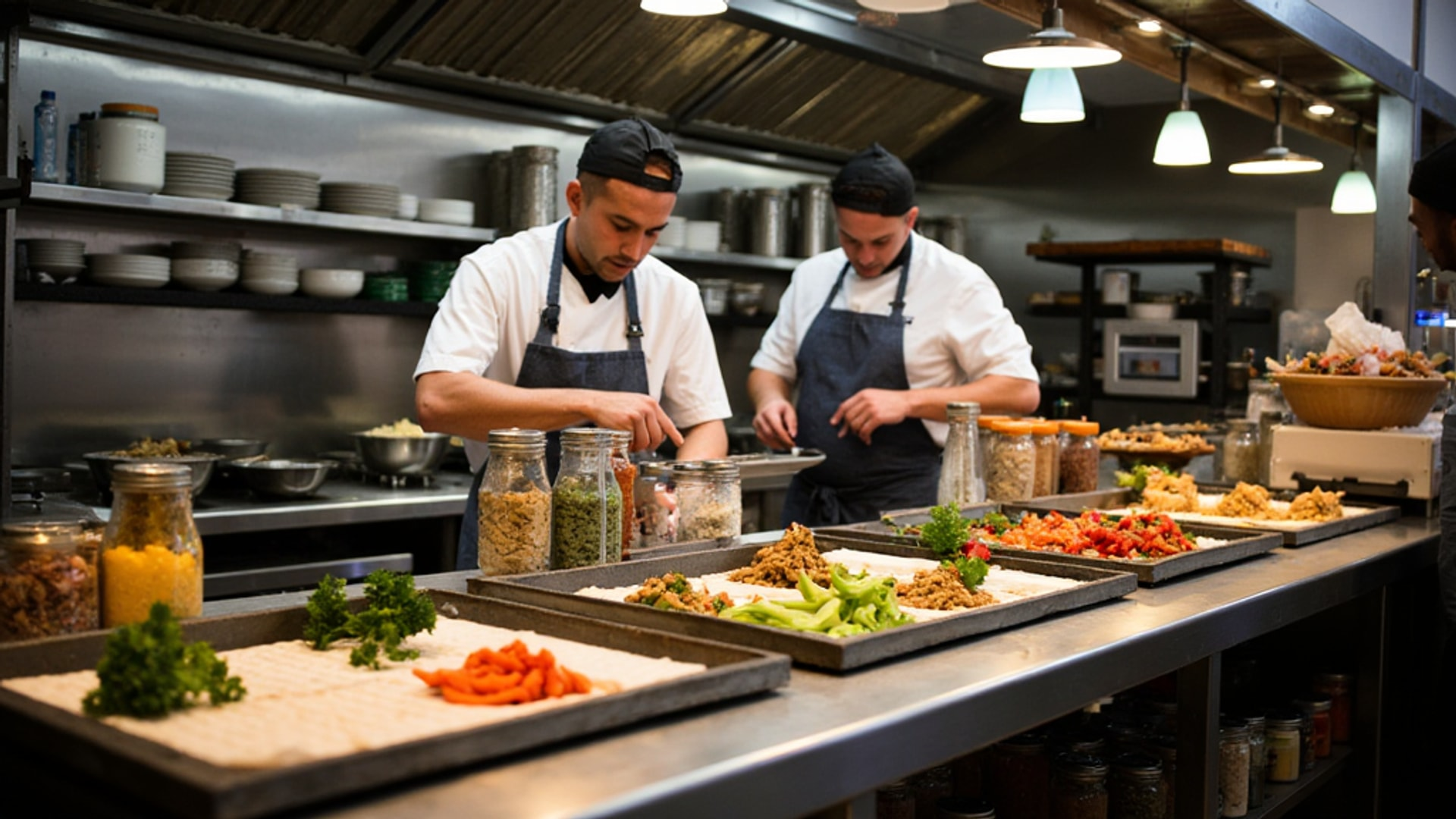
Revenue during off-peak hours: Catering production often happens during prep hours when the kitchen is already staffed and the dining room generates no revenue. Wednesday morning prep time that produces a Thursday corporate lunch order adds revenue without competing with service.
Inventory utilization: Catering uses ingredients already in your ordering cycle, reducing waste by providing a planned outlet for inventory that might otherwise edge toward its use-by date. A batch of roasted vegetables planned for Thursday service can be extended with an incremental order to cover a Friday catering event. NetSuite specifically notes that large event catering enables bulk purchasing efficiencies that reduce per-unit food cost.
Starting a catering operation requires relatively modest investment: dedicated packaging, transport containers, and potentially a dedicated phone line or email address. The more significant investment is operational capacity to manage catering orders without disrupting service — which means building it thoughtfully as demand grows rather than taking on more volume than the kitchen can handle.
Private Events and Venue Revenue
Private event bookings operate differently from catering but share a similar margin logic. Instead of transporting food to a client, you are renting your space — dining room, private dining room, or outdoor area — to a group for a fixed fee or food and beverage minimum.
The revenue structure typically includes a room rental fee, a food and beverage minimum, and service charges (often 18-22% added automatically). The service charge, depending on how it is allocated between the house and staff, represents additional revenue per cover that does not exist in regular dine-in service.
Private events also lock in revenue in advance. A private dinner for 40 guests with a $2,000 food and beverage minimum is guaranteed revenue from the moment the deposit clears. In contrast, that same Saturday table’s dine-in revenue depends on whether guests show up, what they order, and how long they stay. The certainty of event revenue has real financial value, particularly for managing cash flow during typically unpredictable periods.
For restaurants with a dedicated private dining room, event revenue can be tracked and managed as a distinct profit center. Even restaurants without dedicated event space can designate buyout arrangements for full-restaurant or section buyouts on historically slow nights — converting a typically low-revenue Monday evening into a guaranteed revenue event.
Third-Party Delivery: Revenue With Real Costs
Delivery through platforms like DoorDash, Uber Eats, and Grubhub generates incremental revenue that has become expected infrastructure for most full-service and quick-service restaurants. Understanding how to manage third-party delivery relationships is essential for protecting margins. However, NetSuite’s analysis is appropriately measured: delivery revenue is growing but margin-challenged due to third-party commission structures.
Third-party delivery commissions typically range from 15-30% of the order value. For a restaurant with a 30% food cost and 30% delivery commission, the contribution margin from a delivery order can be minimal or negative after accounting for packaging, potential refunds, and credit card processing. The math only works when delivery orders are genuinely incremental — capturing customers who would not visit the dining room — rather than cannibalistic substitutes for higher-margin dine-in covers.
The evaluation question for delivery is not “should we be on delivery platforms?” but “what is our actual margin per delivery order after commissions, packaging, and any incremental kitchen labor, and does that justify the platform’s claims on our revenue?” Many operators have found that listing on all major platforms reduces average revenue per order without proportionally increasing volume.
First-party delivery — using your own ordering system and either your own drivers or white-label delivery services — eliminates platform commissions but requires marketing investment to build direct ordering volume. For restaurants with strong brand loyalty and existing customer relationships, first-party delivery economics can significantly outperform platform-dependent delivery.
Retail Products: Revenue Without Labor Cost
Selling retail products — bottled sauces, spice blends, marinades, branded merchandise, cookbooks — generates revenue with fundamentally different economics than food service. There is no kitchen labor per unit sold, minimal waste, and no service staff required.
The margin profiles vary. A retail sauce bottled at $2.50 per unit and sold for $12 generates a contribution margin before overhead that no restaurant dish can match on a per-transaction basis. The challenge is that retail requires a different skill set: product development, labeling and regulatory compliance (where applicable), inventory management for retail SKUs, and a sales channel to move product.
In-house retail sales from a shelf or display case are the simplest entry point. Online retail through a branded website or food marketplace platforms extends reach but requires shipping logistics. Wholesale to local grocery stores or specialty retailers scales volume but reduces per-unit margin.
Most restaurants that pursue retail products do so with 1-3 signature items that are already their most popular and distinctive offerings. The sauce or spice blend that guests ask to purchase after their meal is the product that moves easily. Starting there minimizes development risk and inventory complexity.
Meal Kits and Subscription Services
Meal kit programs — weekly or monthly boxes of restaurant-quality ingredients with preparation instructions — blossomed during pandemic closures and found a sustainable niche for some restaurant types. The subscription model is particularly appealing: recurring revenue that arrives predictably, often paid in advance.
The operational challenge is significant. Meal kit production requires precise portioning, specialized packaging, cold chain management for perishable ingredients, and a customer base interested in cooking restaurant-quality food at home. These requirements make meal kits better suited to some restaurant concepts — farm-to-table operations, specialty cuisine restaurants, operators with distinct culinary identities — than others.
Cooking classes represent a related opportunity that adds experiential value to the transaction. A three-hour class teaching guests to make your signature pasta generates revenue from multiple participants simultaneously, at a premium price point, with controlled costs. Classes also build deep brand loyalty — guests who cook with your chef become the most enthusiastic brand advocates.
Managing Seasonal Volatility Through Revenue Diversification
NetSuite’s analysis of seasonal fluctuations in restaurant operations makes the connection between revenue diversification and financial stability explicit: operators who manage seasonal patterns best use multiple revenue streams to fill the valleys between peaks.
The practical recommendation is to build revenue streams that have different seasonality profiles from your core dining business. If your dining room peaks in summer and drops in January, winter catering season (holiday parties, corporate year-end events) provides exactly the counter-seasonal revenue that smooths annual cash flow. If weekday lunch is your slow period, corporate delivery accounts specifically targeting nearby businesses during weekday hours address that gap directly.
NetSuite recommends setting aside 5-10% of peak-month profits to cover slower period fixed costs — but the stronger version of that advice is building revenue sources that generate income during slow periods rather than relying entirely on reserves from peak periods. Gift card programs can also help stabilize cash flow across seasons by collecting revenue in advance.
→ Read more: Seasonal Financial Planning: Managing Cash Flow Through Peaks and Valleys
Evaluating Each Revenue Stream
Before investing time and capital in any new revenue stream, evaluate it against four criteria:
Margin contribution: What is the expected gross margin on this revenue stream, and how does it compare to your core dine-in margins? Higher margin streams justify more investment.
Capital requirements: What equipment, packaging, staffing, or infrastructure does this stream require? Lower capital requirements favor earlier development.
Operational complexity: Does this revenue stream require significantly different skills, systems, or management capacity than your core operations? Higher complexity means higher implementation risk.
Brand alignment: Does this revenue stream reinforce or dilute what your restaurant stands for? Catering the same cuisine and quality level that you serve in the dining room reinforces brand. Launching a meal kit for a different cuisine because the market seems favorable dilutes it.
The best new revenue streams leverage what you already have — your kitchen, your recipes, your staff, your brand reputation — rather than building something entirely new. Start there.
→ Read more: Catering and Private Events: Operations, Pricing, and Logistics
→ Read more: Break-Even Analysis and Restaurant Profitability