· Operations · 9 min read
Kitchen Workflow Efficiency: How to Build a Line That Performs Under Pressure
A well-designed kitchen workflow does not just speed up service — it produces better food, reduces errors, and keeps your team calm when the rush hits.
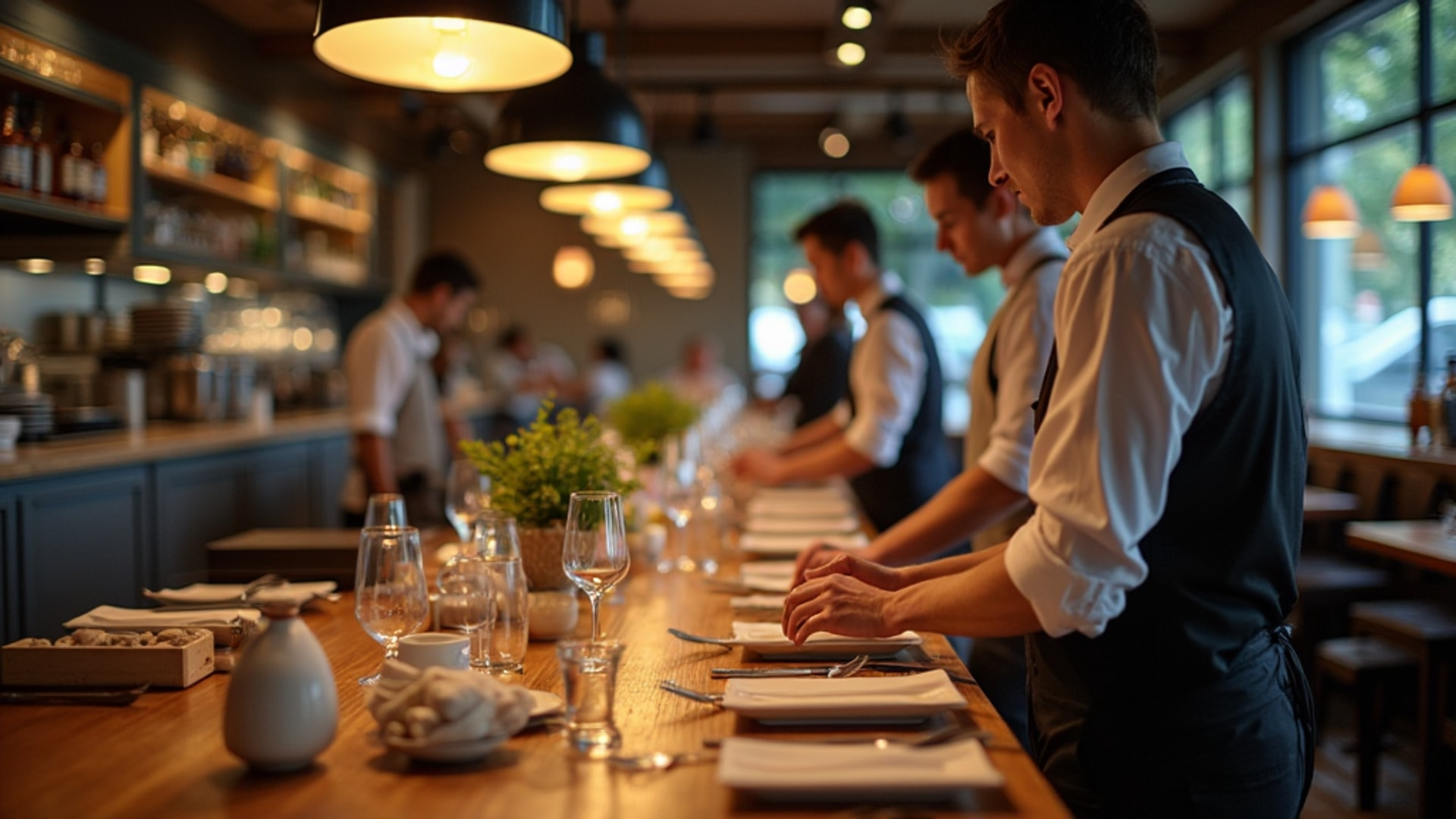
A kitchen under pressure tells you everything about how it was designed. Some kitchens seem to absorb volume — cooks move efficiently, tickets fire smoothly, the pass stays clear, and the team operates with something approaching calm. Others deteriorate: tickets pile up, cooks cross paths and collide, food sits under heat lamps waiting for a companion item, and the whole operation becomes reactive and stressed.
The difference is almost never talent. It is design and discipline. Kitchen workflow efficiency is built into layout choices, prep systems, technology decisions, and communication protocols. When those elements are properly engineered, even a moderately experienced team can perform at a high level. When they are not, even talented cooks struggle.
Ticket Time: The Number That Measures Everything
Before you can improve kitchen workflow, you need a clear metric for measuring it. Ticket time — the duration from when an order enters the kitchen to when completed dishes leave the pass — is that metric.
According to FasterLines, the benchmark for casual dining is dishes completed within seven minutes of cooking, targeting a 10-minute total plate delivery time. Fine dining allows longer ticket times due to dish complexity, but consistency remains the critical factor across all formats. A fine dining kitchen that reliably delivers dishes in 20 minutes is performing better than one that averages 15 minutes but swings between 10 and 30.
Beyond raw ticket time, track average completion time by station to identify which kitchen areas create bottlenecks. A consistently slow saute station is a different problem than a consistently slow grill — and each requires a different solution. Order accuracy rate should be tracked alongside speed, because there is no value in faster tickets that generate more returns and remakes. According to FasterLines, peak versus off-peak time differentials reveal how well the kitchen handles volume surges — a well-designed kitchen maintains relatively stable ticket times across demand levels.
Kitchen display systems make comprehensive ticket time tracking practical without requiring manual observation. They capture timing data automatically and generate the trend analysis that reveals patterns invisible in day-to-day service.
Layout: The Physical Foundation
Kitchen layout determines the floor plan within which everything else operates. A poorly designed layout imposes inefficiency on every person who works in it, regardless of their individual skill or effort.
The fundamental principle is sequential flow. According to WISK, station organization should follow the natural movement of food preparation: receiving and storage connect logically to prep stations, which feed into cooking lines, and then to plating and expediting areas. When this sequence is disrupted — when a cook has to cross the kitchen to retrieve a component, or when plating happens upstream of the pass — unnecessary movement becomes a structural feature of every service.
An assembly line configuration maximizes throughput for high-volume operations. Dishes move sequentially through specialized stations, and each cook focuses on a narrow set of tasks they can execute with minimal cognitive overhead. The constraint of specialization is offset by the efficiency of flow.
Within each station, every tool and ingredient that is used during service should be within arm’s reach. FasterLines documents a concrete example: a restaurant reduced average ticket time by six minutes in a single month by repositioning a saute station next to the flattop grill, allowing items to be finished immediately rather than transported across the kitchen. Six minutes across every ticket is a transformation, not an incremental improvement.
When you assess your kitchen layout, ask for each station: How many steps does this cook take per ticket that could be eliminated by repositioning equipment or ingredients? Where do cooks cross paths in ways that slow both people down? Which equipment placement forces unnecessary detours?
Mise en Place: Preparing to Execute
Mise en place — the French kitchen discipline meaning “everything in its place” — is not just a prep philosophy. It is the operational contract that allows service to function.
According to WISK, prep lists should be generated from sales forecasts rather than routine habit. Batch preparation of frequently used components — stocks, sauces, portioned proteins, prepped vegetables — allows the kitchen to front-load labor-intensive tasks during slower periods. The result is a kitchen that enters service in a state of readiness rather than one that is still making components while tickets arrive.
FasterLines identifies poor prep systems as one of the most common causes of ticket time inflation. When cooks run out of prepared ingredients mid-shift and leave the line to prep components, it disrupts the entire kitchen flow. Not just for the station that ran out — for every station waiting for that cook’s output to complete a ticket.
Rigorous mise en place protocols require three things: standardized prep lists calculated from historical sales data, par levels for each station specifying when and what to replenish during service, and designated prep cooks who maintain supplies throughout service rather than leaving the line cook responsible for both prep and execution simultaneously.
Pre-service line checks conducted by the chef or kitchen manager verify that mise en place is complete before the first ticket arrives. This 15-minute investment before service prevents the scrambling that costs far more time when it happens mid-rush.
The Expediter: Conductor of the Pass
In a kitchen with multiple stations and complex multi-component dishes, the expediter is the most important position for maintaining ticket time and consistency.
The expediter’s role is to coordinate cook times across all stations so that all components of a multi-item order are ready simultaneously. According to FasterLines, the expediter calls out each ticket with time goals, ensuring that the station with the longest preparation time starts first and all components converge at the pass at the right moment. Without this coordination, individual station efficiency is undermined by dishes sitting under heat lamps waiting for companion items.
A skilled expediter does three things well. First, they read the board and identify which tickets are oldest and which stations are moving slow, calling adjustments before problems compound. Second, they maintain quality control at the pass — checking each dish against the standard before it leaves the kitchen. Third, they manage communication between the kitchen and the front of house, coordinating table-side timing with the kitchen’s actual production state.
The expediter position is often underinvested in staffing plans. Managers assume that if each station is performing, the pass will take care of itself. It does not. The pass is where all the individual station work either comes together into a coherent guest experience or fragments into a series of inconsistencies.
Kitchen Display Systems: Replacing Paper with Intelligence
Paper tickets are the operational baseline, not the efficiency standard. KDS platforms replace paper with digital order queues that provide capabilities paper cannot replicate.
According to WISK, approximately 40 percent of US restaurant operators have adopted technology to enhance kitchen productivity. Kitchen display systems route orders to the appropriate stations automatically, track preparation times in real time, and generate data about kitchen performance that enables ongoing improvement.
Advanced KDS systems offer dynamic load balancing — automatically distributing orders based on station capacity to prevent any single station from becoming a bottleneck. When one station is handling three tickets simultaneously, the system can flag the situation and prompt the expediter or kitchen manager to redistribute work or adjust timing expectations.
The data captured by KDS platforms is independently valuable. Which menu items consistently exceed ticket time targets? Which stations are reliably slower during specific dayparts? Which servers’ orders arrive in patterns that the kitchen handles well or poorly? These questions are answerable with KDS data and largely unanswerable without it.
Menu Design as a Workflow Variable
The menu’s effect on kitchen efficiency is underestimated by most operators. Every item on your menu represents a workflow task — a combination of prep requirements, station usage, and ticket time contribution.
A menu engineered without regard for kitchen workflow can create structural inefficiencies that no amount of staffing or training can fully overcome. Multiple items that all require the same station simultaneously create predictable bottlenecks. Items with very different cook times that are frequently ordered together make simultaneous completion difficult.
According to WISK, menu simplification is a proven strategy for improving kitchen efficiency. Streamlining the menu to focus on items that can be executed consistently within target time windows improves throughput without necessarily reducing guest choice. Many successful restaurants maintain a focused core menu with seasonal additions rather than a large permanent menu that stretches kitchen capabilities across too many directions.
When evaluating menu changes, analyze the kitchen workflow implications alongside the financial analysis. A high-margin item that takes 18 minutes to produce and ties up three stations simultaneously may be less valuable than its margin suggests if it consistently delays the tickets around it.
Cross-Training for Operational Resilience
A kitchen where only one person can work each station is a kitchen one sick call away from service degradation.
Cross-training builds resilience directly into kitchen structure. According to WISK, when team members can competently work multiple stations, the kitchen can redistribute labor in real time based on demand patterns. This flexibility is particularly valuable during unexpected rushes when the volume distribution across stations does not match expectations. For the full cross-training system, see Cross-Training for Restaurant Operations.
Cross-training also develops kitchen staff in ways that improve their long-term performance and retention. Cooks who understand adjacent stations develop better awareness of how their work affects the team. The prep cook who knows how the line functions will cut proteins to the right thickness without being told twice. That operational understanding compounds across every service.
Efficient kitchens are not born — they are designed, trained, and continuously refined. The operators who achieve consistently excellent kitchen performance are the ones who treat workflow as a management discipline deserving of the same analytical attention they give to food cost or labor percentages. The payoff appears in every ticket time, every service period, and every review where a guest notes that the food arrived quickly and tasted exactly right.
→ Read more: Speed of Service Benchmarks: The Timing Numbers Every Restaurant Should Know → Read more: Back-of-House Efficiency: How to Build a Kitchen That Actually Runs → Read more: Kitchen Ticket Times: Benchmarks, Causes of Slowdown, and How to Hit Your Targets