· Culture & Sustainability · 9 min read
The Fast-Casual Revolution: Why This Segment Keeps Winning
The fast-casual market was valued at $124.5 to $138.9 billion in 2022 and is projected to reach over $300 billion by 2032. Here is what's driving the growth and what any operator can learn from the segment's sustained success.
Few stories in the modern restaurant industry are as straightforward as fast casual’s rise. The segment has been gaining ground for two decades, and it shows no meaningful signs of slowing. While full-service restaurants and quick-service chains navigate intensifying pressure from labor costs, delivery economics, and shifting consumer preferences, fast casual keeps growing: in revenue, in unit count, and in consumer affinity.
Why fast casual keeps winning matters for anyone running a restaurant. The value proposition that fast casual has built reflects real shifts in what consumers want from dining out.
The Numbers: Where Fast Casual Stands
Straits Research’s market analysis valued the fast casual restaurant market at $124.5 to $138.9 billion globally in 2022, a range reflecting different methodological approaches to market definition, but consistently large. Projections across multiple research sources point to the segment reaching $301 to $338 billion by 2032, representing compound annual growth rates of 6.6 to 10.6 percent.
To put those growth rates in context: the broader restaurant industry has historically grown at 3 to 5 percent annually in good years. Fast casual is growing at roughly double to triple the industry average, consistently, which means it is capturing market share from other segments even as the overall market grows.
North America dominates with 33 to 45 percent of global fast casual market share, per Straits Research. The format originated here and remains most deeply penetrated here, but international adoption is accelerating. The consumer preference for quality-speed combinations that fast casual delivers is not culturally specific to North America; it’s translating across markets as awareness and availability grow.
What Fast Casual Actually Is
The fast casual segment exists in the space between quick-service restaurants (QSR) and full-service dining, and that positioning is both its defining characteristic and the source of its competitive advantage.
Compared to QSR, fast casual offers:
- Higher food quality and fresher ingredients
- More inviting physical environments
- Greater menu customization
- Perceived health advantages through ingredient transparency
- An experience that feels like a choice rather than a convenience compromise
Compared to full-service restaurants, fast casual offers:
- Significantly lower price points
- Faster service with no wait for a table
- Casual dress codes and no reservation pressure
- Consistent experience without the variability of server quality
- Greater convenience for solo dining, lunch, and take-out occasions
The value proposition is “good food, fast, at a reasonable price,” which sounds simple but is operationally demanding to execute well. Chipotle, Shake Shack, Sweetgreen, Panera Bread, and the segment’s other major players have each built distinct versions of this value proposition, but they all deliver on the same fundamental consumer expectation.

Gen Z as the Core Customer
Fast casual is Gen Z’s preferred restaurant type per Straits Research, cited at 36 percent of Gen Z restaurant preference. That’s a meaningful competitive advantage for a segment whose primary consumers are in their teens and twenties, because those consumers will remain restaurant diners for the next 50 years. Capturing preference now creates long-term loyalty.
What drives Gen Z’s preference for fast casual?
Value without compromise. Gen Z diners are financially pragmatic. Many carry student debt, are entering a challenging housing market, and are price-conscious in ways that previous generations at the same life stage were not. But they’re also unwilling to sacrifice quality or experience for price. Fast casual delivers on both dimensions simultaneously.
Customization and control. The assembly-line service model that defines many fast casual restaurants, where guests specify each component of their meal as it’s prepared in front of them, aligns with Gen Z’s deep preference for personalization. They don’t want to be given a fixed product; they want to build the specific thing they want. The Chipotle bowl model, the Sweetgreen salad model, the Mod Pizza model: all put the customer in design control.
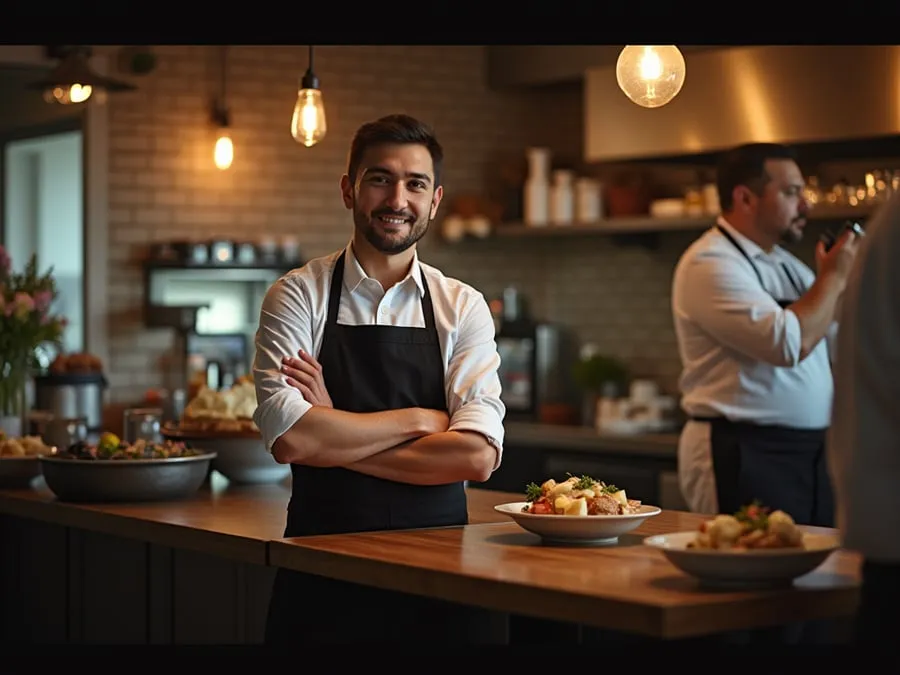
Ingredient transparency. Fast casual restaurants, almost universally, display their ingredients explicitly. The prep line is visible. The ingredients are named. The sourcing is often communicated on signage or digital displays. This transparency resonates with Gen Z’s expectations for honest brand communication and their concerns about food quality and provenance.
Speed and convenience. Gen Z has grown up with on-demand everything. A dining experience that delivers a high-quality meal in 8 to 12 minutes, with no reservation required, aligns with their baseline expectations for efficiency. Full-service dining is a different experience category for a different occasion, the 90-minute dinner with friends. Fast casual is the everyday solution.
The Burger, Pizza, and Bowl Breakdown
Not all fast casual is growing equally. Straits Research’s market breakdown reveals important product category dynamics.
The burger and sandwich segment holds the largest market share within fast casual at 29.53 percent. This reflects the dominance of established concepts like Shake Shack, Five Guys, Smashburger, and dozens of regional chains that have built scale on the familiar appeal of premium burgers. The category is competitive and relatively mature in North America, but still expanding internationally.
Pizza and pasta is anticipated as the fastest-growing product segment within fast casual. The fast casual pizza model (Blaze Pizza, MOD Pizza, 800 Degrees) transfers the customization logic of the assembly line to pizza, with bespoke pies assembled to order and cooked in two to three minutes in high-temperature ovens. This format is still relatively early in its global penetration, which explains the growth projection.
Grain bowls and salad-forward concepts represent the intersection of fast casual with health and wellness trends. Sweetgreen’s success, a restaurant concept built entirely around salads and grain bowls, demonstrated that plant-forward, health-conscious fast casual has substantial and loyal consumer demand. The segment has attracted significant investment as a result.
Globally-inspired formats are the fastest-growing emerging category. Fast casual concepts built on Korean BBQ, Vietnamese pho and banh mi, Indian curry, and Mediterranean bowls are gaining ground rapidly. These formats benefit from both the global cuisine trend driving consumer interest and the fast casual model’s suitability for rice- and grain-bowl formats.
The Delivery Factor
Dine-in accounts for 64.5 percent of fast casual revenue, according to Straits Research, but delivery is the fastest-growing channel within the segment. This split reflects both the segment’s strength as a physical dining experience and the growing expectation that any food concept worth considering needs to be deliverable.
Fast casual and delivery have a more natural relationship than many assume. The food formats that fast casual has built (grain bowls, burritos, sandwiches, pizza) tend to travel reasonably well compared to the foods that full-service restaurants stake their reputations on. A steak that needs to be rested and plated with precision loses significantly in delivery. A grain bowl loses minimally.
That said, third-party delivery’s economics remain challenging for fast casual operators. Platform fees of 15 to 30 percent, which typically eliminate or severely compress margins on delivery orders, have driven many fast casual brands to invest in proprietary delivery infrastructure (apps, loyalty programs with in-app ordering, and first-party delivery operations) to capture delivery revenue without surrendering it entirely to platforms.
Menu Innovation as Competitive Engine
Within the fast casual segment, menu innovation is one of the primary competitive differentiators. Flavor innovation and experimentation drive competitive differentiation according to Straits Research, reflecting the reality that fast casual concepts don’t typically compete on price alone — they compete on the perceived quality and creativity of their food.
The practical implication: fast casual operators who treat their menus as static are at a structural disadvantage relative to concepts that are constantly introducing limited-time offerings, seasonal rotations, and collaborative items that generate press and social media attention without requiring full menu overhauls.
Chipotle’s limited-time menu items, which consistently drive measurable sales spikes, are the most visible example. The Quesarito, the Chorizo, plant-based options: each generates consumer attention that would cost millions to replicate through advertising. The innovation itself becomes the marketing.
What Full-Service Operators Can Learn
Fast casual’s sustained success contains lessons that apply beyond the segment.
Transparency builds trust. The visible prep line that is a hallmark of fast casual operations communicates honesty about ingredients and process. Full-service restaurants that apply the same transparency principle (open kitchens, detailed menu descriptions, visible sourcing information) build the same kind of trust without replicating the fast casual model.
Speed and quality are not opposites. Fast casual has demonstrated definitively that food can be prepared and served quickly without sacrificing quality. Full-service operators who have used table-service timing as a justification for quality decisions should reconsider whether the trade-off is actually necessary.
Customization is a feature, not a complication. The fast casual model treats guest customization as a selling point rather than an operational headache. Full-service restaurants that design dishes with thoughtful customization flexibility, without requiring kitchen reconfiguration for every modification, capture a similar benefit.
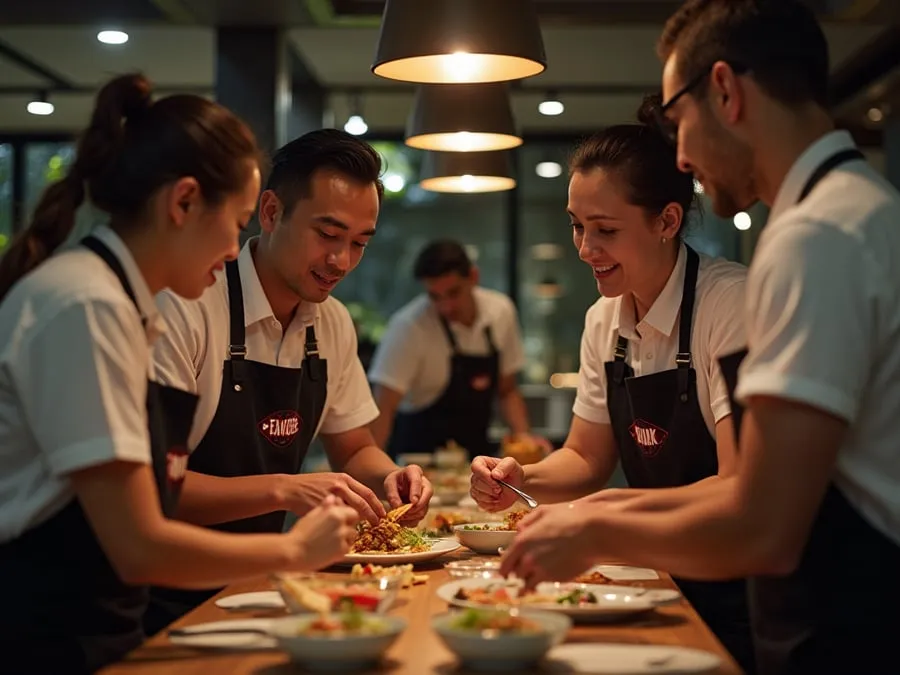
Consistency is a competitive advantage. One of fast casual’s underappreciated strengths is the consistency of its execution. A Chipotle bowl ordered in New York is essentially the same as one ordered in Denver. That consistency lowers guest decision-making risk and drives loyalty. It’s achievable in full-service restaurants through recipe standardization and training investment, but it requires the same deliberate commitment that fast casual operators have made to operational systems.
The Segment’s Continued Trajectory
The conditions driving fast casual growth show no signs of reversing. Labor cost pressures continue to favor the counter-service model over full-service staffing. Consumer preference for quality-speed combinations remains strong across demographics. Global expansion is still early.
The operators most likely to succeed within fast casual are those who understand that the segment’s advantages are not about price or speed alone.
-> Read more: Fast-Casual Success: What Separates Winners from the Rest
-> Read more: Consumer Behavior Trends Reshaping the Restaurant Industry They’re about delivering genuine quality, consistently, in a format that respects the consumer’s time and gives them meaningful control over their experience. That’s a value proposition that resonates not because it’s cheap and fast, but because it’s honest and reliable.