· Culture & Sustainability · 7 min read
The Ghost Kitchen Evolution: From Hype to Hybrid Models
Ghost kitchens raised over $3 billion in venture capital and promised a trillion-dollar market. Here's what actually happened — and what the model is evolving into.
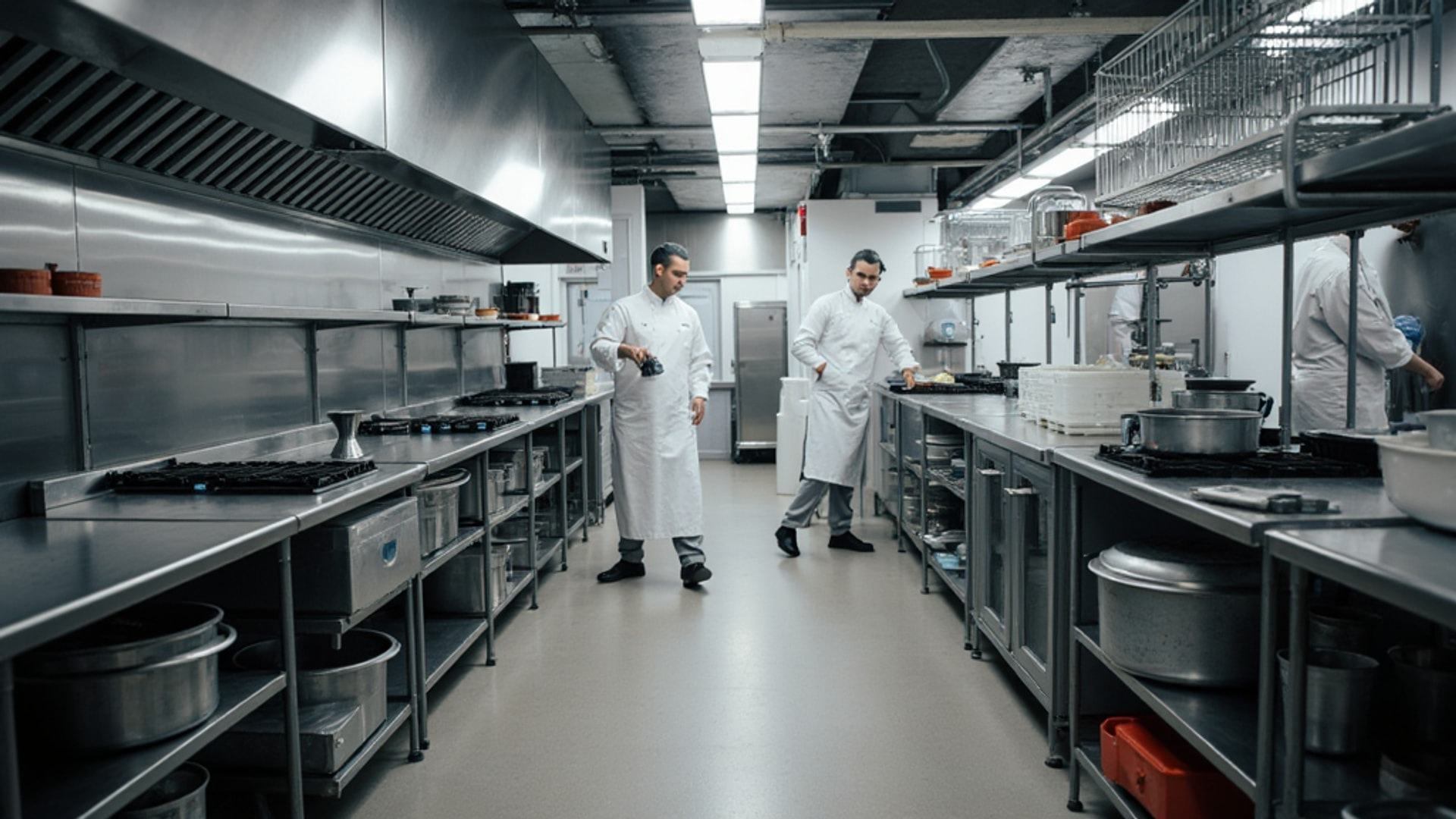
Few concepts in modern restaurant history have been more hyped, more funded, and more publicly scrutinized than the ghost kitchen. During the COVID-19 pandemic, delivery-only kitchens with no dining rooms were being called the future of food. Analysts projected a $1 trillion global market by 2030. Investors poured in over $3 billion in venture capital. Then consumers went back to restaurants, and a reckoning began.
Where things stand now is more interesting than either the hype or the backlash suggested. The ghost kitchen concept hasn’t died — it’s evolved into something more nuanced and, for the right operators, more viable.
How We Got Here
The ghost kitchen value proposition made intuitive sense. Traditional restaurants carry enormous overhead: prime real estate, a dining room that sits empty during off-peak hours, front-of-house staff, expensive kitchen buildouts designed to look as good as they cook. By stripping all of that out and operating purely for delivery, a ghost kitchen could theoretically operate with dramatically lower fixed costs.
The math was compelling. Standard restaurant pre-tax margins run 2-5%. CNBC’s 2024 investigation into the ghost kitchen industry documented the thesis: eliminating dine-in overhead could add 5 percent or more to margins in an industry where 5 percent is a very good year.
The industry grew fast. From approximately 3,500 locations in 2021 to over 7,500 by 2024, according to CNBC’s reporting. The market was valued at over $40 billion in 2022. Wendy’s partnered with REEF Technology to deploy 700 ghost kitchens across the U.S., UK, and Canada. The format felt inevitable.
Then several things happened at once. Consumer appetite for delivery softened as lockdowns ended and dining rooms reopened. The economics of third-party delivery platforms, which charge operators commissions typically running 15-30 percent per order, proved more punishing than many operators anticipated. And the fundamental challenge of building a brand without a physical presence turned out to be harder and more expensive than projected.
Deloitte’s analysis, cited in CNBC’s investigation, concluded that the ghost kitchen impact had been significantly overestimated.
The Real Economics
CloudKitchens, one of the major ghost kitchen facility operators, provides a useful ground-level view of the actual economics. The starting cost advantage is real: launching a ghost kitchen operation requires approximately $30,000 versus roughly $1 million for a traditional restaurant. Ongoing overhead — rent for a smaller space, no front-of-house wages, no dining room maintenance — is substantially lower.
But the delivery platform commission structure works against you at scale. When 15-30 percent of each order goes to DoorDash, Uber Eats, or Grubhub before food cost and labor, the reduced overhead advantage erodes quickly. A $20 delivery order might see $4-6 going to the platform, leaving you to cover food cost, packaging, labor, and rent from the remainder. If your food cost runs 30 percent, you’re working with very little margin before any other expenses.
Packaging costs add up. Delivery packaging needs to maintain food quality over the transit time — a factor that doesn’t matter in a dining room but is essential for customer satisfaction and reviews in a delivery-only model. Good packaging isn’t free.
Marketing spend is non-negotiable. Traditional restaurants benefit from passive foot traffic, physical signage, and the ambient credibility of having a real presence in a neighborhood. Ghost kitchens have none of that. Customer acquisition depends on delivery platform placement (which correlates with advertising spend on those platforms) and external marketing. Building awareness without a storefront requires ongoing investment.
Consumer perception compounds the challenge. According to CloudKitchens’ own research, 70 percent of diners prefer ordering from restaurants with publicly accessible physical locations. The ghost kitchen model, when customers know about it, can create a trust deficit.
The Brand-Building Problem
This is the crux of what went wrong with the pure ghost kitchen model. Building a brand that customers seek out, rather than stumble upon in an app, requires touchpoints that delivery-only operations cannot easily provide.
Traditional restaurants build brand through the dining experience itself, through the neighborhood presence that generates word-of-mouth, through the social sharing that happens when someone is photographed in a well-designed space. Ghost kitchens can produce excellent food. They cannot provide the ambient brand-building that happens in a physical space.
Established brands have found ways around this. Wendy’s, McDonald’s, and similar chains that have experimented with ghost kitchens already have the brand awareness that makes virtual-only ordering credible. When a known brand operates from a ghost kitchen facility to expand delivery radius, customers aren’t building trust in a new entity — they’re ordering from a brand they already know.
For new concepts and independent operators, brand-building through digital channels alone is expensive, slow, and fragile. A single bad delivery experience or a run of poor reviews on a delivery platform can permanently damage a concept that has no physical presence to fall back on.
What the Hybrid Model Actually Looks Like
The evolution the industry has settled into is not the pure ghost kitchen that attracted all the venture capital. It’s a hybrid approach that takes the efficiency advantages of delivery-optimized cooking and combines them with some form of physical presence.
According to Synergy Consultants’ 2025 analysis, the most successful operators are the ones who’ve figured out how these formats complement each other rather than compete. The hybrid models taking shape fall into a few patterns:
Existing restaurants operating virtual brands. A brick-and-mortar restaurant uses its licensed, fully equipped kitchen to run a separate delivery-only concept during hours when the kitchen would otherwise be underutilized. The physical restaurant provides the credibility and operational infrastructure; the virtual brand captures delivery revenue from the same assets. This is probably the most defensible version of the ghost kitchen concept for independent operators.
Ghost kitchen facilities with small retail components. Some ghost kitchen facilities have added window service, pick-up counters, or tiny kiosks to give customers a physical touchpoint. It’s enough to address the trust and brand-building deficits of the pure dark kitchen without the cost of a full dining room.
Delivery expansion for established brands. Using ghost kitchen facilities to serve delivery customers in neighborhoods too far from existing locations, without building a full restaurant. This works for brands that already have customer recognition and loyalty.
Market testing. Launching a new concept in a ghost kitchen to validate demand and refine operations before committing to a full restaurant buildout. The $30,000 entry cost versus $1 million makes ghost kitchens a genuinely compelling laboratory for testing ideas.
The Market Continues Growing
Despite the narrative correction, the ghost kitchen market continues expanding. Global projections from Synergy Consultants put the market at $196.69 billion by 2032, growing at a 12.1 percent CAGR. The U.S. market reached $98.28 billion in 2025, according to CNBC’s reporting. The growth is real — just more measured and more distributed across hybrid models than the original all-ghost vision suggested.
The expansion is particularly strong in markets where real estate costs make traditional restaurant buildouts prohibitive, and in cities with established delivery cultures where consumers are comfortable ordering regularly from digital-only concepts.
What This Means for Operators Considering the Model
If you’re an existing restaurant operator with underutilized kitchen capacity, the virtual brand approach is worth evaluating seriously. The investment is relatively low, the operational skills transfer directly, and the additional revenue from delivery hours can be meaningful without major capital commitment.
If you’re considering launching a new concept as a ghost kitchen with no physical presence, the evidence strongly suggests caution. The brand-building challenge is real and expensive. The delivery platform dependency is an ongoing structural vulnerability. The 70 percent of consumers who prefer physical locations aren’t going away.
The ghost kitchen as a market testing tool remains genuinely valuable. Prove demand and refine the concept with minimal capital, then use the validated model to justify a full restaurant investment.
The concept that was going to make traditional restaurants obsolete is instead becoming an operational layer that smart operators integrate into broader strategies. That’s less exciting than the $1 trillion narrative, but it’s more honest — and for operators willing to engage with it on realistic terms, it has real value.
-> Read more: Ghost Kitchen Operations: The Real Economics of Delivery-Only Restaurants
-> Read more: The Food Delivery Shift: How Third-Party Apps Rewired Restaurant Economics