· Starting a Restaurant · 9 min read
Starting a Cloud Kitchen: Lower Costs, Faster Launch, Different Challenges
Cloud kitchens cut startup costs to a fraction of a traditional restaurant, but they trade one set of problems for another — here's what you need to know before committing.
The numbers are hard to argue with. A traditional restaurant costs anywhere from $200,000 to $500,000 to open — sometimes well above that in major markets, as detailed in the startup costs breakdown. A cloud kitchen can launch for $10,000 to $100,000. That is not a rounding error. It is a fundamentally different business proposition, and it explains why delivery-only operations have exploded since delivery platforms made remote food ordering mainstream.
But before you assume a cloud kitchen is the easier path, you need to understand what you are trading. Lower rent and no dining room do not mean lower complexity. They mean different complexity — and some of those new challenges are ones that no amount of restaurant experience fully prepares you for.
What a Cloud Kitchen Actually Is
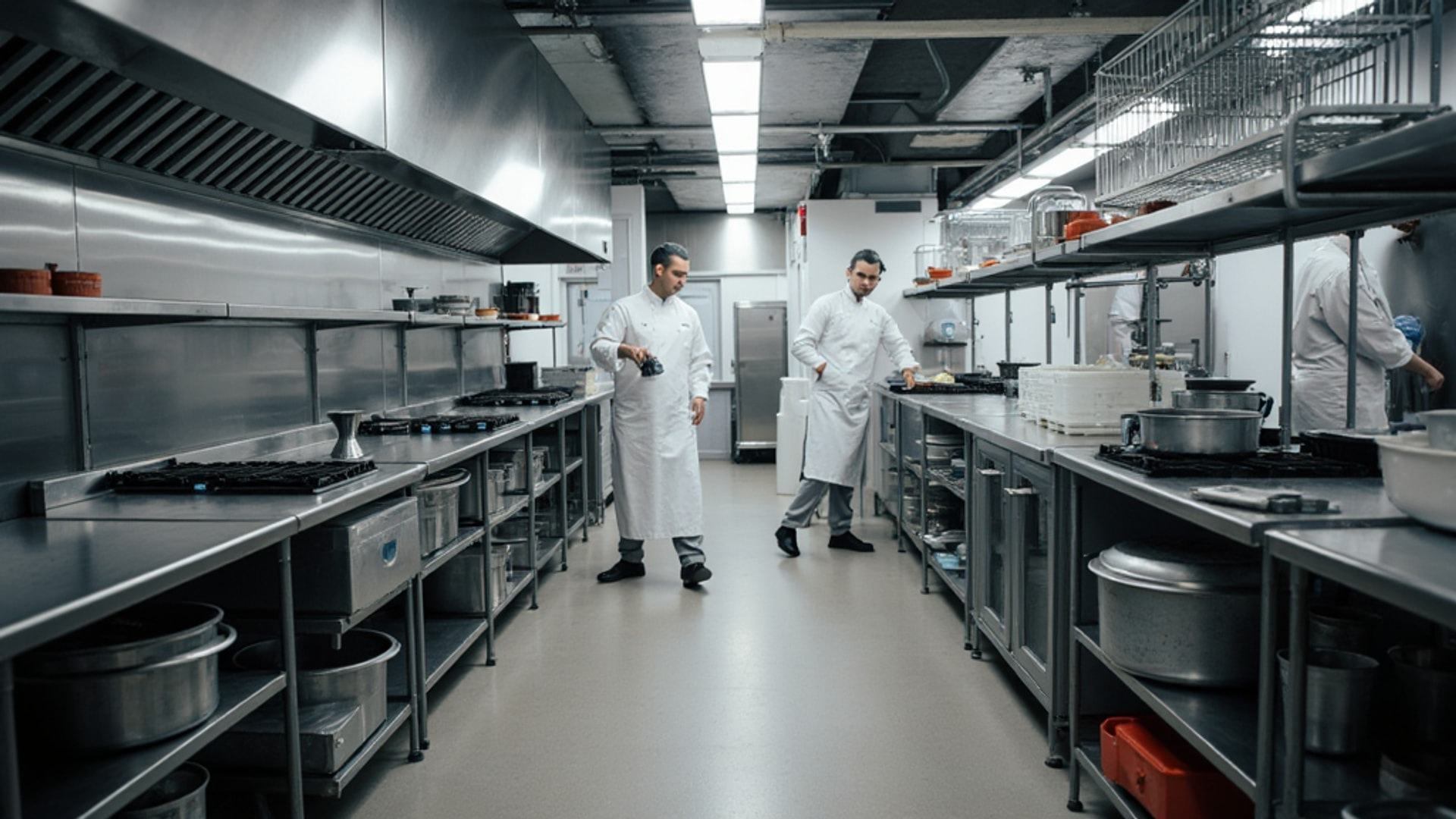
A cloud kitchen — also called a ghost kitchen or dark kitchen — is a licensed commercial kitchen that produces food exclusively for delivery and pickup, with no customer-facing dining space. According to CloudKitchens, these operations typically occupy 200 to 800 square feet, compared to the 1,500 to 4,000 square feet a full-service restaurant requires. You cook, you pack, you hand off to delivery drivers. That is the entire customer touchpoint.
There are several operating models. You can lease space inside a shared cloud kitchen facility, where the operator handles the building, utilities, and common areas and you pay per-square-foot or per-shift. You can build out your own dedicated cloud kitchen space in an industrial or commercial area. Or you can run a delivery brand out of an existing restaurant kitchen during off-peak hours — a popular way to squeeze more revenue from existing overhead.
The Real Cost Comparison
According to CloudKitchens, the startup cost differential is significant across every line item. Traditional restaurants incur large deposits on prime real estate, extensive interior design and construction costs, front-of-house furniture and fixtures, signage visible to foot traffic, and permits associated with customer-facing space. Cloud kitchens eliminate most of that.
The operational cost structure is equally different. Cloud kitchens require 2 to 5 employees to run, compared to much larger teams for full-service restaurants that need both kitchen and front-of-house coverage. Utility costs are lower because you are heating and cooling a production space rather than a dining room. There is no host stand, no bar program, no tableside service that requires hospitality-trained staff.
Both models target 15 to 25 percent annual ROI, but cloud kitchens reach that threshold faster because the financial burden at launch is dramatically lower. A traditional restaurant might need two or three years just to recoup buildout costs. A well-run cloud kitchen can reach breakeven within the first year.
Where Cloud Kitchens Win
Speed to market. You can go from concept to first order in weeks rather than months. There is no buildout waiting period, no furniture delivery delay, no front-of-house hiring marathon. Once your kitchen passes health inspection and you are live on the delivery platforms, you are open.
Concept flexibility. If a concept is not working, you can pivot in weeks rather than abandoning a lease and a $300,000 buildout. This is why cloud kitchens have become the dominant environment for concept testing. As CloudKitchens puts it, you can test your menu, pricing, packaging, and customer response with dramatically lower overhead, then iterate based on real data.
Multiple brands from one kitchen. One cloud kitchen can run three or four delivery brands simultaneously. A kitchen with the right equipment can produce Mexican food under one brand and Thai food under another, each with separate listings on delivery apps. This multiplies revenue potential without multiplying overhead.
Scalability without geography. You are not constrained by foot traffic or neighborhood demographics. If your food travels well and you can maintain quality across delivery distances, your customer base is limited only by delivery range and platform reach.
Where Cloud Kitchens Struggle
Here is what the cost comparison does not tell you.
Delivery platform dependency. When you operate without a dining room, third-party platforms — DoorDash, Uber Eats, Grubhub — become your primary customer acquisition channel. These platforms charge 15 to 30 percent commission on every order, which CloudKitchens notes comes directly out of your margin. That comes directly out of your margin. A traditional restaurant captures customers who walk past the door. You cannot walk past a cloud kitchen.
Brand building is harder. No physical presence means no ambient marketing. Every new customer has to find you through a platform search, a social media post, or word of mouth from someone who ordered. Building a loyal following takes longer and requires deliberate digital marketing investment that traditional restaurants can partially replace with street presence and signage.
Food quality control over distance. Some food travels beautifully. Pizza, ramen, fried chicken — these concepts were built for delivery. A delicate composed salad, a soufflé, a carefully constructed tasting menu plate — these do not survive 30 minutes in a delivery bag. Your concept must be delivery-optimized from day one, not adapted from a dine-in menu.
No hospitality as a differentiator. A traditional restaurant can win on service, on atmosphere, on the feeling a guest gets when they walk in. You cannot create that experience through a cardboard box. Your only competitive tools are food quality, value, speed, and packaging.
Choosing the Right Concept for a Cloud Kitchen
Not every food concept is suited to delivery-only operations. Before you commit, run your menu ideas through these questions:
Does the food maintain quality after 20 to 30 minutes of transport? Heat and moisture are the enemies of delivery food. Test by holding plated dishes in delivery packaging for the expected transit time before judging quality.
Is there genuine demand in your target market? A cloud kitchen in a suburban market with low delivery adoption will starve for orders regardless of food quality. Check delivery platform demand indicators in your area before selecting a location.
Can you achieve acceptable unit economics after platform commissions? Work backward from your target revenue. If a dish sells for $16 and the platform takes 25 percent, you receive $12. From that $12, subtract food cost, packaging, and allocated labor. The number remaining must cover overhead and contribute to profit.
Does your concept have a clear identity that works in a text-and-photo environment? On a delivery platform, your entire brand is a name, a logo, a cover photo, and menu item descriptions. Concepts with strong, clear identities — one cuisine, one signature product, one clear promise — outperform unfocused menus that try to appeal to everyone.
Operational Realities
Cloud kitchen operations look simpler on paper than they are in practice. Managing multiple delivery platform tablets simultaneously is chaotic without a centralized order management system. Kitchen timing requires a different approach when you are packing for 12 simultaneous delivery orders rather than managing table turns. Packaging selection matters enormously — cheap containers that fail during transit generate bad reviews that tank your platform ratings.
Your platform ratings are your lifeblood. A 4.2-star rating versus a 4.7-star rating is a massive difference in how frequently the algorithm surfaces your brand to potential customers. Every single order needs to be treated as a potential review, which requires operational consistency that is harder to maintain in a delivery-only environment where you cannot see the customer reaction.
When a Cloud Kitchen Makes Strategic Sense
A cloud kitchen startup makes the most sense if you are testing a new concept before committing to a permanent location. It makes sense if your concept is inherently delivery-optimized — think meal kits, comfort food, wings, or anything that has demonstrated delivery demand. It makes sense if you have limited capital and need to generate revenue quickly to prove the concept before seeking additional funding.
It is a harder path if you are building a brand that depends on atmosphere and hospitality. It is a harder path in markets where delivery platform penetration is low. And it is a harder path if you are not prepared to become fluent in digital marketing, platform management, and data analytics — skills that a traditional restaurant owner can partially substitute with physical presence.
The cloud kitchen model genuinely lowers the financial barrier to entry in food service. That is real and meaningful. But it replaces the challenges of running a dining room with the challenges of running a logistics-dependent, algorithm-influenced, delivery-platform-dependent business. Know which set of challenges you are better equipped to handle before you sign a kitchen lease.
→ Read more: Ghost Kitchen Operations: The Real Economics of Delivery-Only Restaurants
→ Read more: Delivery and Takeout Operations: How to Build a Profitable Off-Premise Channel
Starting Steps
If you decide a cloud kitchen is the right model, here is how to sequence the launch:
Validate the concept first. Before signing any lease, test your menu at farmers markets, pop-up events, or through a friend’s commercial kitchen. Get real customers to pay real money for your food.
Select your kitchen space carefully. Location still matters even without foot traffic — proximity to your target delivery area affects delivery time and driver availability. Shared cloud kitchen facilities offer lower upfront cost but less control over hours and layout.
Build your platform presence before day one. Set up your delivery app listings, take professional-quality photos of your menu items, and draft your menu descriptions carefully. Poor photos and vague descriptions kill conversion on delivery platforms.
Price for delivery economics. Your delivery menu pricing needs to account for platform commissions and packaging costs. Many operators run delivery pricing 15 to 20 percent higher than what they would charge at a physical counter.
Track obsessively. Order volume by platform, by item, by time of day. Customer ratings. Rejection rates. Refund requests. These metrics tell you what is working and what needs to change, and in a cloud kitchen, your ability to iterate quickly is your primary competitive advantage.