· Design & Ambiance · 9 min read
Restaurant Interior Design: How Concept, Color, and Space Shape the Guest Experience
Color alone influences up to 90% of a guest's initial impression, and 36% of diners choose unfamiliar restaurants based on signage quality. This guide covers concept-driven design, color psychology for different restaurant types, entrance strategy, signage, and the seven elements that make a dining room work.
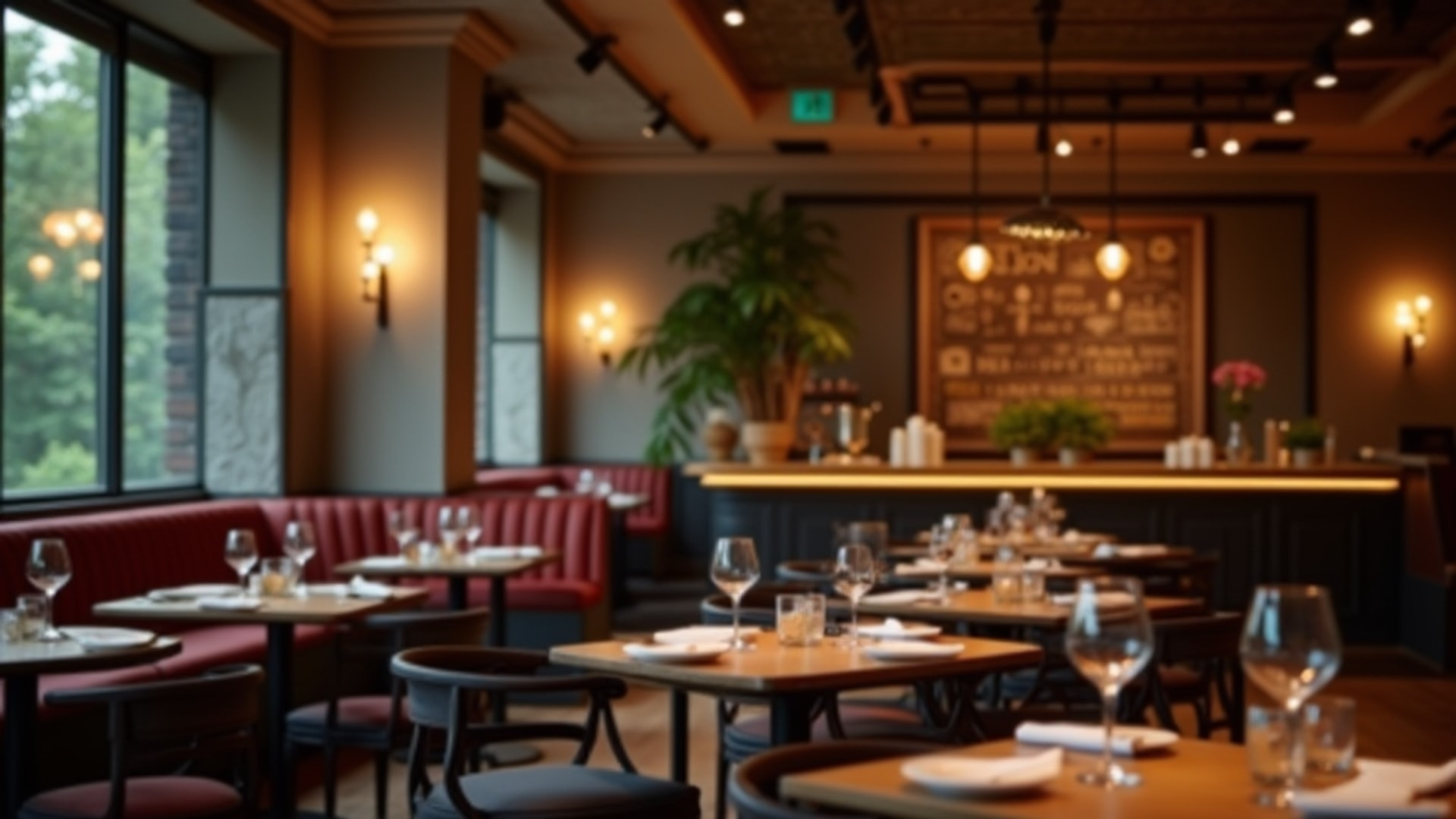
Your food might be the reason guests come back. But your design is the reason they walk in the first time.
According to TouchBistro’s interior design guide, restaurant interior design is a strategic discipline that directly shapes guest perception, brand identity, and revenue. According to Dunne Kozlowski’s entrance design research, guests form a powerful first impression within the first 30 seconds of stepping through a restaurant’s door.
That means your color choices, your entrance design, your signage, and your spatial layout are not decorative afterthoughts. They are business tools that influence whether someone walks in, how long they stay, how much they spend, and whether they come back.
This guide covers the principles that separate forgettable dining rooms from memorable ones.
Start with the Concept
Before you choose a single color, fabric, or fixture, you need a clearly defined concept. According to TouchBistro, the most successful restaurant interiors begin with a concept that guides every subsequent design decision. Mixing conflicting styles creates confusion and undermines the dining experience.
Your concept is the filter through which every design choice must pass. This is closely tied to restaurant theme and storytelling — every material, every color, every fixture should answer one question: does this advance the story we are telling?
Examples of Concept Coherence
| Concept | Materials | Colors | Fixtures | Sound |
|---|---|---|---|---|
| Rustic farmhouse | Reclaimed wood, stone, natural fibers | Warm earth tones, cream, sage | Edison bulbs, wrought iron, mason jars | Acoustic folk, moderate conversation |
| Industrial modern | Exposed steel, concrete, leather | Charcoal, black, copper accents | Pendant lights, metal stools, open ductwork | Uptempo ambient, higher energy |
| Fine dining | Marble, velvet, polished wood | Deep navy, burgundy, gold accents | Crystal, brass, dimmable sconces | Classical or jazz, subdued |
| Fast-casual health | Light wood, greenery, glass | White, green, natural wood | Clean lines, pendant lights, living walls | Upbeat instrumental |
Consistency is everything. A rustic concept with plastic chairs and fluorescent lighting tells guests you did not think this through. A fine dining concept with generic wall art and paper napkins undermines the price point.
→ Read more: Branding and Interior Consistency
The Seven Elements of Restaurant Design
According to TouchBistro, every restaurant design operates through seven foundational elements. Understanding how they interact is what separates professionals from amateurs.
1. Color
The single most powerful design element. According to TouchBistro, color alone can influence up to 90% of a guest’s initial impression, and strategic use of brand-consistent colors boosts brand awareness by approximately 80%.
2. Form
The shapes and structure of furnishings, architectural elements, and decorative objects. Rounded forms feel welcoming and organic. Angular forms feel modern and energetic.
3. Light
Both natural and artificial. Light controls mood more directly than any other element. Too bright and guests feel exposed. Too dark and they cannot read the menu.
4. Line
The visual paths created by architectural features, furniture arrangement, and decorative elements. Horizontal lines create stability. Vertical lines create height. Curved lines add movement.
5. Pattern
Repetition creates visual rhythm and interest. Patterned tile, textured walls, and repeated design motifs add depth without clutter.
6. Texture
The tactile quality of surfaces — smooth marble, rough-hewn wood, soft velvet. Mixing textures adds richness and prevents spaces from feeling flat.
7. Space
Both the positive (occupied) and negative (empty) space in a room. According to TouchBistro, open visual space makes dining areas appear larger. Generous table spacing allows discreet yet attentive service, something small restaurant designs must balance carefully.
These elements do not work in isolation. A dark wall (color) with indirect lighting (light) and rough stone texture creates an intimate, cave-like effect. A white wall (color) with natural light (light) and smooth surfaces (texture) creates an airy, modern feel. Every element affects every other element.
Color Psychology: The Science Behind Your Palette
According to Fohlio’s color psychology research, color selection in restaurant design is grounded in evolutionary biology and its measurable influence on appetite, mood, and spending behavior.
Appetite Stimulants (Warm Colors)
Red — According to Fohlio, the most effective appetite stimulant. It triggers primal responses linked to energy-dense foods found in nature. Red creates urgency and excitement that can accelerate eating pace, making it effective for high-turnover operations. Fast-food chains use red for exactly this reason.
Orange — Evokes warmth and comfort. According to Fohlio, it creates a welcoming, social atmosphere that encourages conversation and lingering. Effective for casual dining where the experience matters as much as the food.
Yellow — Associated with happiness and serotonin release. According to Fohlio, it creates an energetic atmosphere but must be used judiciously. Overly bright yellow becomes overwhelming and anxiety-inducing in large doses.
Mild Stimulants (Greens and Teals)
According to Fohlio, green and turquoise signal edible, non-poisonous plants in nature but lack the energy-density associations of warm colors. Green strongly conveys health, freshness, and natural sourcing, making it dominant for farm-to-table and health-focused concepts.
Appetite Suppressants (Cool and Dark Colors)
According to Fohlio, blue suppresses appetite because very few natural foods are blue — historically signaling inedibility. However, blue inspires thirst and conveys serenity, making it appropriate for fine dining where prolonged, contemplative dining is the goal.
Color Strategy by Restaurant Type
| Restaurant Type | Primary Palette | Rationale |
|---|---|---|
| Fast-casual / QSR | Red, orange, yellow | Stimulate appetite, encourage turnover |
| Casual dining | Warm earth tones, orange accents | Comfortable, social, encouraging conversation |
| Fine dining | Deep navy, burgundy, muted gold | Intimacy, sophistication, encourage lingering |
| Health-focused | Green, white, natural wood tones | Freshness, health, natural sourcing |
| Bar / lounge | Deep tones, black, copper | Evening atmosphere, intimacy |
Color and Spending Behavior
According to Fohlio, strategic color use influences both dwell time and spending. Brighter colors in casual seating areas encourage quicker turnover. Comfortable, upholstered furniture in muted tones encourages longer stays and additional orders in lounge or premium dining areas.
Entrance Design: The First 30 Seconds
According to Dunne Kozlowski, the entrance is where the brand’s digital promise must match the physical reality of the space. It is one of the most strategically important design elements in any restaurant.
Three Functions Every Entrance Must Serve
According to Dunne Kozlowski:
- Brand moment — Design elements communicate quality, concept, and tone without revealing everything at once. Build anticipation for the experience ahead.
- Intuitive flow — From the moment guests step inside, it should be immediately obvious where to stand and where to go. According to Dunne Kozlowski, this is achieved through layout and sightlines rather than directional signage.
- Staff interaction — Clear sightlines between the entry and host stand enable prompt, warm greetings that make hospitality natural rather than forced.
Host Stand Design
According to Dunne Kozlowski, in full-service restaurants, the host station typically sits directly in front of the main entry and captures immediate attention. The host area generally occupies about 50 square feet and must accommodate a reservation system, charging station, and enough workspace for seating logistics.
Position the host stand so the host can simultaneously greet arriving guests and monitor the dining room for table availability.
Three Entry Design Strategies
According to Dunne Kozlowski:
Controlled introduction — Focuses on service, guiding guests through a carefully orchestrated sequence from door to host to table. Best for fine dining and upscale casual.
Framed heartbeat — Directs attention toward a key visual element — an open kitchen, a dramatic bar, an architectural feature. The entrance frames the view and draws the eye. Best for concepts with a visual centerpiece.
Immersive entry — Plunges guests immediately into the energy and atmosphere. No buffer, no transition — you are in it from the first step. Best for bar-driven and high-energy concepts.
Common Entry Mistakes
According to Dunne Kozlowski, undersizing the entry area to maximize revenue-generating dining space is a common and costly mistake. Cramped, unclear entries increase guest anxiety and slow staff performance during peak periods.
Allow approximately 50 square feet between exterior and interior doors. Add space for waiting benches during busy periods. Prevent bottlenecks where arriving, departing, and waiting guests collide.
Consider vestibules or airlocks to protect the dining room from temperature swings when exterior doors open. Adequate exterior lighting ensures safety and visibility.
Signage: Your 24/7 Marketing
According to Impact Signs, research indicates that 36% of diners are attracted to unfamiliar restaurants because of high-quality outdoor signage. Your sign works for you every hour of every day, whether you are open or not.
Design Principles
According to Impact Signs:
- Readability first — Clear fonts, adequate sizing, high contrast. Sans-serif typefaces work best at distance.
- Negative space — Signs should be at least 60% negative space for clutter-free legibility
- Test from viewing distance — Design that looks great at arm’s length may be illegible from across the street
- Color strategy — Red and yellow for fast food. Greens for health concepts. Deep blues for fine dining.
- Material quality communicates brand — According to Impact Signs, stone, wood, and metals suggest premium positioning, while vinyl and plastic signal casual or budget concepts
Signage Types
| Type | Purpose | Best For |
|---|---|---|
| Building-mounted | Primary identification — name and logo | All restaurants |
| Monument/freestanding | Maximum visibility from road | Drive-by traffic, suburban locations |
| Window graphics | Promote specials, reinforce branding | Urban locations with foot traffic |
| A-frame sidewalk signs | Capture foot traffic, daily specials | Urban, downtown, foot-traffic areas |
| Awnings/canopies | Branding surface plus weather protection | Street-level entrances |
| Digital displays | Dynamic content, social media, promotions | Modern and tech-forward concepts |
Regulatory Requirements
According to Impact Signs, local signage ordinances govern size, placement, illumination, and type of permitted signs. ADA accessibility requirements apply to directional signage. Verify permitting requirements before fabrication to avoid costly redesigns.
→ Read more: Restaurant Signage and Wayfinding
Putting It All Together
Restaurant design is not a series of independent decisions. It is an integrated system where color, light, space, materials, signage, and layout all work together to create a single coherent experience.
The Design Process
- Define your concept — Before anything else. This is the filter for every decision that follows.
- Select your palette — Based on concept, target market, and the psychological effects you want to create
- Design the entrance — The first impression and the flow that follows
- Plan the layout — Seating, kitchen, bar, restrooms, service paths
- Choose materials and textures — Consistent with concept and budget
- Design lighting — The element with the single biggest impact on mood
- Design signage — Your brand’s face to the street
- Layer the details — Art, plants, tableware, music — the touches that make the space memorable
The Two Masters
According to TouchBistro, every design choice must serve two masters simultaneously: the guest experience and operational efficiency. A stunning chandelier that servers hit their heads on every time they walk to table 6 is a bad design decision. A gorgeous communal table that makes it impossible to serve a four-top efficiently is a bad design decision.
Design for beauty and function, always. When they conflict, function wins.
The Bottom Line
Restaurant design is a strategic investment with measurable returns. The right colors increase appetite and spending. The right entrance creates an emotional connection in 30 seconds. The right signage brings in guests who have never heard of you.
Start with a clear concept and let it drive every decision. Use color psychology deliberately, not decoratively. Design your entrance as carefully as your menu. And invest in signage that works for you 24 hours a day.
The restaurants people remember are not just the ones with great food. They are the ones where walking through the door felt like entering a world someone created with intention.
→ Read more: Hiring a Restaurant Designer
→ Read more: Restaurant Design Psychology