· Kitchen · 9 min read
Food Safety and HACCP: The System That Protects Your Guests and Your Business
48 million Americans get sick from foodborne diseases each year, and more than half of outbreaks are associated with restaurants. Here's the HACCP framework, the four essential food safety steps, and the human factor that determines whether your systems actually work.
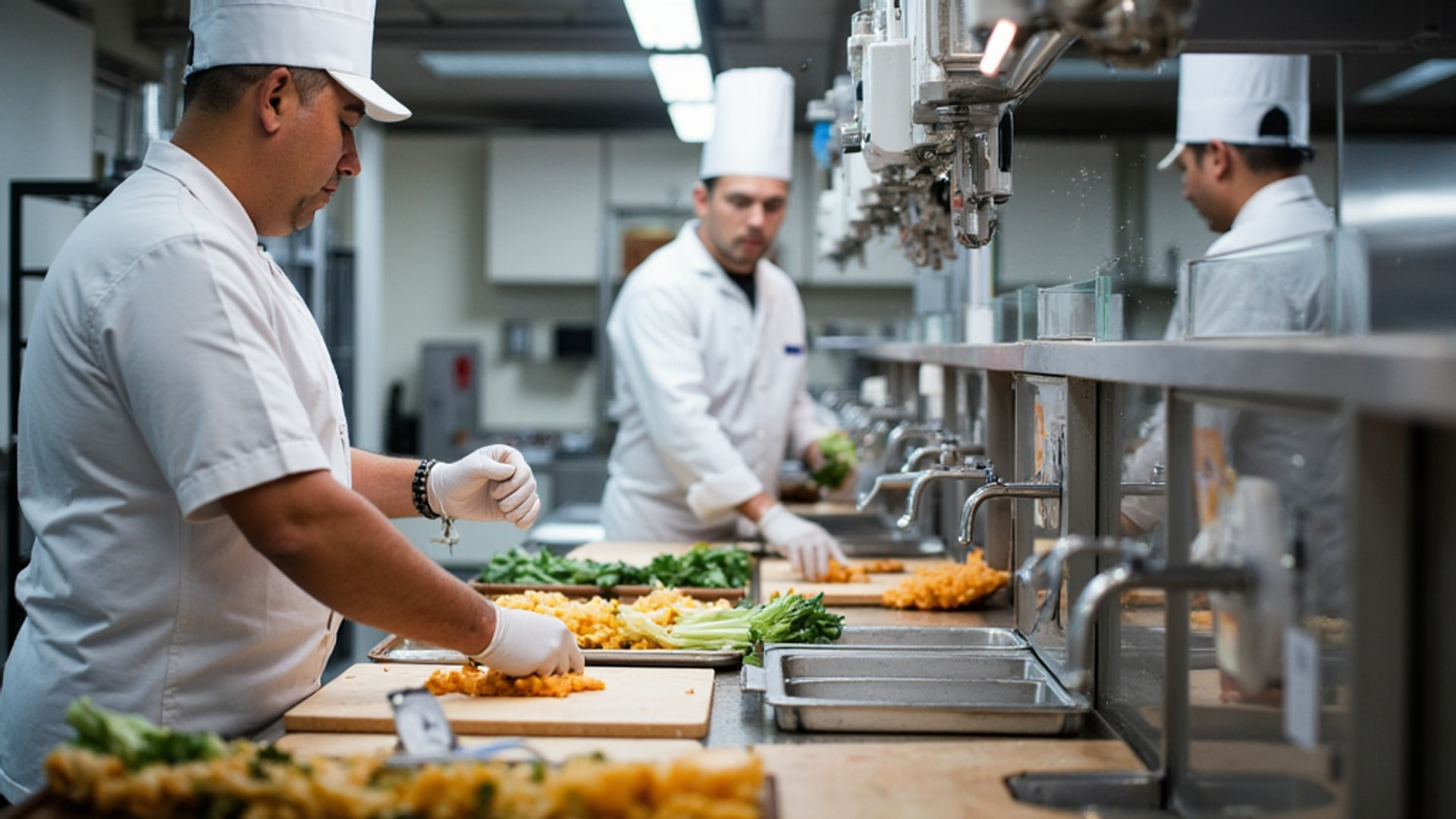
Food safety is not a checklist you complete once and file away. It is the non-negotiable foundation of every single thing that happens in your kitchen. According to the CDC, roughly 48 million Americans get sick from foodborne diseases each year, resulting in 128,000 hospitalizations and 3,000 deaths. The economic cost reaches approximately $17.6 billion annually.
And here is the number that should keep every restaurant operator focused: according to the CDC, more than half of all foodborne illness outbreaks in the United States are associated with restaurants, delis, banquet facilities, schools, and other food service institutions. Your kitchen is statistically the most likely place for someone to get sick from food. Your food safety systems determine whether that happens.
The HACCP Framework: Seven Principles
Hazard Analysis and Critical Control Points (HACCP) is the FDA-endorsed, science-based system for preventing foodborne illness. According to the FDA, it is a systematic approach that identifies, evaluates, and controls hazards throughout the food production process. The system rests on seven principles.
Principle 1: Conduct a Hazard Analysis
According to the FDA, identify biological, chemical, and physical food safety hazards at each step of the food preparation process:
| Hazard Type | Examples |
|---|---|
| Biological | Bacteria (Salmonella, E. coli, Listeria), viruses (norovirus), parasites |
| Chemical | Allergens, cleaning agent residue, pesticide contamination |
| Physical | Glass fragments, metal shavings, plastic pieces, bone fragments |
Walk through every step of your food flow — receiving, storage, preparation, cooking, holding, service — and identify where hazards can be introduced.
Principle 2: Determine Critical Control Points (CCPs)
According to the FDA, identify the specific steps where control is essential to prevent, eliminate, or reduce a hazard to an acceptable level. In restaurant settings, common CCPs include:
- Cooking — reaching the minimum internal temperature that kills pathogens
- Cooling — moving hot food through the danger zone quickly enough to prevent bacterial growth
- Hot and cold holding — maintaining safe temperatures during service
Principle 3: Establish Critical Limits
Set measurable maximum or minimum values at each CCP. According to the FDA, these must be specific and measurable — not vague guidelines but precise numbers. For example: chicken must reach 165F internal temperature, not “cook thoroughly.”
Principle 4: Establish Monitoring Procedures
According to the FDA, create planned observations and measurements to assess whether each CCP is under control. Physical and chemical measurements (temperature checks, pH readings) are preferred over microbiological testing because they provide faster, more reliable results.
Monitoring should be continuous when feasible. When it cannot be continuous, document the frequency and assign clear responsibility for each monitoring activity.
Principle 5: Establish Corrective Actions
According to the FDA, define specific procedures to follow when monitoring indicates a deviation from a critical limit. If chicken has not reached 165F, the corrective action is to continue cooking — not to serve it and hope for the best.
Principle 6: Establish Verification Procedures
According to the FDA, confirm that the HACCP plan is working through activities such as reviewing records, calibrating thermometers, and conducting periodic audits. Verification answers the question: is the system actually doing what it is supposed to do?
Principle 7: Maintain Documentation
According to the FDA, maintain comprehensive written records of all HACCP activities — hazard analyses, CCP determinations, monitoring logs, corrective actions, and verification activities. This documentation serves both regulatory compliance and continuous improvement.
Getting Started
According to the FDA, HACCP implementation does not require a complete operational overhaul. Operators should take incremental steps, integrating food safety management into existing workflows and prioritizing the products and processes that pose the greatest risk. Start with your highest-risk items — raw proteins, ready-to-eat foods — and expand from there.
Prerequisite Programs: The Foundation Under HACCP
According to the FDA, before HACCP can function, foundational prerequisite programs must be in place. Without them, your HACCP plan is built on sand.
Prerequisite programs include:
- Standard sanitation procedures — cleaning schedules, sanitization protocols
- Employee health and hygiene policies — handwashing, illness reporting, personal hygiene standards
- Supplier verification — ensuring incoming products meet safety standards
- Equipment maintenance schedules — calibrated thermometers, functioning refrigeration
- Pest management — prevention and control
- Chemical control protocols — proper storage, labeling, and use of cleaning chemicals
According to the FDA, these programs provide the basic environmental and operating conditions necessary for safe food production. They are not glamorous, but they are essential.
The Four Steps: Clean, Separate, Cook, Chill
The USDA organizes food safety around four fundamental actions that every kitchen employee must practice every day.
Clean
According to the USDA:
- Wash hands with soap and warm water for at least 20 seconds before and after handling food
- Wash cutting boards, utensils, dishes, and countertops with hot soapy water after preparing each food item
- Wash fruits and vegetables under running water before eating, cutting, or cooking
- Do not wash raw meat, poultry, or eggs — this spreads bacteria to other surfaces
That last point surprises many people. Rinsing chicken in the sink does not remove bacteria — it splashes contaminated water onto the sink, countertop, and anything nearby.
Separate
According to the USDA:
- Keep raw meat, poultry, seafood, and their juices away from other foods during storage and preparation
- Use separate cutting boards designated for raw meat and for produce/ready-to-eat foods
- Never place cooked food on a surface that previously held raw meat without washing it first
Color-coded cutting boards make this visible and enforceable: red for raw meat, green for produce, blue for seafood, yellow for poultry.
→ Read more: Preventing Cross-Contamination: Allergen Control and Kitchen Safety Protocols
Cook
According to the USDA, use a food thermometer to verify internal temperatures. Color is not a reliable indicator of doneness.
| Food | Minimum Internal Temperature |
|---|---|
| Whole cuts of beef, pork, lamb, veal | 145F (with 3-minute rest) |
| Ground beef, pork, lamb, veal | 160F |
| All poultry (whole or ground) | 165F |
| Fish and shellfish | 145F |
| Leftovers and casseroles | 165F |
Chill
According to the USDA:
- Refrigerate perishables within 2 hours (within 1 hour when ambient temperature exceeds 90F)
- Refrigerator: 40F or below
- Freezer: 0F or below
- Hot food during service: 140F or above
- Cold food during service: 40F or below
The Temperature Danger Zone
According to the USDA, the temperature danger zone between 40F and 140F is where bacteria multiply most rapidly — potentially doubling every 20 minutes. Food must not remain in this zone for more than 2 hours of accumulated time.
This is accumulated time. If chicken sits at room temperature for 45 minutes during prep, then gets cooked, then sits on a counter for another 45 minutes before going into the walk-in, it has already used up 90 minutes of its 2-hour window — even though it was cooked in between.
During service, monitor holding temperatures continuously. Use proper cooling procedures to move hot food through the danger zone quickly — shallow pans, ice baths, blast chillers.
→ Read more: Food Storage and Temperature Control: Zones, Rotation, and Compliance
The Human Factor: Where Systems Meet Reality
The best HACCP plan in the world fails if your team does not follow it. And according to CDC research, there are persistent compliance gaps in restaurant food safety practices.
The Data on Worker Behavior
According to the CDC:
- 5% of food workers reported working while experiencing vomiting or diarrhea within the past year — a leading cause of outbreaks
- 1 in 4 workers did not consistently wash hands between handling raw meat and ready-to-eat food
- Over half failed to consistently wear gloves when touching ready-to-eat items
- Just over half of workers who cooked food did not routinely use a thermometer to verify temperatures
These are not occasional lapses. They are systemic behavioral patterns that create contamination pathways in kitchens across the country.
Who Is Most At Risk
According to the CDC, younger, less-experienced workers showed the greatest compliance gaps. And independent restaurants demonstrated worse food safety practices than chain establishments — likely because chains have more standardized training programs, clearer written procedures, and stronger corporate oversight.
If you are an independent operator, you need to consciously build the training infrastructure that chains provide automatically. The National Restaurant Association offers food safety training programs through its ServSafe certification that can help level the playing field.
What Actually Works
According to the CDC, the single most effective food safety investment is ongoing, practical training that explains not just procedures but the reasons behind them. Workers who understand the health consequences of unsafe handling comply more consistently than workers who are simply told what to do.
Training approaches that work:
- Explain the “why” — a cook who knows that Salmonella in undercooked chicken causes illness is more likely to use a thermometer than one who is simply told “check the temp”
- Focus on younger workers — they show the greatest compliance gaps and benefit most from training
- Make it cultural — according to the CDC, workers handle food more safely when managers and coworkers actively stress food safety as a shared priority
- Repeat it — one onboarding session is not enough; quarterly refreshers maintain awareness
Four Hazard Categories
According to the topic synthesis, kitchen hazards fall into four types:
Biological hazards — bacteria, viruses, parasites. Controlled through proper cooking temperatures, handwashing, and preventing cross-contamination. This is the highest-risk category.
Chemical hazards — cleaning agents, sanitizers, pesticides. Controlled through clearly labeled storage separated from food areas. Never store chemicals above food. Never use unlabeled containers.
Physical hazards — glass, metal, plastic fragments. Controlled through daily equipment inspections, quality checks at plating, and careful handling. A broken glass near the ice machine contaminates the ice. A loose screw from a food processor contaminates the prep.
Environmental hazards — slips, burns, fire risks. Controlled through proper maintenance, non-slip mats, adequate ventilation, and accessible first aid supplies. These affect your team’s safety, not just your guests’.
→ Read more: Kitchen Safety Training: Burns, Cuts, Ergonomics, and Emergency Response
Building Your Food Safety System
Daily Practices
- Temperature checks on all refrigeration and hot-holding equipment — logged
- Handwashing compliance monitored and corrected in real time
- Thermometer use verified for all cooked proteins
- FIFO rotation enforced in all storage areas
- Cleaning and sanitization completed per schedule
- Sick employees sent home per policy
Weekly Practices
- Calibrate all thermometers
- Review temperature logs for deviations
- Deep clean high-risk areas
- Review prep procedures for compliance
Monthly Practices
- Conduct internal food safety audit
- Review and update HACCP documentation
- Verify training records are current
- Check pest control measures
Quarterly Practices
- Food safety refresher training for all staff
- Review and update SOPs based on any incidents or near-misses
- Verify supplier compliance with your standards
The Bottom Line
Food safety is the one area of restaurant operations where there is no acceptable margin for error. A slightly slow ticket time loses a few minutes. A slightly high food cost costs a few dollars. A foodborne illness outbreak can hospitalize customers, generate lawsuits, destroy your reputation, and close your business permanently.
According to the FDA, HACCP is the gold standard for preventing foodborne illness. According to the USDA, the four steps — clean, separate, cook, chill — are the foundation every kitchen must build on. And according to the CDC, the human factor — training, culture, and management commitment — determines whether the systems actually work.
Build your HACCP plan. Establish your prerequisite programs. Train your team on the science behind the procedures, not just the procedures themselves. Monitor compliance daily. Document everything. Food safety is not a project you complete — it is a discipline you practice every single day, on every single shift, with every single plate.
→ Read more: Health Inspection Preparation: What Inspectors Look For and How to Score High