· Legal & Compliance · 15 min read
Food Safety Compliance: Protecting Your Guests and Your Business
A practical guide to food safety compliance in restaurants — covering HACCP implementation, temperature control, cross-contamination prevention, allergen management, health inspections, and the documentation that holds it all together.
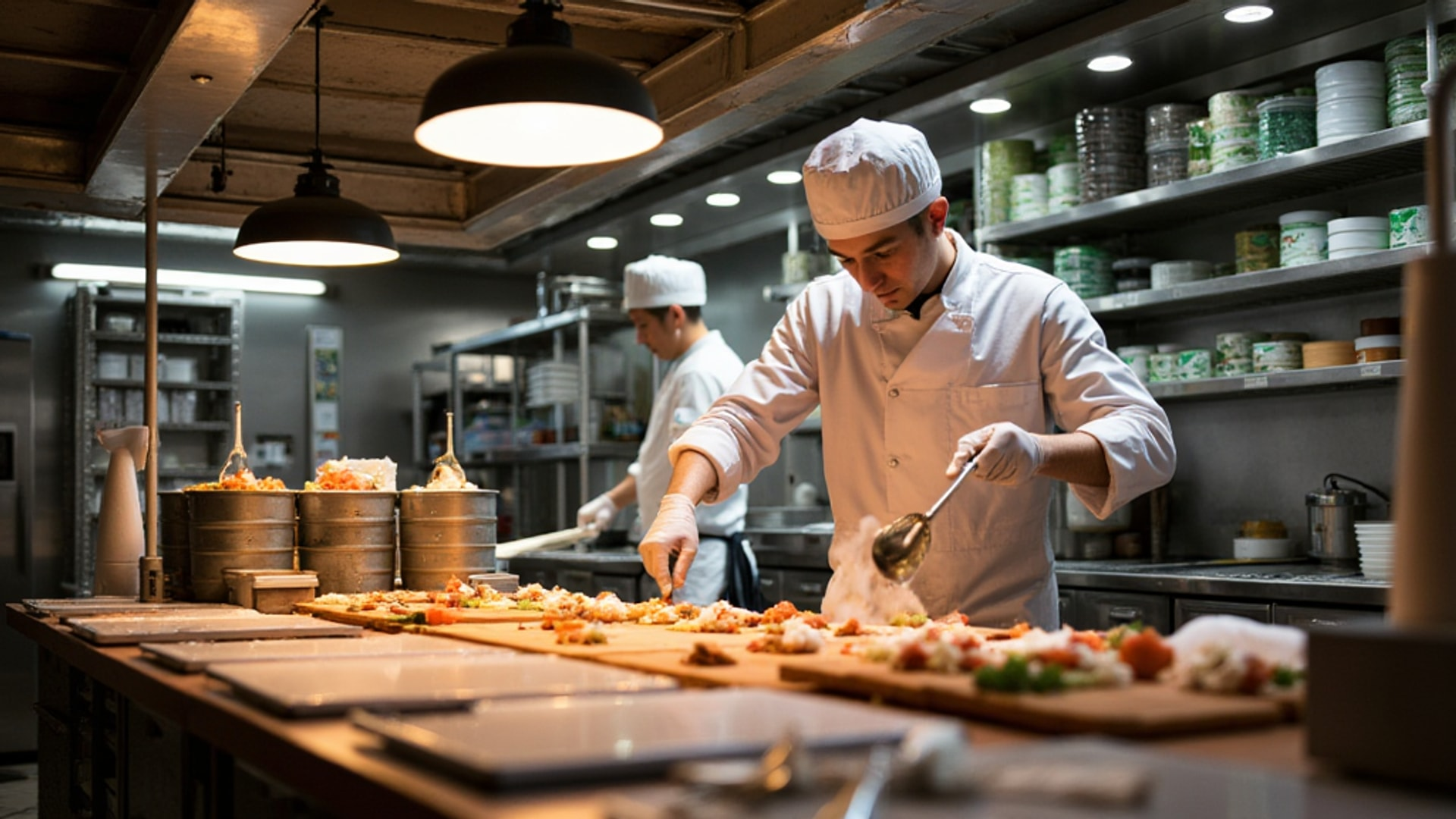
According to the CDC, roughly 48 million Americans get sick from foodborne diseases every year — 1 in 6 people. Of those, 128,000 are hospitalized and 3,000 die. The economic cost reaches approximately $17.6 billion annually. More than half of all foodborne illness outbreaks trace back to restaurants and food service institutions.
Food safety is not a compliance checkbox. It is the single most fundamental obligation you take on when you open a restaurant. A confirmed outbreak triggers health department investigations, media coverage, lawsuit exposure, and a reputation collapse many restaurants never recover from.
The science behind food safety is well established. What separates safe restaurants from dangerous ones is not knowledge — it is discipline. This guide covers the systems, procedures, and habits that keep your guests safe and your operation in compliance.
The Regulatory Framework: FDA Food Code and FSMA
Your restaurant operates under a layered regulatory system — federal guidelines, state regulations, and local health department rules. The foundation is the FDA Food Code.
The FDA Food Code is not federal law itself. It is the FDA’s model framework for preventing foodborne illness across more than one million food establishments. States adopt and adapt it to create their own enforceable regulations, making it the de facto national standard. The current 2022 edition (the 10th) added sesame as the ninth major food allergen following the FASTER Act of 2021.
The Code targets five CDC-identified risk factors behind foodborne illness outbreaks:
- Food from unsafe sources
- Improper holding temperatures
- Inadequate cooking
- Contaminated equipment
- Poor personal hygiene
Every system in this guide maps back to one or more of those five risk factors.
The Food Safety Modernization Act (FSMA), signed in 2011, shifted the broader food safety approach from reactive to preventive. While FSMA primarily targets manufacturing and supply chains, restaurants operating commissaries or production facilities may need to comply with Preventive Controls requirements, and operations importing ingredients must follow Foreign Supplier Verification Programs.
For a comprehensive overview of all the legal requirements you face, see our restaurant legal requirements overview.
HACCP: Your Food Safety Management System
Hazard Analysis and Critical Control Points (HACCP) is the globally recognized, FDA-endorsed system for preventing foodborne illness. You do not necessarily need a full formal HACCP plan to operate a restaurant, but understanding and applying its principles gives you the framework for every food safety decision you make.
HACCP rests on seven principles:
| Principle | What It Means in Practice |
|---|---|
| 1. Hazard analysis | Identify biological, chemical, and physical risks for every menu item and prep process |
| 2. Critical control points (CCPs) | Find the specific steps where you can prevent, eliminate, or reduce a hazard — cooking temps, cooling procedures, hot/cold holding |
| 3. Critical limits | Set measurable, non-negotiable boundaries: 165F for poultry, 41F or below for cold holding |
| 4. Monitoring procedures | Define who checks what, when, how, and with what equipment |
| 5. Corrective actions | Predetermine the response when a limit is not met — recook, discard, document |
| 6. Verification | Periodically audit the system: calibrate thermometers, review logs, test processes |
| 7. Recordkeeping | Document everything — monitoring results, corrective actions, verification activities |
Before HACCP can function, you need prerequisite programs in place: standard sanitation procedures, employee health and hygiene policies, supplier verification, equipment maintenance schedules, pest management, and chemical control protocols. According to the FDA, these programs provide the baseline conditions necessary for safe food production.
The FDA specifically notes that HACCP implementation does not require a complete operational overhaul. Start incrementally. Integrate food safety management into your existing kitchen workflows, prioritizing the products and processes that pose the greatest risk.
A practical HACCP team includes the head chef, kitchen manager, and a quality/safety designee. Their job: develop a flow chart of all kitchen operations, identify hazards at each step, and establish controls for the critical ones. Hands-on demonstrations — showing employees how to measure temperatures and fill out logs — reinforce the system far more effectively than written manuals alone.
Temperature Control: Where Most Failures Happen
Temperature abuse is the leading preventable cause of foodborne illness. Between 41F and 135F — the danger zone — bacteria can double every 20 minutes. Your entire operation needs to be engineered to keep food out of this range.
Receiving
The receiving dock is your first line of defense. Proper food receiving inspection procedures are critical. According to WebstaurantStore, the entire process from vehicle arrival to refrigerator storage must happen within 30 minutes to maintain the cold chain. Use a calibrated thermometer to verify perishable temps. Reject anything that does not meet standards:
- Refrigerated food: 41F or below
- Frozen food: fully frozen, no signs of thawing (ice crystals inside packaging or misshapen containers mean it thawed and refroze)
- Hot food: 135F or above
Reject damaged, soiled, or expired packaging and document every rejection. This data helps you evaluate supplier reliability over time.
Storage
The FDA Food Code establishes a strict storage hierarchy inside your walk-in based on minimum cooking temperatures:
| Shelf Position | Food Type | Minimum Cook Temp |
|---|---|---|
| Top | Ready-to-eat foods (salads, deli items, prepared foods) | N/A |
| Second | Whole cuts of beef and pork | 145F |
| Third | Ground meats | 155F |
| Bottom | Poultry | 165F |
Raw poultry always goes on the bottom shelf. The logic is simple: if it drips, it drips onto nothing that will be eaten without further cooking.
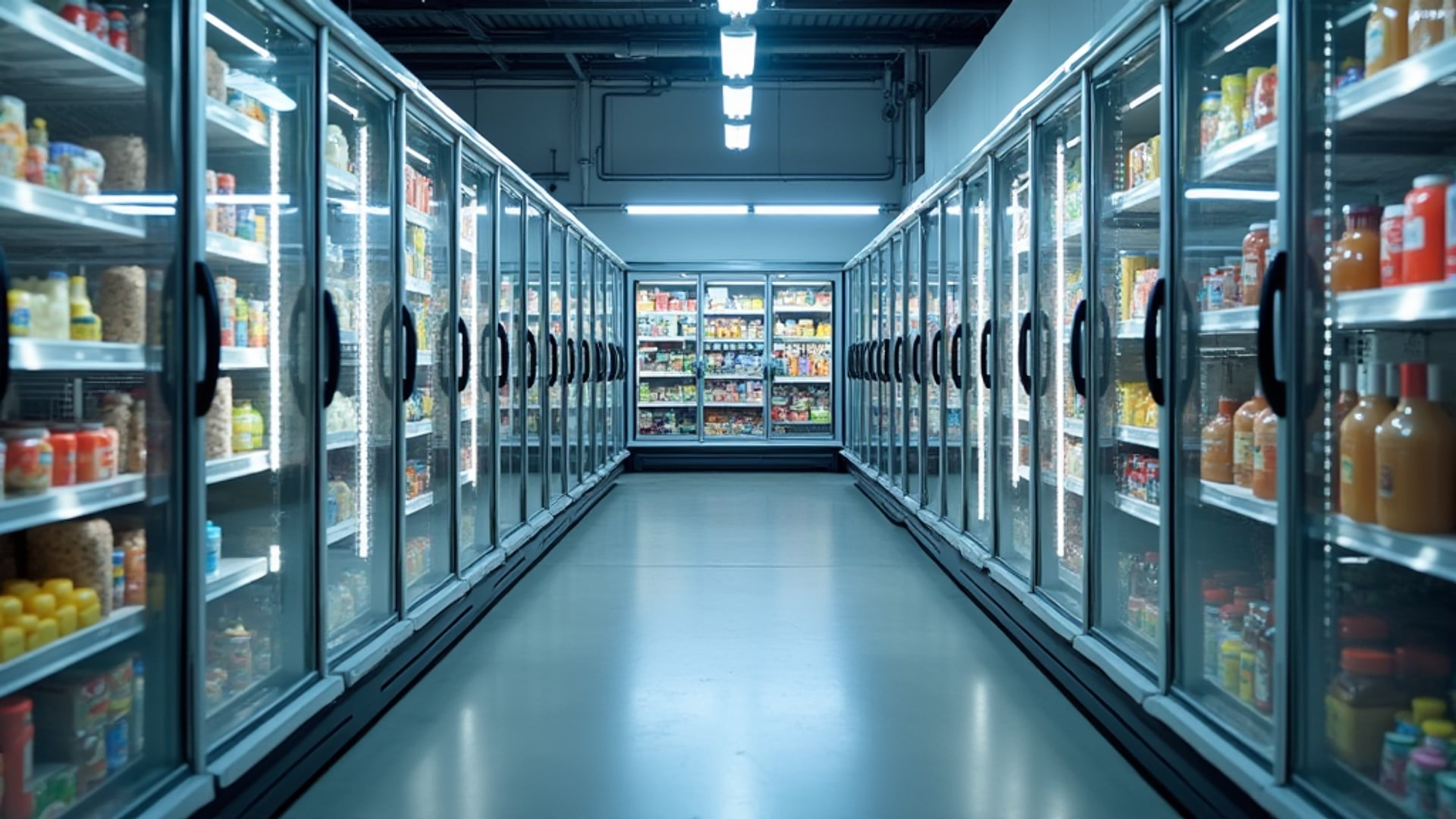
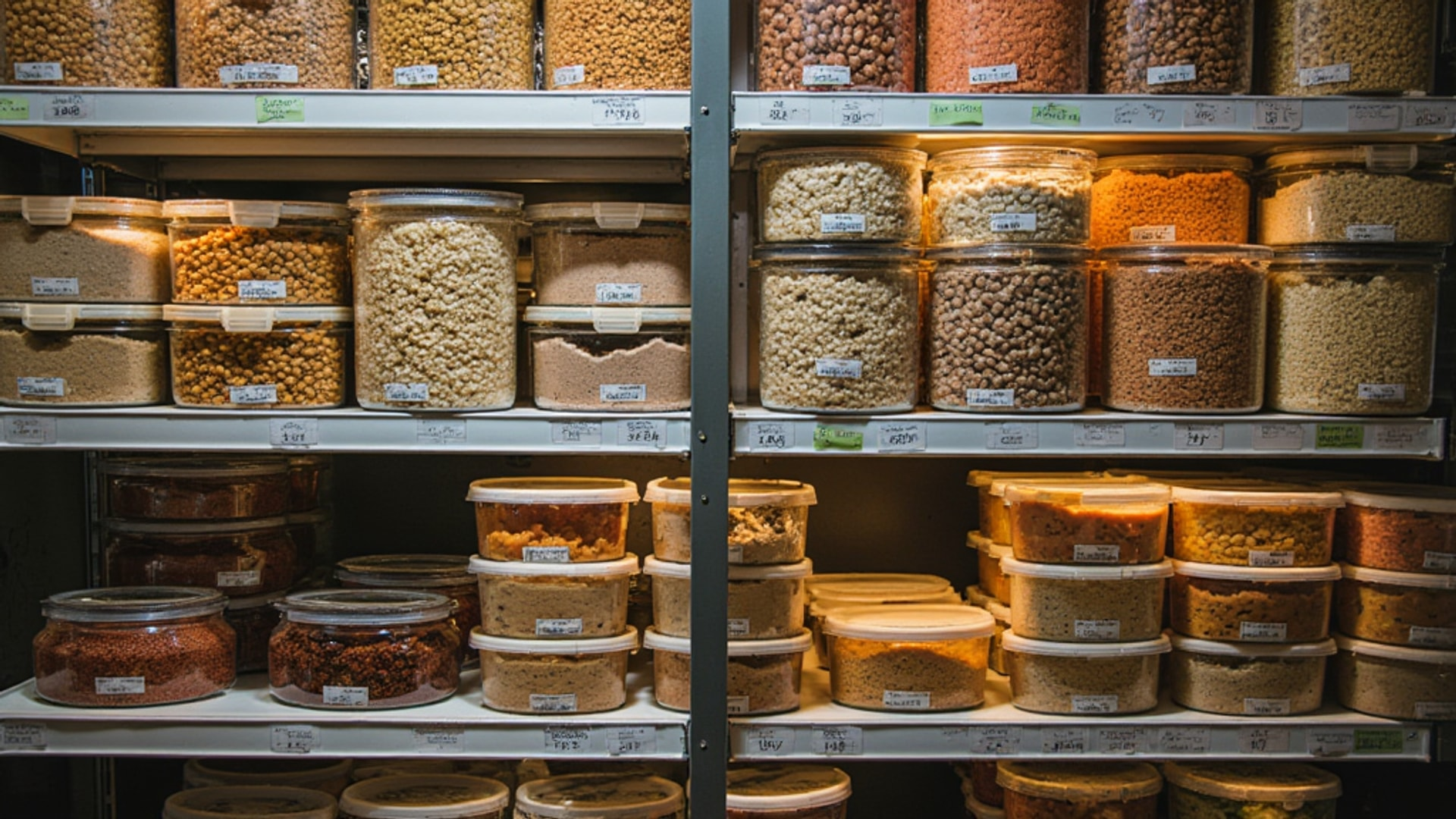
Refrigerators must maintain 40F or below. Freezers must hold 0F or below. All items need labels showing item name, date of preparation or receipt, and use-by date. Follow FIFO (First In, First Out) rotation without exception.
Dry storage has its own standards: items at least 6 inches off the floor, ambient temperature between 50F and 70F, and chemical storage completely separated from food — always on shelves below food, never above. For a complete guide to organizing your cold and dry storage, see our walk-in cooler organization and food storage and temperature control guides.
→ Read more: Food Storage and Temperature Control: Zones, Rotation, and Compliance
Cooking
Every protein has a non-negotiable minimum internal temperature:
| Food | Minimum Internal Temperature |
|---|---|
| Poultry and stuffed items | 165F for 15 seconds |
| Ground meats | 155F for 15 seconds |
| Seafood, steaks, pork, eggs cooked to order | 145F for 15 seconds |
Always measure with a calibrated probe thermometer inserted into the thickest part of the product. CDC research found that just over half of restaurant workers who cooked food did not routinely use a thermometer to verify temperatures. That statistic should alarm you. Temperature verification is not optional.
Holding and Cooling
Hot food must be held at 135F or above. Cold food at 41F or below. Never use hot-holding equipment to reheat food — it does not raise temperatures fast enough. When reheating, bring food to 165F within two hours before transferring to hot-holding.
Cooling is one of the most commonly failed procedures. Food must move from 135F to 70F within two hours, then from 70F to 41F within four more hours. Use shallow pans, ice baths, or blast chillers. Divide large batches into smaller containers. Never place a large hot container directly into the walk-in.
The four-hour rule: ready-to-eat food in the danger zone for more than four cumulative hours must be discarded. The FDA Food Code does allow “time as a control” without temperature monitoring, but only with written procedures and documentation.
Cross-Contamination Prevention
Cross-contamination is the transfer of harmful organisms from one food or surface to another. Prevention requires physical separation, disciplined work habits, and a system that makes the safe choice the easy choice.
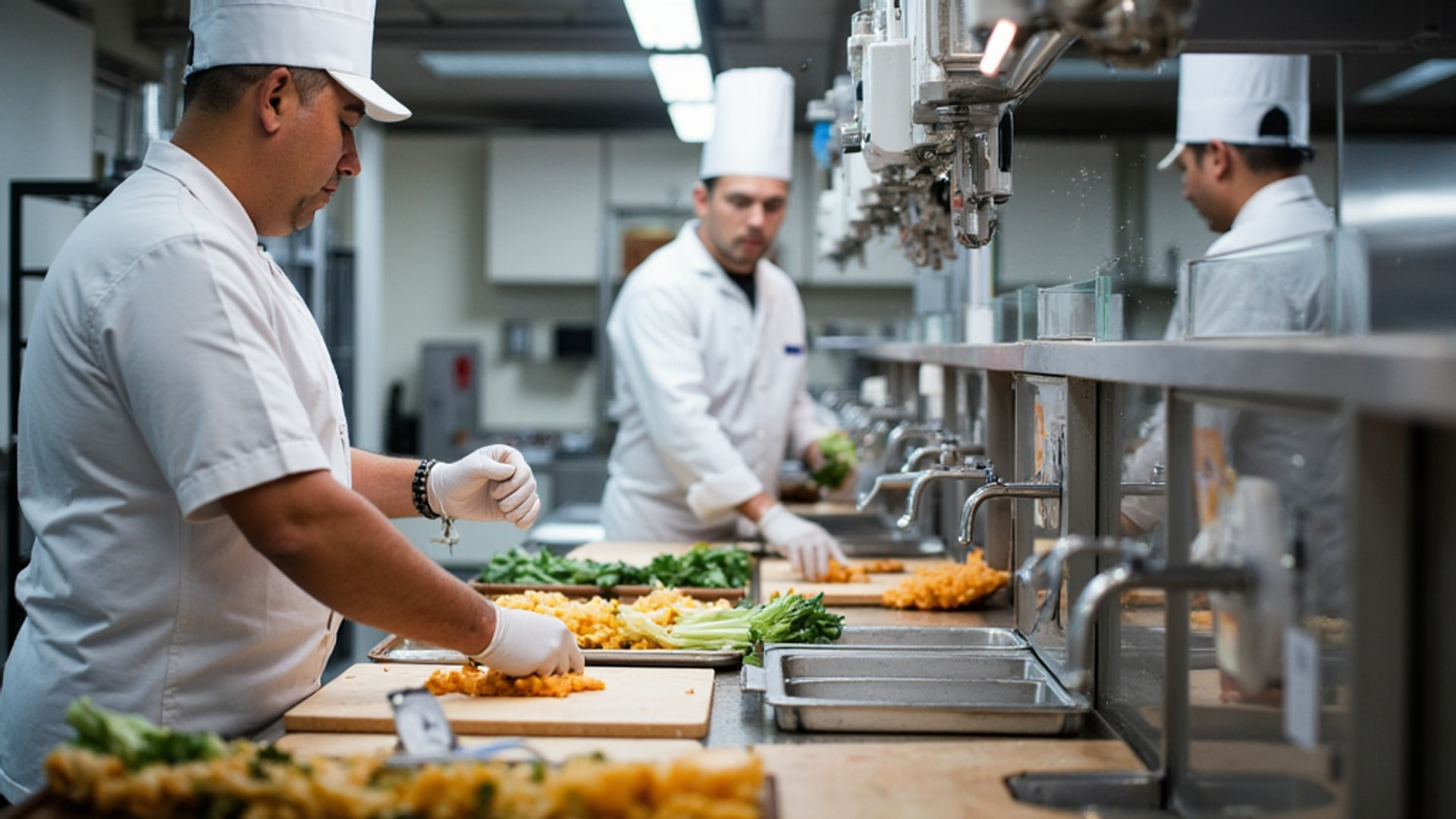
Color-coded cutting boards and utensils. Assign specific colors to specific product categories: red for raw meat, green for produce, yellow for poultry, blue for seafood. Some operations add purple for allergen-free preparation. This visual system prevents accidental cross-use without requiring staff to think about it.
Handwashing. According to the FDA Food Code (2022), every food prep area must have a dedicated handwashing sink with water at a minimum of 85F, liquid soap (bar soap is not permitted), single-use towels, and posted reminders. Handwashing sinks cannot be blocked by equipment or used for any other purpose. CDC research found that workers wash hands an average of 15.7 times during an 8-hour shift — but about 1 in 4 did not consistently wash between handling raw meat and ready-to-eat food. That gap is where outbreaks start.
Separate prep areas. Where space allows, designate separate zones for raw proteins and ready-to-eat items. In smaller kitchens, separate by time: complete all raw protein work first, then thoroughly clean and sanitize surfaces before preparing items that will not be cooked.
Sanitizer stations. Maintain sanitizer buckets at every prep station. The FDA-approved options are chlorine solutions at 50-100 ppm with 7 seconds of contact time, or quaternary ammonium compounds at 200 ppm with 30 seconds of contact time. Test concentration with chemical test strips at least twice per shift.
Glove discipline. CDC data shows that over half of restaurant workers failed to consistently wear gloves when touching ready-to-eat food. One-third did not always change gloves between handling raw meat and ready-to-eat food. Train your team that gloves are not a substitute for handwashing — hands must be washed before putting gloves on and when switching between tasks.
Allergen Management: A Distinct Category of Risk
Allergen cross-contact is different from microbial cross-contamination, and the distinction matters. Cooking kills bacteria, but cooking does not destroy food allergens. Even trace amounts of allergenic protein can trigger life-threatening reactions.
The FDA recognizes nine major food allergens that account for roughly 90% of allergic reactions: milk, eggs, fish, crustacean shellfish, tree nuts, peanuts, wheat, soybeans, and sesame. Over 33 million Americans have at least one diagnosed food allergy, and roughly 1 in 3 has experienced a reaction to food prepared in a restaurant. Epinephrine is required in approximately 28% of restaurant allergen incidents.
The 2022 FDA Food Code now requires written consumer notification about allergens in unpackaged food.
Kitchen Protocols for Allergen Orders
- Designate a separate preparation area or station for allergen-free meals
- Use equipment reserved exclusively for allergen-free preparation (often color-coded)
- Wash all surfaces with soap and water before preparation — sanitizing alone does not remove food proteins
- Use separate cooking oil for frying allergen-free items (shared fryers retain protein from previously fried foods)
- Assign each allergen-free meal to a single food handler who washes hands with soap and water (alcohol-based sanitizers do not remove food proteins)
- Cover completed allergen-free meals with clean lids marked with an allergy designation
- If contamination occurs during preparation, remake the entire meal
Build an allergen matrix for your menu. Train every team member on where allergens hide in common ingredients (malt, modified food starch, soy sauce). Servers should ask about allergies when taking orders. If your kitchen cannot guarantee elimination of cross-contact, communicate that honestly. Claiming allergen-free status when the risk exists causes real harm and legal liability.
→ Read more: Food Allergen Disclosure Laws: Liability, Labeling, and Restaurant Responsibilities
Health Inspections: What Happens and How to Prepare
Health inspections are typically unannounced and occur one to three times per year. According to industry sources, the process follows four phases: the inspector presents credentials, surveys the restaurant and kitchen, assigns a grade with violation documentation, and conducts follow-up for severe issues.
What Inspectors Evaluate
Inspectors assess your operation against a standardized checklist. The categories are consistent across jurisdictions even if scoring differs:
Critical violations — conditions that directly contribute to foodborne illness risk. These include food held in the temperature danger zone (41F-135F), bare-hand contact with ready-to-eat food, cross-contamination between raw and cooked foods, evidence of pest activity, employees working while ill, and missing or non-functional handwashing stations. Critical violations can trigger immediate closure.
Non-critical violations — lower-risk issues that indicate systemic problems. Missing thermometers, unorganized storage, minor equipment disrepair, incomplete labeling, cracked floor tiles, or inadequate ventilation. Individually minor, but accumulation signals management problems.
Scoring Systems
Scoring varies by jurisdiction. According to WebstaurantStore, common approaches include:
- 100-point scale: 90+ is good, 80-89 adequate, 70-79 needs improvement, 69 or below is poor
- Letter grades: A for few or zero low-risk violations, B for multiple violations, C for significant concerns
- Point-addition systems: New York City starts at 0 and adds points for violations (lower is better)
- Point-subtraction systems: Boston starts at 100 and subtracts (higher is better)
Inspection results are typically posted publicly online and increasingly displayed at the restaurant entrance. Your inspection record is part of your public reputation.
Your Best Preparation Strategy
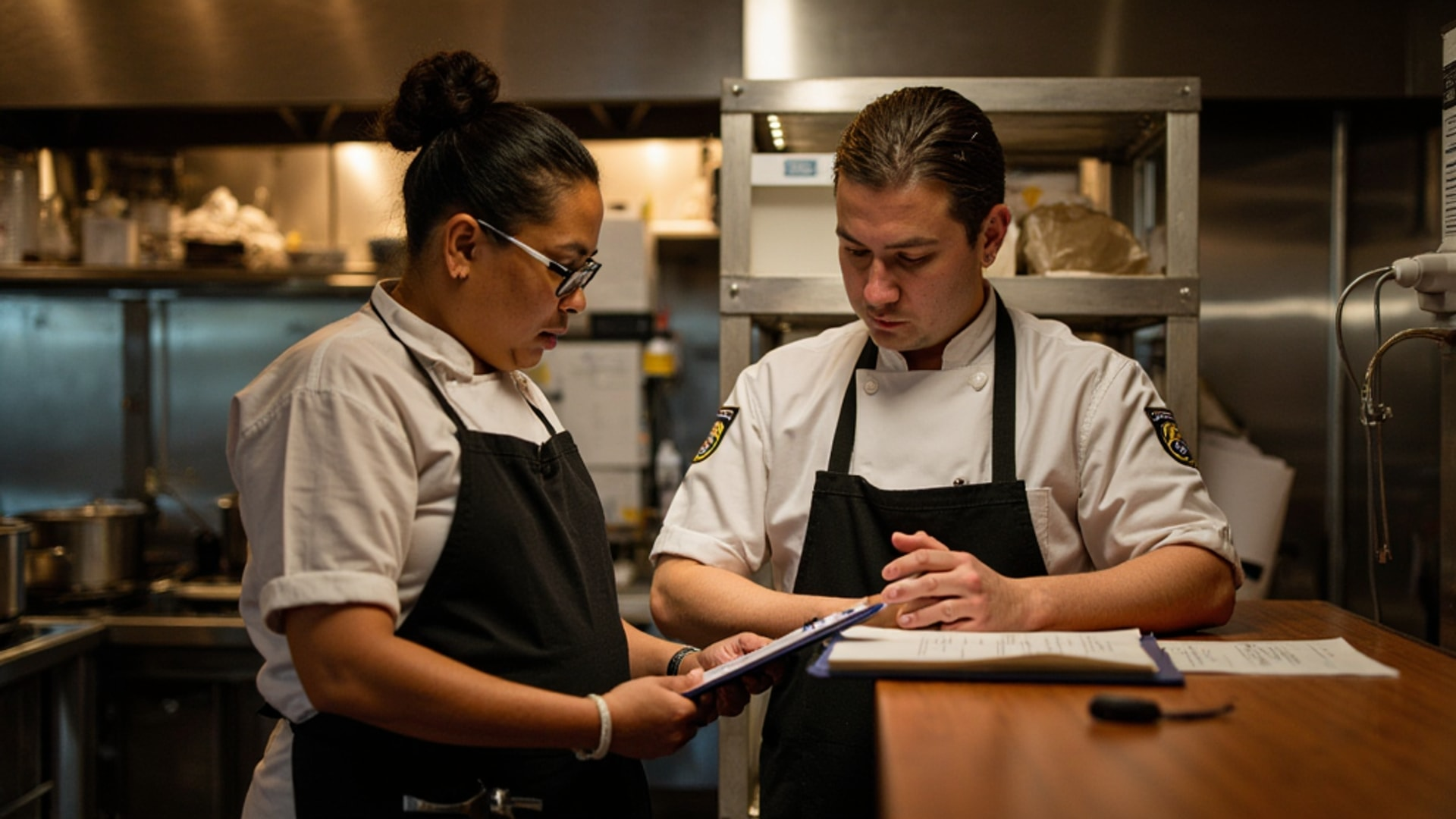
Run mock inspections using official criteria from your jurisdiction. WebstaurantStore calls self-inspection the single most effective preparation strategy. Conduct unannounced internal audits monthly or quarterly using the same checklist inspectors use.
During an actual inspection: verify the inspector’s credentials, accompany them throughout the process to document violations in real time, sign the report (this acknowledges receipt, not agreement), and ask for clarification on anything unclear. Never refuse an inspection or offer the inspector food or beverages.
The Human Factor: Training That Actually Works
Your people are your biggest food safety variable. CDC research found measurable differences between chain and independent restaurants, with independent operations showing worse food safety practices. The likely reason: chains have more standardized training programs, clearer written procedures, and stronger institutional oversight. If you run an independent restaurant, you need to build those systems yourself.
Certifications
The FDA Food Code requires a certified food protection manager on site during all hours of operation. This requirement was influenced by a landmark 2006 CDC EHS-Net study that found restaurants with foodborne illness outbreaks were less likely to have a certified kitchen manager than restaurants without outbreaks.
Programs like ServSafe, the National Registry of Food Safety Professionals, and Prometric offer accredited certification exams. Many states also require all food handlers to complete approved training and obtain food handler cards, typically renewed every two to five years.
Beyond Certification
A 2024 review of 118 food safety studies published in Heliyon found that management actions — training, policy implementation, monitoring — are associated with stronger food safety performance. But only 29% of studies used direct observation of practices, and self-reported compliance often diverges from actual behavior.
The takeaway: certification is necessary but not sufficient. Your ongoing training must be hands-on and explain not just procedures but reasons. CDC research shows that workers who understand the health consequences of unsafe handling comply more consistently. Build food safety training into your staff onboarding process and reinforce it through daily pre-shift routines.
→ Read more: Kitchen Safety Training: Burns, Cuts, Ergonomics, and Emergency Response Train managers to model correct behavior visibly — when the chef checks temperatures and takes corrective action without hesitation, the line cooks follow.
Sanitation: Your Standard Operating Procedures
Most state regulatory agencies require written Sanitation Standard Operating Procedures (SSOPs) during health inspections. Your SSOP specifies what to clean, how to clean it, what products and concentrations to use, how often, and who is responsible.
The Three-Step Sanitizing Process
Every food-contact surface follows the same sequence:
- Wash with hot soapy water to remove visible soil
- Rinse with clean water to remove soap residue
- Sanitize with an approved chemical solution at the correct concentration and contact time
For chlorine-based sanitizers: 50-100 ppm, 7 seconds of contact time. For quaternary ammonium: 200 ppm, 30 seconds of contact time. Test concentrations with chemical test strips.
Cleaning Schedule by Frequency
| Frequency | Tasks |
|---|---|
| After each use | All food-contact surfaces, cutting boards, utensils |
| During service | High-touch surfaces (refrigerator handles, oven knobs, POS screens) |
| Daily | Prep surfaces, floor mats, grease traps (point-of-use), sinks, restrooms, hood filters, range tops, griddles |
| Weekly | Deep clean ovens, fryers, grills; walk-in cooler shelves and walls; ice machines; behind/under equipment |
| Monthly | Exhaust hood and duct cleaning, ceiling tiles and vents, floor drains, thermometer calibration |
Assign every task to a specific person. Use sign-off sheets. Cleaning logs serve as compliance documentation during inspections.
Pest Control: Integrated Pest Management
Evidence of pest activity is a critical health inspection violation that can trigger immediate closure. The most effective approach is Integrated Pest Management (IPM), which prioritizes prevention over chemical treatment. A 2009 comparative study confirmed that IPM produces better long-term pest reduction results than pesticide-only approaches.
Prevention: Seal all gaps and openings around pipes, under doors, at wall-floor junctions. Install door sweeps, self-closing doors, and air curtains at delivery entrances. Remove trash daily, clean drains, store all food in sealed containers, and eliminate standing water. A comprehensive integrated pest management program is essential for long-term prevention.
Monitoring: Place sticky traps and pheromone traps near receiving docks, waste storage, along walls, and near drains. Log trap data and analyze for trends.
Treatment: Target specific pests with the least-toxic effective method. Gel baits in concealed locations rather than broadcast spraying. Mechanical traps for rodents rather than poison bait near food areas.
Document your IPM program — inspection logs, trap records, treatments, and corrective actions.
Documentation: Your Compliance Paper Trail
If it is not documented, it did not happen. According to the National Restaurant Association, documentation is among the first items health inspectors request. Maintain organized records for:
- Temperature logs — cooler/freezer temps at least twice daily, cooking temps for every protein batch, receiving temps for perishable deliveries
- Cleaning schedules — daily, weekly, and monthly tasks with sign-off fields
- Corrective action logs — what happened, what action was taken, who was responsible
- Training records — hire dates, certification dates, ongoing training topics, signed acknowledgments
- Pest control records — service dates, findings, treatments, follow-up actions
- Supplier documentation — food safety certifications, HACCP plans, recall notification agreements
Digital monitoring systems — including IoT temperature sensors — can provide real-time temperature alerts, but paper logs work fine if consistently maintained. The key is consistency, not technology. Store records where you can produce any log within minutes of an inspector arriving. Integrate documentation into your daily operational routines so it becomes habit, not homework.
Building a Food Safety Culture
Systems only work when the people running them believe in them. The restaurants that perform best treat food safety as an operational discipline integrated into every shift, not a checklist pulled out for inspections. CDC data supports this: states that adopted three specific Food Code provisions — requiring a certified food protection manager, excluding sick staff, and prohibiting bare-hand contact with ready-to-eat food — showed lower rates of foodborne norovirus outbreaks compared to states without those provisions.
Sick-worker policies deserve special attention. CDC research found that about 1 in 5 food workers reported working while sick with vomiting and diarrhea, making sick employees one of the most common contributing factors to restaurant outbreaks. The solution is a clear exclusion policy — workers stay home for at least 24 hours after symptoms subside — combined with a culture where calling in sick does not carry stigma or financial penalty.
Food safety is not a cost center. It is the minimum standard that earns you the right to serve food to the public. Build it into the foundation of your operation, and it becomes invisible — not because it disappeared, but because it became how your restaurant works.