· Legal & Compliance · 9 min read
Understanding Health Department Scoring: Inspection Systems and How They Work
Health inspection grades are posted on your window and searched online by every potential customer — understanding how scoring systems work is the foundation of protecting your score.

The letter grade or numerical score posted in your window is not just regulatory paperwork. It is a marketing signal that directly influences customer decisions, a legal record that affects your liability exposure, and a benchmark that regulators use to determine how often to inspect your operation. Understanding how health inspection scoring actually works gives you the information you need to manage it proactively rather than reactively.
Most restaurant operators know inspections happen. Fewer understand the underlying scoring mechanics well enough to predict which of their practices will generate violations and what those violations will cost on the score sheet. That knowledge gap is the difference between managing your inspection outcomes and just hoping for the best.
How Inspections Are Triggered
Health department inspections are unannounced by design. The entire point is to assess normal operating conditions — what the kitchen looks like when staff are not performing for an inspector. An inspector who calls ahead is not assessing your restaurant’s actual practices; they are assessing your restaurant’s practices when management has had time to prepare. Most jurisdictions treat announced inspections as an exceptional circumstance reserved for follow-up visits after specific complaints.
The frequency of inspections varies by jurisdiction and is often tied to the establishment’s risk level and compliance history. According to WebstaurantStore’s analysis of health inspection systems, most restaurants are inspected one to three times per year. Establishments with recent critical violations or a history of compliance problems may receive more frequent inspections. Some jurisdictions use a risk-based inspection frequency model where clean operations receive fewer inspections over time — a meaningful incentive for consistent compliance.
Inspections can also be triggered by customer complaints about food safety or foodborne illness, by a reported outbreak linked to your establishment, or as follow-up to a previous failed inspection.
The Scoring Architecture
This is where operators get confused, because scoring systems are not uniform across jurisdictions. The same numerical score can mean opposite things depending on where your restaurant operates.
Deduction-based systems start at 100 points and subtract points for each violation. A higher score is better. Boston uses this model. An establishment scoring 90 or above is generally considered compliant; lower scores indicate accumulated violations. The advantage of this system is intuitive: 100 means perfect, and scores fall from there.
Addition-based systems start at 0 and add points for each violation. A lower score is better. New York City uses this model. In New York City’s system, a score of 0 to 13 earns an “A” grade; 14 to 27 earns a “B”; 28 or above earns a “C.” An establishment with a score of 8 is performing better than one with a score of 20.
Letter grade systems are used in many jurisdictions and often correlate with underlying numerical scores. California, New York City, and Los Angeles use prominent letter grade posting requirements. An “A” indicates minimal violations; “B” indicates moderate violations; “C” indicates significant compliance problems. In jurisdictions that require letter grades to be posted at the entrance, the grade becomes a direct customer-facing signal.
Pass/fail or points-with-closure-triggers are used in other jurisdictions. An establishment that exceeds a certain violation threshold — particularly critical violations — may be required to close immediately for correction rather than receiving a formal score.
The practical implication: know your jurisdiction’s specific scoring system. Contact your local health department, review their published inspection scoring guide, and understand exactly how violations in different categories translate to your score. This is not complicated to learn, but it requires looking it up rather than assuming.
Critical vs. Non-Critical Violations
Every scoring system distinguishes between violations based on their public health risk. Understanding this distinction tells you which practices to prioritize.
Critical violations are conditions or practices with a direct link to foodborne illness risk. They carry the highest point values in addition-based systems and the largest deductions in subtraction-based systems. Critical violations often require immediate corrective action — the inspector may require you to fix the problem before they leave the premises, or may initiate closure procedures.
The most common critical violations in restaurant environments include:
Temperature control failures. Food held in the “danger zone” — between 41°F and 135°F — allows rapid bacterial growth. Hot foods held below 135°F, cold foods held above 41°F, improper cooling of cooked food, and improper thawing methods all create critical violations. Temperature control is the single most common source of critical violations in restaurant inspections. For detailed protocols on maintaining proper temperatures, see our guide on food storage and temperature control.
Cross-contamination. Raw proteins stored above ready-to-eat foods, using the same cutting board for raw chicken and salad greens, improper handwashing between handling raw and cooked foods — all create cross-contamination violations. Inspectors pay close attention to refrigerator organization and food handling sequence.
Bare-hand contact with ready-to-eat foods. Any contact between ungloved hands and food that will not be cooked before service is a critical violation in virtually every jurisdiction. This applies to plating, garnishing, and portioning ready-to-eat items.
Employee hygiene failures. Evidence of inadequate handwashing — no soap at stations, employees observed not washing hands after handling raw protein — is a critical violation. Employees working while visibly ill creates additional critical violations.
Pest evidence. Any evidence of rodent or insect activity — droppings, gnaw marks, live or dead pests — is treated as a critical violation in most systems and often triggers mandatory closure pending extermination and re-inspection. Establishing an integrated pest management program is the most effective way to prevent these violations.
Non-critical violations relate to general sanitation, equipment maintenance, administrative compliance, and facility conditions that do not directly cause foodborne illness but indicate systemic management problems. Examples include worn equipment, inadequate ventilation, missing or expired permits, and minor sanitation failures in low-risk areas. Individual non-critical violations carry lower point values, but accumulation of non-critical violations contributes meaningfully to overall scores and signals to inspectors that management attention to compliance is weak.
What Inspectors Examine
A health department inspection follows a systematic process that covers the entire operation. According to WebstaurantStore’s inspection guidance, inspectors typically assess:
Permits and certifications. The inspection often begins with a review of your operating permits and employee food handler certifications. Missing, expired, or improperly posted permits are violations discovered before the inspector looks at a single kitchen surface. Ensure your permits are current, properly displayed, and your food handler certification requirements are met for all required staff.
Food temperature monitoring. Inspectors use calibrated thermometers to check holding temperatures across your cold storage, hot holding equipment, and any food in active preparation. They will check refrigeration units, steam tables, and food in transport.
Food handling and storage practices. Raw protein storage hierarchy in refrigeration (beef above pork above poultry, all below ready-to-eat), date labels on all prepared items, FIFO rotation compliance, proper thawing methods, and food in covered containers.
Employee hygiene. Handwashing station accessibility and supplies, observation of handwashing practices during the inspection, employee health (visible symptoms of illness), hair restraint compliance, and appropriate handling of food with utensils or gloves.
Equipment cleanliness and sanitization. Sanitizer concentration in three-compartment sinks and wiping solution buckets (inspectors carry test strips), food contact surface cleanliness, cutting board condition, and ice machine cleanliness.
Pest control. Evidence of pest activity, condition of door seals and other pest entry points, and documentation of professional pest control services.
Facility maintenance. Ventilation, lighting, plumbing, waste management, and chemical storage and labeling.
After an Inspection
When violations are cited, restaurants typically receive an opportunity to correct them and are reinspected. The timeline varies by violation type and jurisdiction — critical violations may require correction before the inspector leaves or within 24 hours, while non-critical violations may be given 30 days.
According to inspection system guidance reviewed by WebstaurantStore, restaurants with repeat critical violations — the same violation found in consecutive inspections — face escalating consequences. Repeat findings indicate that the violation reflects a systemic practice rather than a one-time mistake, and regulators respond with stricter enforcement: more frequent inspections, higher fines, and potentially permit suspension or revocation.
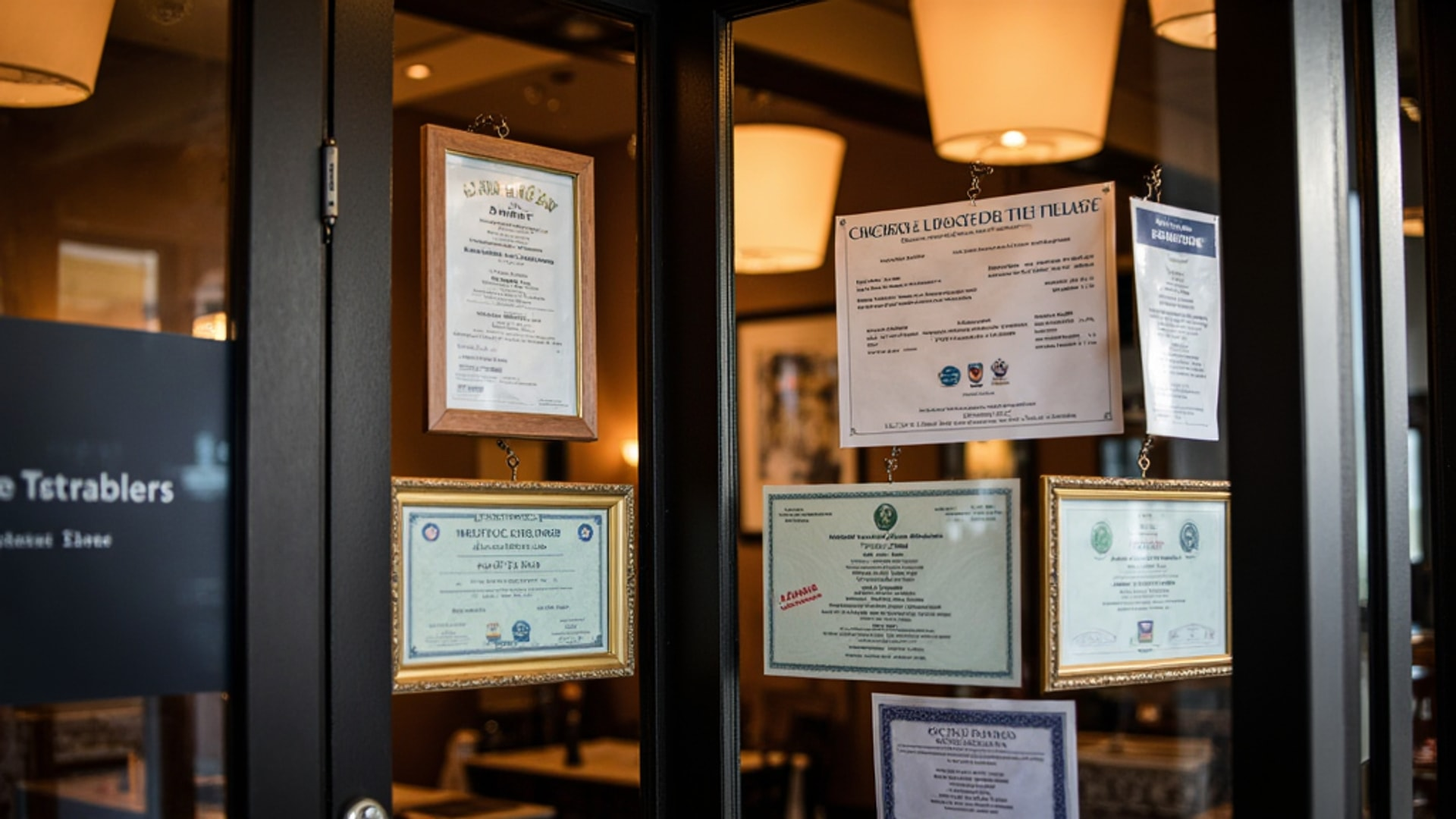
The inspection report is a public document in most jurisdictions. Many health departments publish inspection results on searchable online databases. Customers who Google your restaurant’s name before visiting may find your inspection history before your menu. Managing your inspection score is, in part, managing your restaurant’s public reputation.
→ Read more: Food Safety Compliance: Protecting Your Guests and Your Business
Treating Inspections as Ongoing Operations, Not Events
The most effective compliance approach treats every day of operation as an inspection day. This means:
Regular self-inspections. Use your local health department’s actual inspection form — most publish them online — to conduct internal inspections on a weekly or monthly schedule. Assign this task to a manager, require written documentation of findings and corrective actions, and track trends over time. Building this into your cleaning and sanitation schedule ensures consistency.
Temperature logging. Maintain written or digital temperature logs for all cold and hot holding equipment. These logs demonstrate to inspectors that temperature monitoring is an ongoing practice, not a performance staged for their visit. They also create a legal record that supports your defense if a foodborne illness complaint arises.
Current certifications. Track expiration dates for food handler and food manager certifications for all required staff. Do not let certifications lapse. An inspector who finds three employees without current certifications on a mandatory certification list will cite violations that are entirely preventable.
Maintenance response. Address equipment and facility maintenance issues promptly. A broken refrigerator door seal that has been noted and ignored for months will appear very different to an inspector than one identified that morning and already scheduled for repair with documented work order. A proactive equipment preventive maintenance program catches these issues before they become violations.
→ Read more: Health Inspections: What Inspectors Look For and How to Be Ready Every Day
The restaurants that consistently score well on health inspections do so because their daily operations align with health code requirements — not because they prepare differently when they know an inspector is coming. Since inspections are unannounced, there is no other reliable approach.