· Legal & Compliance · 9 min read
Liquor License Guide: Types, Application Process, and Costs by State
A practical breakdown of liquor license types, the application process, costs by state, and the strategic decisions every restaurant operator must make before serving alcohol.
Walk into any successful bar program and you are looking at thousands of dollars in fees, months of waiting, and a stack of paperwork that rivals a mortgage application. The liquor license is the single most complex permit most restaurant operators will ever obtain — and the one that most dramatically affects the financial model of the business. Get it right early, and it becomes a competitive asset. Underestimate it, and it can delay your opening by six months or sink the project entirely.
How Alcohol Regulation Works in the United States
Alcohol regulation in the United States operates at multiple levels simultaneously. The federal government sets baseline rules through the Alcohol and Tobacco Tax and Trade Bureau (TTB), but the real complexity lives at the state level. Each state has its own Alcoholic Beverage Control (ABC) agency that governs all rules related to distribution, sale, and consumption of alcohol within that state, according to WebstaurantStore’s liquor license guide. Many counties and municipalities then add their own layer of requirements on top of state rules.
This multi-level structure means a restaurant located near a county or city boundary may face entirely different requirements than a competitor two miles down the road. Understanding the complete regulatory picture for your specific address requires research at every applicable government level before you file anything.
License Types You Need to Know
Not all liquor licenses are created equal. The type you need depends on what you plan to serve, your business model, and the regulatory options available in your jurisdiction.
Full Liquor (All-Liquor) License: The broadest option, covering spirits, wine, and beer. This is the standard for full-service restaurants with active bar programs. It typically carries the highest cost and the most stringent requirements. Some states restrict alcohol revenue to approximately 40% or less of total establishment revenue under restaurant-specific licenses, distinguishing them from bar or tavern licenses.
Beer and Wine License: Restricts service to beer and wine only, no spirits. Generally less expensive and easier to obtain than a full liquor license, making it a logical entry point for operators who want to serve wine with dinner without committing to a full bar program. If you are building a wine list strategy, this may be all you need. The cost differential can be significant in some jurisdictions.
Tavern or Bar License: Designed for establishments where alcohol is the primary business rather than food service. These typically do not require a food revenue percentage and are appropriate for bars, pubs, and nightclubs. They often carry stricter requirements and higher scrutiny.
Brewpub License: Covers establishments that produce and sell their own beer or wine on-site. These are a specialized category with their own production and sales requirements.
On-Premises vs. Off-Premises: On-premises licenses allow alcohol consumption at the restaurant, which is the standard for dining. Off-premises licenses are for takeaway alcohol sales and are less commonly relevant to restaurants, though cocktail-to-go laws in some states have added complexity here.
The Application Process: Step by Step
The process follows a general pattern across most jurisdictions, though specifics vary considerably.
Step 1: Verify zoning. Before investing time in an application, confirm that your location is zoned to permit alcohol sales. Zoning verification should be part of your broader location selection process. Some residential-adjacent zones prohibit alcohol sales entirely, and proximity restrictions to schools, churches, or other alcohol establishments may apply. Discovering a zoning problem after signing a lease is an expensive lesson.
Step 2: Gather prerequisite documentation. Standard requirements include a business license, health permits, zoning permits, tax permits, proof of insurance, and a certificate of occupancy. Some jurisdictions require documentation before the application can be filed.
Step 3: Complete ABC agency forms. The core application requires detailed information about the business, its owners, and the planned alcohol service. Background checks on all owners and principals are standard. Some states require state residency for a specified period before an operator can apply.
Step 4: Pay the processing fee. Application processing fees typically run $50 to $100, separate from the license cost itself. These are non-refundable regardless of outcome.
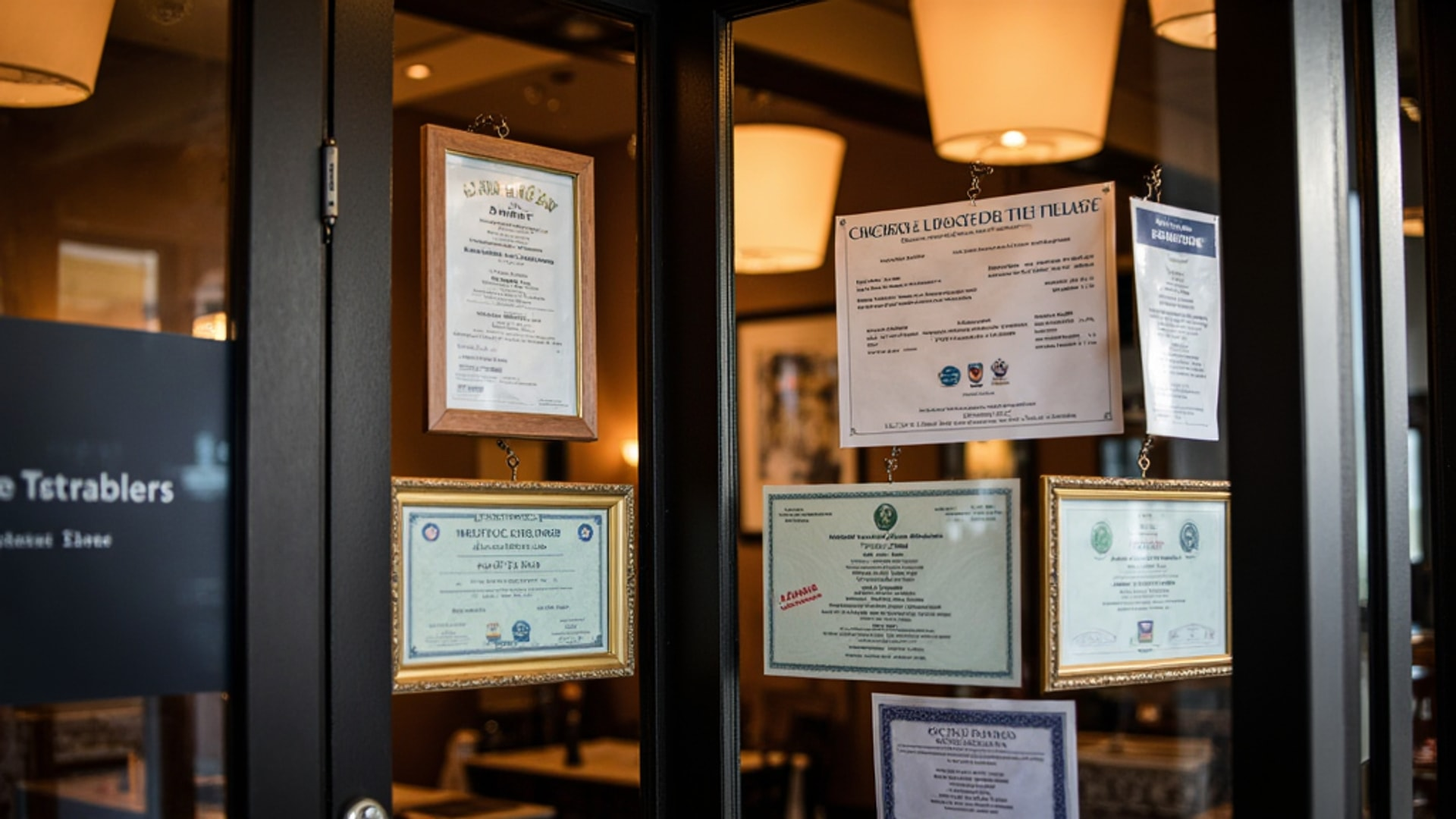
Step 5: Post public notice. Most jurisdictions require posting a notice at the restaurant location during the application period. This allows community members and local officials to see the application and raise concerns. Some areas require notice in a local newspaper as well.
Step 6: Community board review or public hearing. In many jurisdictions, community boards have advisory input on license approvals. Contentious applications may trigger public hearings where residents, business owners, and local officials can voice objections. Addressing community concerns early (sometimes before the formal application is filed) can prevent delays.
Step 7: Physical inspection. Inspectors verify that the premises comply with health, safety, and zoning regulations. This inspection typically cannot occur until the space is substantially complete, which is one reason the timing of your application matters.
Step 8: Wait. Processing times range from 30 days in straightforward cases to over a year in complex jurisdictions or during application backlogs. Plan accordingly.
The Quota State Problem
This is where liquor licensing gets genuinely complicated for restaurant planning. Some states (New Jersey, Pennsylvania, and others) cap the total number of liquor licenses available in a given geographic area. When all available licenses have been issued, new applicants cannot simply apply for a new one. They must purchase an existing license from a current holder on the secondary market.
The financial consequences are dramatic. WebstaurantStore’s analysis puts quota state license transfers at $25,000 to well over $500,000 in desirable urban markets, and $300,000 or more is not unusual. In non-quota states, an operator can typically obtain a new license directly from the government for a comparatively modest fee.
This cost difference can fundamentally change the financial model for a restaurant that depends on alcohol revenue. A $300,000 license acquisition cost that requires financing adds thousands of dollars per month in debt service before you pour a single drink. In quota markets, you need to factor this into your startup costs and capitalization plan from day one, not as an afterthought once you have already signed a lease.
→ Read more: Restaurant Startup Costs: A Complete Breakdown of What You Will Actually Spend
What Licenses Actually Cost
Cost variability is one of the most surprising aspects of liquor licensing for operators who have not navigated it before. WebstaurantStore reports fees ranging from as low as $125 in some states to hundreds of thousands of dollars in premium quota markets.
At the low end, beer and wine licenses in non-quota states can be obtained for a few hundred dollars in annual fees. At the high end, a full liquor license in a quota-limited urban market like New York City or parts of New Jersey can require purchasing an existing license for several hundred thousand dollars plus any government fees. Between those extremes lies an enormous range depending on state, county, municipality, license type, and market conditions.
The practical implication: budget research for the liquor license cost should happen before you commit to a location, not after. License costs can vary dramatically between jurisdictions only a few miles apart.
Timeline Strategy: Start Early
The most common mistake operators make with liquor licensing is treating it as something to handle once the restaurant is close to opening. By then, you have already lost the window. Because processing can take many months, and because physical inspections require the space to be substantially complete, the application needs to be submitted as early as possible, often during the construction or buildout phase.
As WebstaurantStore’s guide notes, the standard waiting time to hear back from a local ABC board is up to six months, and in quota states it can take significantly longer. A restaurant that is physically ready to open but cannot legally serve alcohol because the license has not been issued is in a painful and expensive position.
The practical sequence most experienced operators follow: begin the licensing research during concept development, initiate the application process during buildout, and plan the opening timeline to assume a realistic worst-case processing delay.
Renewal and Ongoing Compliance
A liquor license is not a one-time acquisition. Most states require renewal every one to three years, with associated fees. Maintaining the license requires continuous compliance with the conditions attached to it, including service hour restrictions, age verification requirements, responsible service practices, and revenue ratios where applicable.
Violations can result in fines, temporary suspension, or permanent revocation. A revocation, especially for cause, can permanently disqualify an operator from future licensing. For a restaurant where alcohol represents 25% to 40% of revenue, losing the license is not a recoverable event. Understanding dram shop liability is critical for managing the legal risks of alcohol service.
→ Read more: Dram Shop Liability: Alcohol Overservice Laws and Restaurant Risk Management
Purchasing an Existing License vs. Applying for a New One
In quota-limited markets, buying an existing license from another business is sometimes faster and occasionally more cost-effective than waiting for the application process. Sellers are often operators who are closing or consolidating, and the transaction typically requires ABC approval of the transfer.
The transfer process has its own timeline and requirements — you cannot simply hand cash over and start serving. But in markets where new licenses simply are not available, acquisition is the only path to a full liquor license.
Even in non-quota states, some operators purchase an existing license to inherit the goodwill of an established approval, particularly in jurisdictions where community board opposition to new licenses is common.
Practical Checklist Before You Apply
- Confirm your address-level zoning permits alcohol sales
- Determine which license type fits your business model and what alcohol revenue restrictions apply
- Determine whether you are in a quota state and what licenses currently trade for on the secondary market
- Research all government levels: state, county, and municipal requirements
- Identify all documents required before filing
- Build the expected processing timeline into your opening plan
- Budget for license acquisition costs in your capitalization plan
- Consult an attorney experienced in your state’s ABC process, particularly for quota markets or contested applications
- Ensure your bartender training program includes responsible service protocols
→ Read more: Restaurant Insurance and Risk Management: Every Coverage You Need and Why
The liquor license is not glamorous, but getting it right early is one of the most consequential decisions in restaurant development. The operators who treat it as a day-one planning item instead of an afterthought are the ones who open on schedule with their full beverage program intact.