· Menu & Food · 5 min read
Ghost Kitchen Menu Strategy: Building Menus for Delivery-Only Operations
How ghost kitchens require a fundamentally different menu approach — and what makes delivery-only menus succeed or fail.
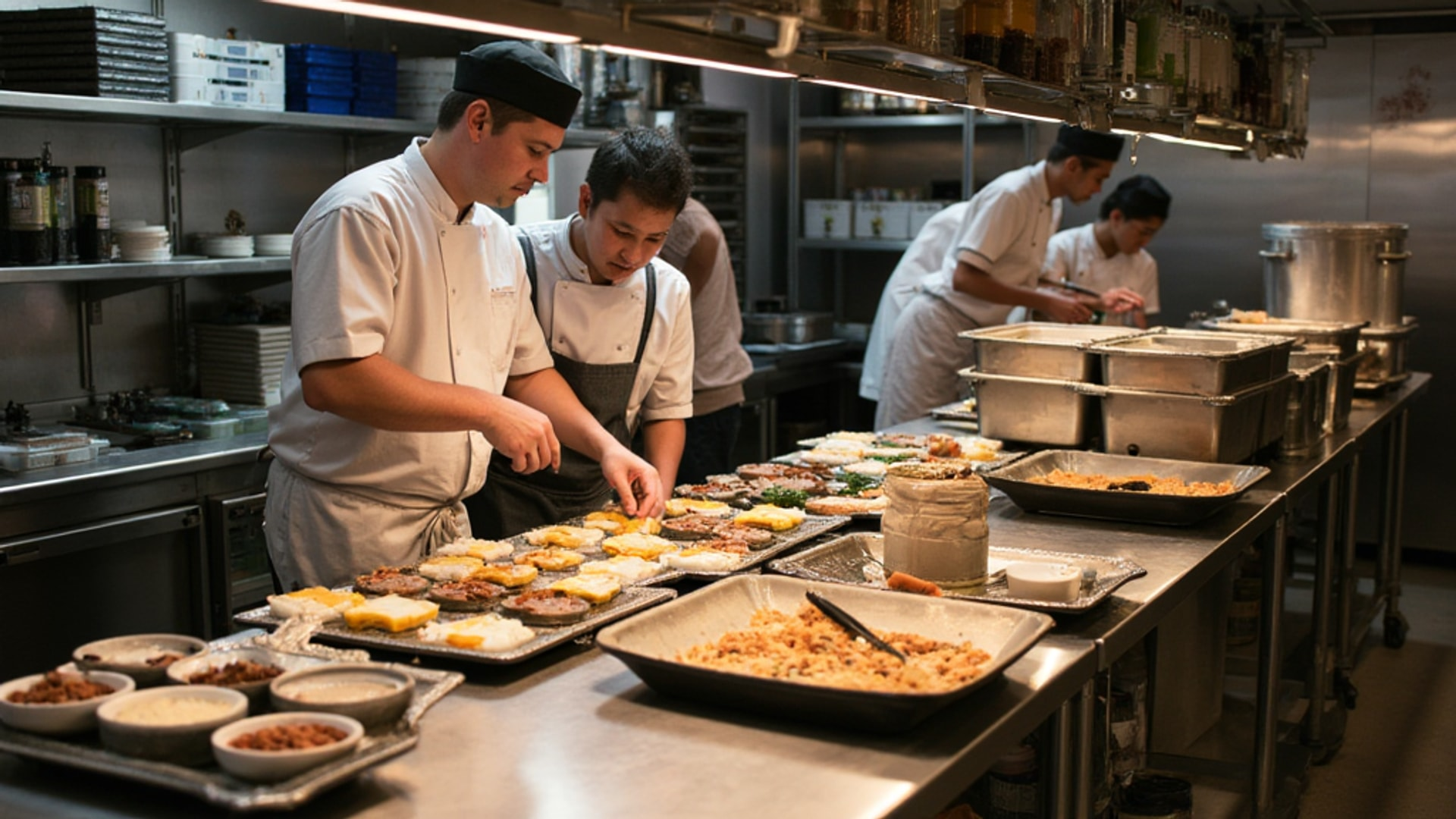
Ghost kitchens — delivery-only operations with no dining room, no front-of-house staff, and no walk-in traffic — represent the most dramatic shift in restaurant model economics in decades. According to Peppr POS, ghost kitchens achieve 10 to 30% profit margins by eliminating front-of-house costs entirely, compared to the 3 to 6% margins typical in full-service restaurants.
But a ghost kitchen’s financial advantage depends entirely on having a menu built for the medium. There is no ambient experience, no server relationship, and no in-person sensory appeal to compensate for menu weaknesses. The menu carries the entire brand.
→ Read more: Ghost Kitchens and Virtual Brands: Operating Without a Dining Room
The Ghost Kitchen Financial Advantage
The economics are straightforward. According to Peppr POS:
- Ghost kitchens use 70–80% less square footage than traditional restaurants
- Labor costs run 30–40% lower by eliminating front-of-house roles
- The margin opportunity (10–30%) reflects radically reduced overhead, not higher revenue per order
But these margins are only achievable with a menu designed specifically for the delivery context. A ghost kitchen running a menu designed for dine-in quickly discovers that delivery platform commissions (15 to 30% of each order), packaging costs, and food quality degradation in transit erode the theoretical margin advantage.
Menu Design Principles for Ghost Kitchens
Principle 1: Every Item Must Survive Transit
This is the non-negotiable starting point. According to Square, restaurants must evaluate menu items for travel quality — specifically, ability to maintain quality through a 20 to 40 minute delivery window without a chef’s oversight at the destination.
Ghost kitchen menu filters:
- Does this item maintain quality at 10 degrees below ideal temperature?
- Does this item hold its texture (not wilt, not lose crunch, not separate) in a sealed container?
- Can this item be reheated by a customer with minimal instructions if needed?
- Does this item look appealing when a container is opened, not when it is plated by a skilled server?
Items that fail these filters should not be on a ghost kitchen menu, regardless of how well they perform in a dine-in context.
Principle 2: Design for High Ticket Size
Ghost kitchen economics depend on revenue per order because fixed kitchen costs are still present. According to Square, 80% of delivery customers respond positively to value deals, bundles, and promotional structures. Building these into the menu architecture — not just offering them as periodic promotions — increases the baseline order value.
Revenue architecture tactics:
- Meal bundles priced at 10 to 15% less than individual items ordered separately
- Clear add-on categories (extra sauces, upgraded protein, additional sides)
- Family/group meal formats designed for 2 to 4 people
- Limited-time promotional items that create urgency
Principle 3: Maintain Ingredient Efficiency
With no dining room sales to absorb waste, ingredient management in a ghost kitchen is more critical than in a mixed-use operation. According to the National Restaurant Association, menu engineering with overlapping ingredients minimizes excess inventory and prevents spoilage.
Ghost kitchen menus should be engineered so that:
- At least 70% of ingredients appear in multiple menu items
- No single ingredient is used in only one item unless it drives significant order volume
- Items are designed around predictable demand, not extensive variety
Principle 4: Concentrated Category Structure
Unlike a dine-in menu with multiple courses, a ghost kitchen menu typically organizes around 3 to 5 core categories with 5 to 8 items each. According to Qamarero, research establishes 5 to 7 options per category as optimal for preventing decision fatigue. On a delivery app where customers scroll through multiple competing options, a focused menu with well-chosen items outperforms an extensive one.
Multi-Brand Ghost Kitchen Strategy
One of the ghost kitchen model’s unique capabilities is running multiple delivery brands from a single kitchen. A kitchen building in Korean-American cuisine can simultaneously operate:
- A Korean fried chicken delivery brand
- A rice bowl brand using the same base preparations
- A fusion sandwich brand leveraging the same proteins
According to Peppr POS, ghost kitchens achieve their margin advantage partly through this asset utilization — multiple revenue streams from a single facility. Each brand’s menu is focused and purpose-built, while they share the kitchen infrastructure, ingredient inventory, and equipment.
Requirements for multi-brand operations:
- Brands must share core ingredients (or efficiency gains disappear)
- Menus must be executable simultaneously without station conflicts
- Each brand needs a distinct enough identity to target different customer segments on delivery platforms
- Packaging must be brand-specific (the box is the restaurant experience)
Packaging as Brand Expression
In a ghost kitchen, the packaging is the physical embodiment of the brand. There is no physical space to communicate identity. According to Square, packaging directly impacts customer satisfaction and repeat ordering. Tamper-proof packaging, including sealed bags and security stickers, has become an expected standard.
Ghost kitchen packaging standards:
- Brand-consistent color, logo, and design on all containers
- Tamper-evident seals visible before opening
- Correct container for each item type (vented for hot crispy items, sealed for soups)
- Insulated outer bag for temperature maintenance
- Brief reheating instructions for items that benefit from it
Digital Presence is the Dining Room
In a traditional restaurant, the physical space does the brand storytelling. In a ghost kitchen, the digital presence — primarily the delivery platform profile and listing — does it all. According to Square, the digital ordering experience must compensate for the absence of in-person sensory cues.
Digital optimization requirements:
- High-quality photography of every menu item (no stock images)
- Complete ingredient descriptions in item listings
- Clear dietary and allergen labeling
- Consistent name and description across all platforms
- Ratings and reviews actively monitored and responded to
Margin Targets and Cost Structure
| Cost Element | Ghost Kitchen Target | Full-Service Target |
|---|---|---|
| Food cost | 28–32% | 28–35% |
| Packaging | 3–5% | Minimal |
| Delivery commissions | 15–30% (third-party) | N/A |
| Labor (kitchen only) | 20–28% | 30–35% total |
| Overhead (rent, utilities) | 8–12% | 15–25% |
| Net margin | 10–30% | 3–6% |
The delivery commission line is the most important variable in ghost kitchen economics. Strategies to manage it: building first-party ordering capability, negotiating preferred rates with platforms based on volume, and designing menus with high enough average order values to absorb commission costs while maintaining margin.
According to Square, with 40% of diners preferring to order directly from the restaurant, investing in a first-party ordering channel — through an owned website or app — is the single highest-leverage step for long-term ghost kitchen profitability.
→ Read more: Takeout and Delivery Menu Optimization: Designing for Off-Premise Success → Read more: Delivery Platform Comparison: DoorDash, Uber Eats, and Grubhub for Restaurants