· Menu & Food · 6 min read
Menu Category Structure: How to Organize Your Menu for Maximum Impact
The decisions behind how menu categories are named, sequenced, and sized — and why they matter more than most operators realize.
Category structure is the menu decision that most operators think about least and that affects customer behavior most directly. How sections are named, how many items appear in each, in what sequence they appear, and how they are visually separated from each other — these structural choices determine how customers navigate the menu and, critically, which items they end up ordering.
According to Restaurant Resource Group, items should be organized by consumption order from cocktails through desserts. This is the baseline. The more sophisticated question is how to structure those categories to guide customers toward your highest-value items while making the navigation experience feel intuitive rather than manipulative.
The Cognitive Foundation
Customers do not read menus sequentially. According to Cafeshore, customers spend approximately 109 seconds reading a menu, their eyes following the Golden Triangle pattern (center → top right → top left) before settling into a scan of sections. The category structure must work with this reading pattern rather than against it.
What this means for category design:
- The most important categories should appear in the most-scanned positions
- The first item in each category receives disproportionate attention
- Sections with too many items cause scanning fatigue and default ordering behavior
- Sections with distinct visual separation get more attention than those that blend together
According to Sauce and Bites, limiting each category to approximately 7 items aligns with cognitive capacity limits (the “7 plus or minus 2” working memory constraint). Beyond that threshold, customers either stop reading or default to familiar items regardless of what else is in the category.
Category Naming Strategy
Category names are the first communication about what is inside. Weak names are purely functional (“Appetizers,” “Entrées,” “Desserts”). Strong names communicate identity, create anticipation, and reinforce the restaurant’s personality.
| Generic Name | Stronger Alternative | Effect |
|---|---|---|
| Appetizers | Small Plates / To Start / From the Kitchen | More casual, encourages sharing |
| Entrées | Mains / Chef’s Selections / From the Grill | Implies curation and craftsmanship |
| Desserts | Sweet Finish / Something Sweet | Frames dessert as a natural conclusion |
| Beverages | Drinks / From the Bar / What We’re Drinking | Varies by concept tone |
| Sides | Alongside / Add to Your Plate | Encourages ordering without feeling separate |
The principle: names should match the restaurant’s voice. A neighborhood bistro’s “Small Plates” section feels appropriate. The same section on a formal steakhouse menu would feel inconsistent. According to Lisi Menu, typography contributes to atmosphere and dining experience beyond just readability — and category names are part of that typographic environment.
Sequencing: The Narrative Arc
A menu should tell a story through its sequence. According to Restaurant Resource Group, sections should flow in consumption order: beverages and cocktails, appetizers/starters, soups and salads, mains, sides, and desserts. This sequence mirrors the natural dining progression and makes navigation feel intuitive.
Standard full-service sequence:
- Cocktails / Beverages
- Starters / Small Plates
- Soups and Salads
- Mains / Entrées
- Sides (integrated with mains or separate)
- Desserts (separate menu or final section)
- After-dinner drinks / Digestifs
Deviations that work:
- Featuring shareables or signature items prominently at the top regardless of consumption order (works for concepts built around sharing culture)
- Placing the most profitable category in a visually prominent position even if it breaks strict sequence
- Using a “Chef’s Recommendations” section at the beginning to draw attention to specific items before the standard navigation begins
Separate Menus vs. Unified Menus
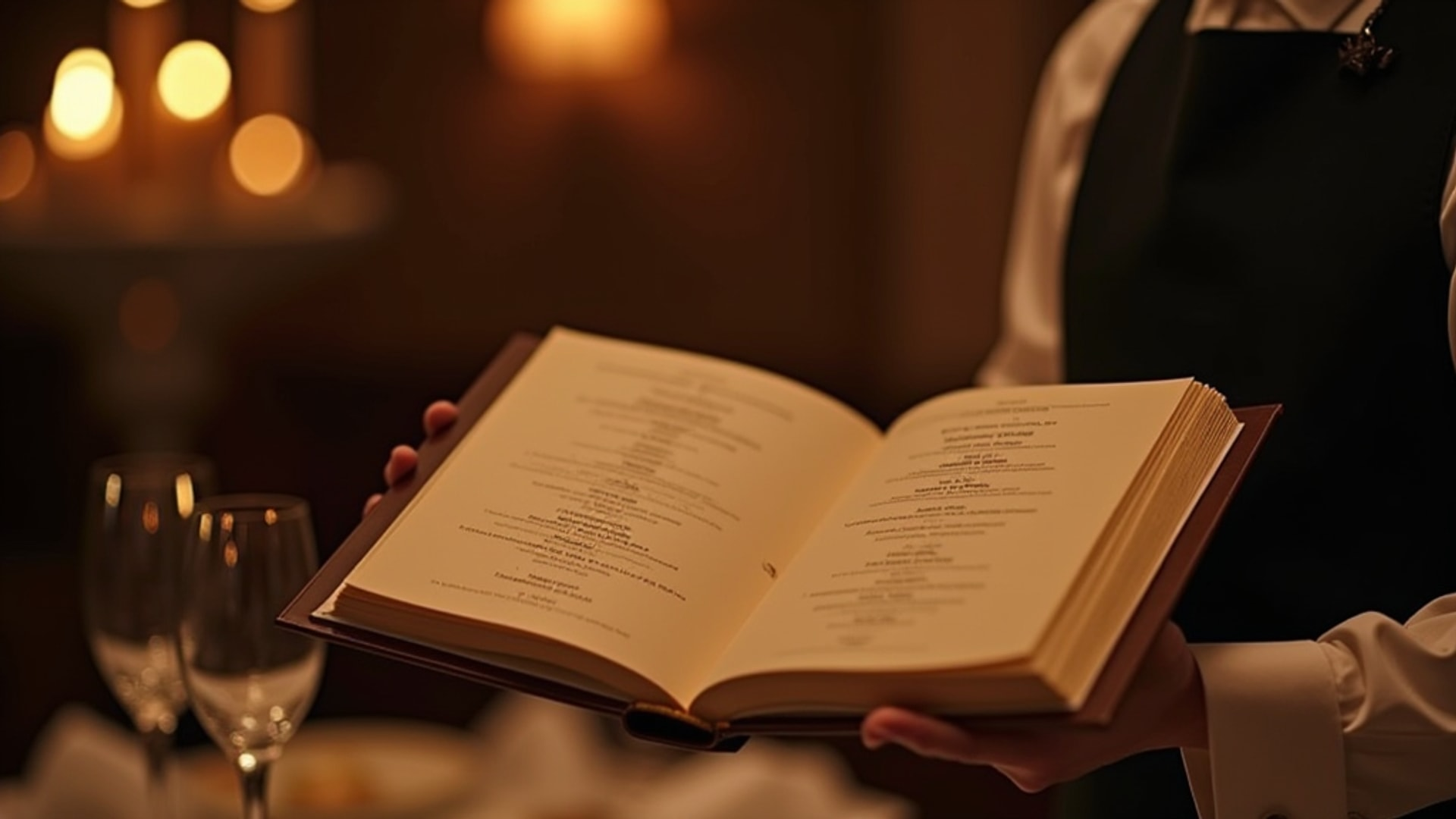
According to Restaurant Resource Group, separate menus should be used for drinks, wine, desserts, and children’s items. This guidance applies when those categories are substantial enough to warrant dedicated treatment. A 40-item wine list embedded in the food menu creates visual noise and makes both food and wine harder to navigate. A separate wine list gives the beverage program the attention it deserves and signals that the restaurant takes wine seriously.
For desserts specifically, a separate dessert menu presented after the main course captures attention at a moment when customers are in a satisfied, receptive state — rather than burying dessert options at the bottom of the main menu where they are typically ignored during the ordering decision.
Category Size Calibration
According to Qamarero, a focused menu with the right item count per category increases sales by reducing decision paralysis. The practical guidelines:
| Category | Recommended Item Count |
|---|---|
| Cocktails / Craft Beer | 6–10 |
| Starters / Small Plates | 5–7 |
| Soups and Salads | 3–5 |
| Mains | 6–8 |
| Sides | 4–6 |
| Desserts | 4–6 |
When a category exceeds these ranges, consider subcategorization. A mains section with 14 items is harder to navigate than two subcategories of 7 items each (e.g., “From the Sea” and “From the Land”). Subcategories also create natural opportunities for visual hierarchy — a section divider becomes a chance to highlight featured items at the top of each sub-group.
Within-Section Item Placement
Within each section, the placement of individual items matters as much as the sequence of sections. According to WebstaurantStore, customers notice the first two items and the last item in each section most frequently. These positions should be reserved for:
- First position: Your highest-margin item or a strong Puzzle (high-margin, needs visibility)
- Second position: Your most popular item (reassures customers that others like it)
- Last position: A distinctive or signature item (benefits from the “final impression” effect)
Items in the middle of a long section receive the least attention. If you have a high-margin item buried in position 6 of 8, it is not getting the sales it could deliver. Move it to the top.
Visual Separation and Hierarchy
Category structure is only as effective as its visual execution. According to Restaurant Resource Group, effective eye magnets include borders and boxes framing specific items, font variation, color accents, and spacing variations that group related items together.
Minimum visual requirements for effective category structure:
- Clear section headings with size and weight distinction from item names
- Whitespace between categories (crowded sections reduce attention to all items within them)
- Consistent item presentation (name, description, price in the same format throughout)
- Strategic use of one visual callout element per page (a box, a highlight) to draw attention to a featured item
The menu is the customer’s navigation system through your food program. When the category structure is clear, the sequence is intuitive, and the within-section placement is strategic, customers navigate with confidence — and make ordering decisions that serve both their satisfaction and your profitability.
→ Read more: Menu Design and Layout: The Visual Psychology That Drives What Guests Order → Read more: Menu Color and Typography: The Visual Science of Selling More Food → Read more: Menu Simplification: How Fewer Choices Drive More Revenue