· Operations · 8 min read
Customer Service Excellence: How to Train Your Team to Keep Guests Coming Back
70% of customers return despite average food quality if service excels. Here's the training framework, complaint resolution system, and measurable standards that build lasting guest loyalty.
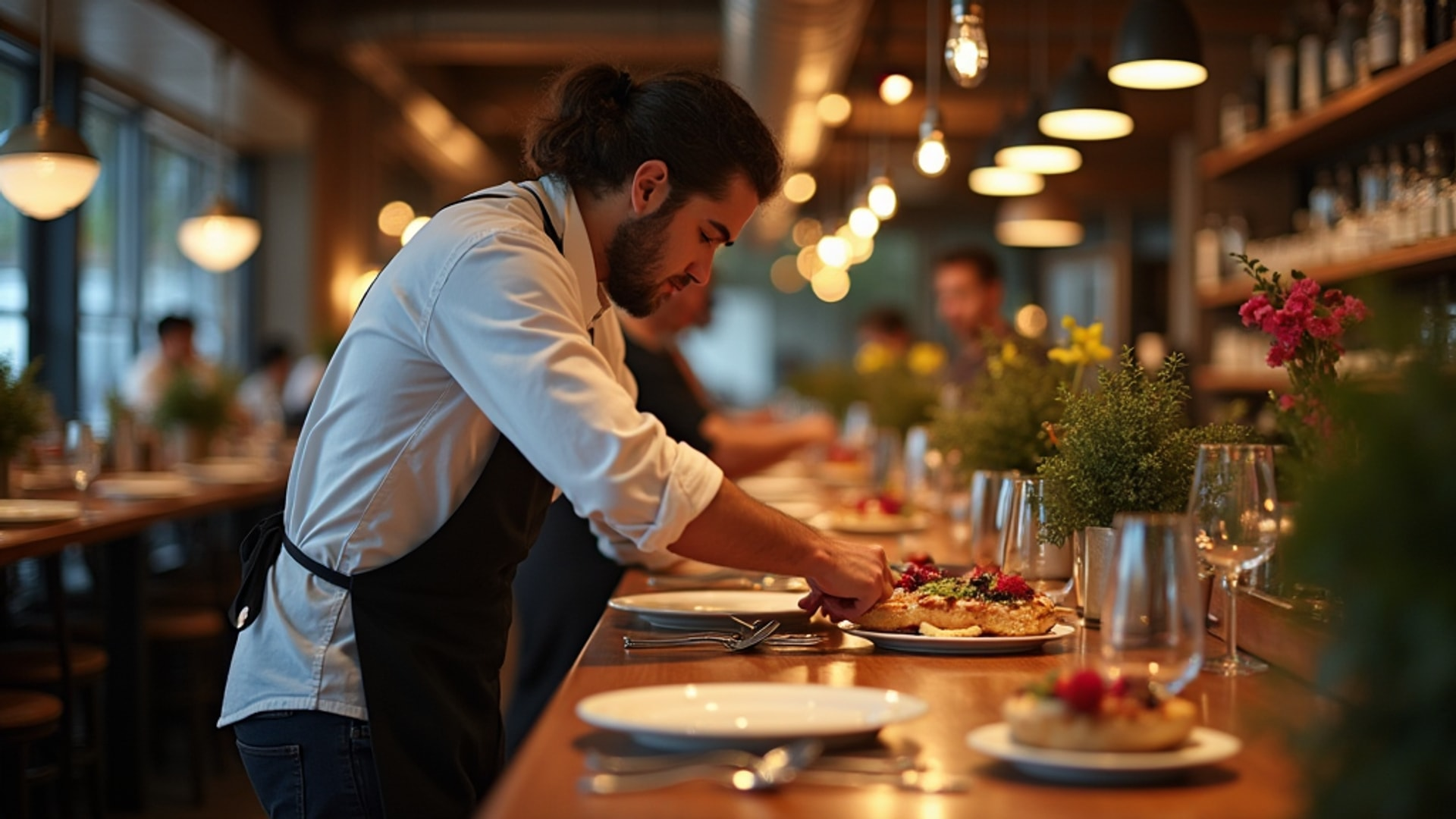
Here is a statistic that should reshape how you think about your restaurant: according to Xenia, 70% of customers return despite average food quality if service excels. Your food matters — but your service might matter more. The training systems you build around service standards will determine whether this holds true in your operation.
That finding aligns with data from 7shifts showing that 7 out of 10 customers spend more at businesses with exceptional service, and 72% of diners are more likely to choose restaurants that actively solicit feedback. Service is not a soft skill. It is a revenue driver with measurable returns.
The Science of What Guests Actually Care About
A peer-reviewed study published in the International Journal of Environmental Research and Public Health (available through PubMed Central) used the Kano model to identify what drives satisfaction versus dissatisfaction in foodservice settings. The research surveyed 464 participants and revealed something every operator should understand: satisfaction and dissatisfaction are driven by different factors.
What Creates Satisfaction
The highest satisfaction drivers, measured by their Better coefficients, were:
| Factor | Better Coefficient |
|---|---|
| Favorite menu items | 0.892 |
| Taste of food | 0.875 |
| Special menus and events | 0.868 |
These are attributes that actively increase satisfaction when present and well-executed. They create delight.
What Creates Dissatisfaction
The strongest dissatisfaction drivers, measured by Worse coefficients, were:
| Factor | Worse Coefficient |
|---|---|
| Clean tableware | -0.886 |
| Clean tables | -0.847 |
| Staff hygiene | -0.767 |
These are hygiene basics that do not create satisfaction when present — nobody gets excited about a clean fork — but strongly drive dissatisfaction when absent.
What This Means for You
According to the PMC study, operators must maintain two parallel systems: a hygiene and cleanliness program that prevents dissatisfaction, and a culinary quality program that actively builds delight. Neglecting either side produces suboptimal outcomes. Clean tables do not make guests love you, but dirty ones make them leave. Great food does not compensate for a visibly unclean restaurant.
The Five-Step Service Training Blueprint
According to Xenia, effective customer service training follows a structured five-step blueprint. This is not a one-time event — it is an ongoing operational system.
Step 1: Define Measurable Standards
Vague expectations produce vague results. Define specific, timed service standards that your team can be measured against:
- Greet guests within 30 seconds of seating
- Take drink orders within 2 minutes
- Check tables within 5 minutes after entrees are served
- Present the check within 2 minutes of being asked
- Pre-bus tables during the meal to keep the dining experience clean
These become the benchmarks you train to, measure against, and hold people accountable for.
Step 2: Design Role-Specific Training
According to Xenia, servers, hosts, and kitchen staff each need scenario-based learning tailored to their function. A host’s training centers on greeting, seating flow, and managing wait times. A server’s training covers table management, menu knowledge, and reading guest cues. Kitchen staff need training on communication with FOH, plating standards, and timing.
Do not put everyone through the same generic training and expect role-specific excellence.
Step 3: Implement Structured Programs
According to Xenia, combine multiple training methods:
- Onboarding — structured first-week program covering all basics
- Shadowing — new hires follow experienced team members for several shifts
- Hands-on practice — role-playing common scenarios before working live tables
- Quarterly refresher sessions — reinforce standards and address emerging issues
A 30-day implementation timeline with clear milestones keeps the program on track.
Step 4: Track Performance Metrics
According to Xenia, four metrics reveal whether your training is working:
- Guest satisfaction scores — from comment cards, surveys, or digital feedback tools
- Online review sentiment — trends in Google, Yelp, and social media ratings
- Employee evaluations — regular performance reviews against your defined standards
- Average tip amounts — a direct reflection of service quality from the guest’s perspective
Step 5: Enable Growth Pathways
According to Xenia, 80% of restaurant managers started as entry-level workers, and 26% of frontline workers would stay longer with better growth opportunities. Cross-training, leadership development, and recognition programs turn service training into a retention tool.
When your best server sees a path to management, they invest in their own development instead of looking for a higher-paying job elsewhere.
Seven Essential Training Areas
According to Xenia, a complete service training curriculum covers seven areas:
1. Greeting protocols with active listening. The first 30 seconds define the guest’s expectations. Train your team to make eye contact, smile genuinely, and listen rather than recite a script.
2. Menu expertise including allergen awareness and upselling. Every server should be able to describe every dish, recommend pairings, identify allergens, and suggest add-ons naturally — not as a sales pitch, but as genuine guidance.
3. Complaint de-escalation through scenarios. Practice the difficult situations before they happen. Role-play the angry guest, the wrong order, the long wait. Muscle memory under pressure requires rehearsal.
4. FOH/BOH team communication. The kitchen and the floor are one team serving one guest. Train both sides on how to communicate clearly about timing, modifications, and problems.
5. Emotional intelligence to read guest cues. Not every table wants the same experience. Some want conversation; some want to be left alone. Train your team to read body language and adjust.
6. Personalization by remembering regulars. A guest who is greeted by name and offered their usual drink without asking becomes a guest for life. Build systems that support this — table notes, CRM tools, or simply a good memory.
7. Continuous learning through monthly role-plays. According to Xenia, 59% of employees show improved performance with proper training. Monthly practice keeps standards sharp and addresses new challenges as they emerge.
Handling Customer Complaints
Every restaurant gets complaints. What matters is how you handle them. According to WebstaurantStore, complaints are opportunities — they reveal customer expectations that might otherwise remain invisible. A dedicated process for handling customer complaints converts negative experiences into loyalty-building moments.
The Five-Step Resolution Process
WebstaurantStore presents a framework that works for any complaint:
1. Stay calm. Maintain composure with a level voice and open mind. Make eye contact. Do not get defensive, even if the complaint feels unfair.
2. Listen. Give the customer full, undivided attention. Let them finish. Do not interrupt, explain, or justify until they have said everything they need to say.
3. Sympathize. Use appropriate facial expressions and body language. Acknowledge that the experience was not what they expected. Avoid appearing dismissive.
4. Apologize. Accept responsibility without excuses or blame-shifting. “I’m sorry your steak was overcooked” — not “The kitchen has been slammed tonight.”
5. Resolve. Tailor the solution to the specific complaint. The appropriate response ranges from a simple apology to comping the entire meal, depending on severity.
Who Handles Complaints
According to WebstaurantStore, the front-of-house manager should handle complaints whenever possible. This demonstrates that the restaurant values guest opinions and provides neutral representation when the complaint involves a specific server.
Responses by Complaint Type
| Complaint | Response |
|---|---|
| Uncleanliness | Immediate action to clean; consider comping the bill |
| Poor food quality | Kitchen refire; address through training and quality control |
| Rude service | Reassign server; listen to employee’s perspective privately |
| Order mix-up | Expedite replacement; complimentary item while waiting; remove incorrect item from bill |
| Slow service | Table check-in; complimentary item; review workflow |
| Atmosphere issues | Evaluate layout, lighting, temperature, noise |
Preventing Complaints
According to WebstaurantStore, proactive systems reduce complaint volume:
- Wait time management — paging systems, realistic time estimates, duration tracking, and proactive greeting
- Menu clarity — list main ingredients, include allergen information, and train servers through tastings
- Delivery accuracy — expeditor staff, food-running policies, and seat numbering systems
Training Delivery: What Actually Works
According to Restaurant365, the delivery method matters as much as the content. Their comparison of three approaches reveals clear differences.
Platform-Based Training
Integrated with operations software, this approach delivers the best results. According to Restaurant365, Winking Lizard Tavern — a 17-location chain — achieved over 2,000 monthly training completions with standardized onboarding and improved guest satisfaction using a platform-based approach.
Standalone Learning Management Systems
Custom content and detailed tracking, but according to Restaurant365, these often suffer from low engagement because they are disconnected from the daily workflow.
Manual/Paper Methods
No upfront cost, but according to Restaurant365, manual methods are nearly impossible to standardize and track across multiple locations. For a single-unit operator with hands-on management, they can work. For anything larger, they fall short.
Protecting Your Online Reputation
In the current digital landscape, your online reputation is your first impression for most potential guests. According to WebstaurantStore, monitoring complaints across review platforms is essential. Responding promptly to negative reviews demonstrates attentiveness and can convert negative experiences into recovery opportunities.
Best practices for review responses:
- Respond within 24-48 hours
- Thank the guest for their feedback
- Acknowledge the specific issue
- Describe what you are doing to address it
- Invite them to return for a better experience
- Never argue, blame, or get defensive in a public response
The Bottom Line
Customer service excellence is not about hiring naturally friendly people and hoping for the best. It is a system — defined standards, structured training, measured performance, and continuous improvement.
According to Xenia, effective customer service training must be ongoing and measurable, not a one-time onboarding event. The connection between training investment, employee retention, and customer loyalty creates a virtuous cycle that directly impacts profitability.
Build the standards. Train to them. Measure against them. Improve continuously. The restaurants that do this consistently do not just survive — they build the kind of guest loyalty that sustains a business for decades.
→ Read more: Handling Customer Complaints: Turning Problems Into Loyalty → Read more: Server Upselling Techniques: Training Your Team to Increase Check Averages → Read more: Creating Restaurant Ambiance: The Operational Side of Guest Experience