· Operations · 8 min read
Restaurant Opening and Morning Prep: How to Start Every Service Day Right
The first hour of a restaurant's day sets the tone for everything that follows — a disciplined opening routine is one of the highest-leverage systems an operator can build.
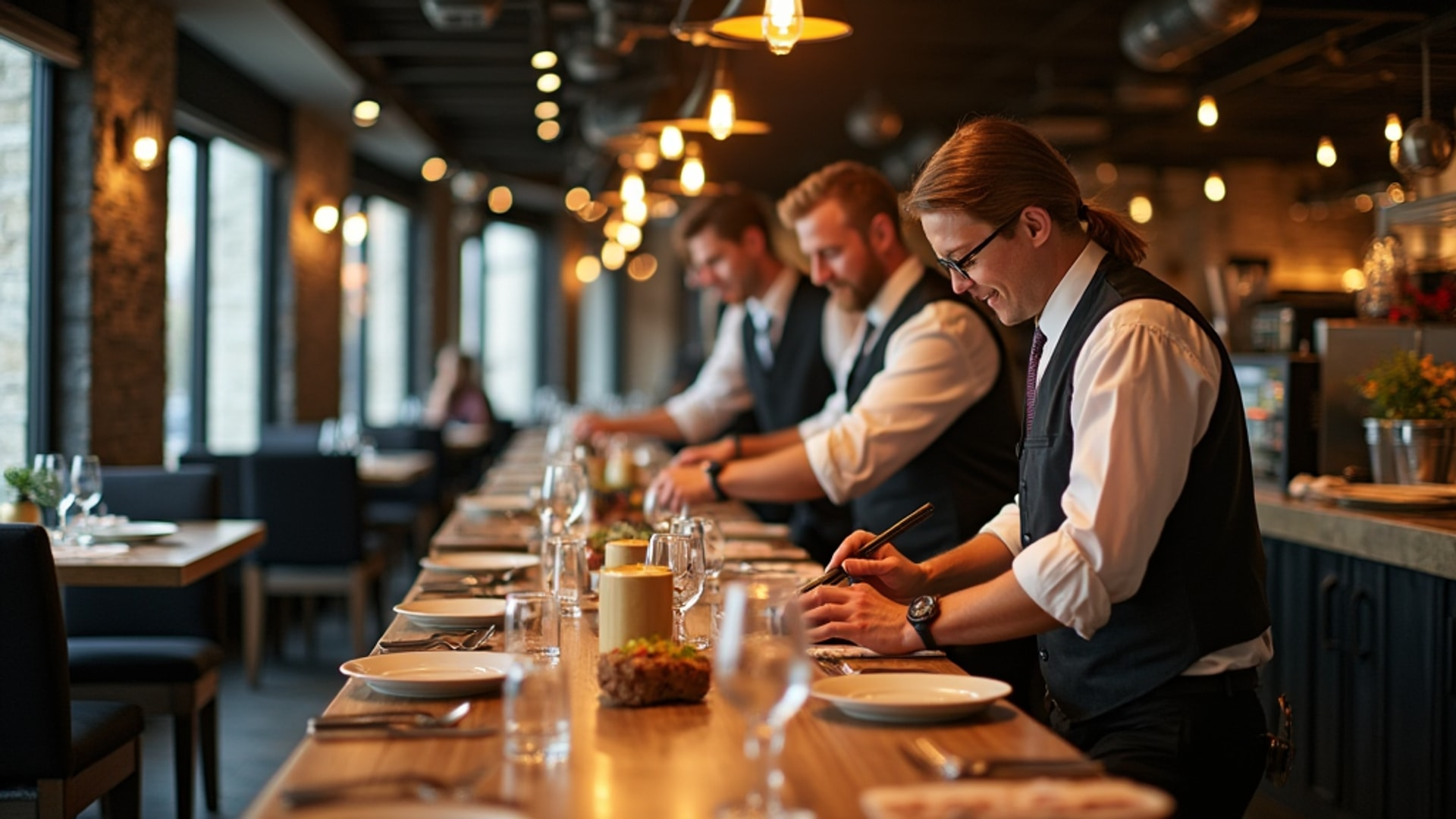
How a restaurant opens tells you almost everything about how it operates. A kitchen where the first service of the day begins with organized mise en place, verified equipment, and a fully briefed team will perform better than one where staff are still prepping while the first guests are seated. The difference is not talent — it is whether opening procedures are treated as a genuine operational discipline or as a formality to rush through.
According to MarketMan, consistent morning prep procedures ensure operations run smoothly, create a reliable customer experience, and maintain food safety standards every day. That combination — consistency, guest experience, and food safety — represents three of the most important outcomes in restaurant management. All three depend on what happens before the first guest walks in.
Who Opens and Why It Matters
The opening sequence has a logical order of arrival. Managers and kitchen leadership arrive first, typically 60 to 90 minutes before service, followed by back-of-house prep staff, then front-of-house setup staff, and finally service staff close to opening time.
This staggered arrival allows the work to proceed in sequence rather than in parallel chaos. According to TouchBistro, managers typically arrive earliest to verify that the previous night’s closing was completed correctly, confirm cash drawer starting amounts match reports, review the day’s reservations and any special events, and assess any maintenance or supply needs that require addressing before service.
Finding a closing problem — an item that was not restocked, a temperature issue in the walk-in, a piece of equipment that needs attention — at opening allows time to resolve it before it affects guests. Finding the same problem mid-service creates exactly the kind of reactive firefighting that degrades service quality and staff morale.
The manager opening walkthrough should be deliberate and comprehensive: kitchen, dining room, bar, restrooms, entry. Thirty minutes of systematic checking at opening prevents the incidents that consume hours later.
Kitchen Opening: Equipment and Temperature First
The kitchen opening sequence should begin with equipment and food safety verification before any prep work starts.
According to MarketMan, back-of-house teams must verify all equipment functions properly: preheat ovens, check refrigeration temperatures, and test cooking equipment. This step cannot be treated as optional or rushed. A walk-in refrigerator that has been running warm overnight — perhaps because the door was not fully closed at closing — represents food safety and financial risk. Discovering it at opening allows for decisions about affected product before service. Discovering it mid-service, when product has already been used, creates a different and worse set of problems.
Specific temperature checks should be logged, not just observed. A written record of refrigeration and holding temperatures creates both an accountability trail and a pattern-detection tool. If a unit consistently reads high on weekday mornings, there is a maintenance issue requiring attention before it becomes a failure.
Once equipment is verified, the receiving and inventory process should begin. Process incoming deliveries promptly with quality checks — temperature verification for proteins and dairy, visual inspection for produce quality, count verification against the purchase order. Deliveries that arrive out-of-temperature or below quality standards should be rejected or documented before product enters the facility.
The chef or kitchen manager should physically verify inventory against prep lists for all menu items, confirming that every ingredient needed for today’s service is in-house and meets quality standards. According to MarketMan, this verification prevents the mid-service discovery of missing ingredients that forces menu substitutions or removal of items. That scenario is manageable once; as a recurring pattern it indicates a fundamental inventory management problem.
Mise en Place: The Prep Work That Makes Service Work
After equipment verification and inventory confirmation comes the prep work that enables service execution.
Prep lists should be calculated from sales forecasts, not generated as standing templates. Review last week’s comparable service, check the reservation book for any changes in expected volume, and adjust prep quantities accordingly. Over-prepping wastes product and labor; under-prepping forces mid-service improvisation.
According to MarketMan, mise en place stations need full preparation with all ingredients portioned, labeled, and accessible. This means every sauce made, every protein portioned, every garnish ready, every station equipped with the specific tools used during service. Pre-service line checks conducted by the kitchen manager confirm that each station meets this standard before tickets start arriving.
Specific tasks in the BOH morning prep include reheating soups and sauces from the previous day if applicable, preparing toppings and portioned extras, setting up sanitizer stations with properly concentrated sanitizer solution, and organizing storage areas for efficient access during service. According to TouchBistro, kitchen closing involves properly storing all remaining food items and conducting end-of-day inventory — so morning prep should begin with that foundation of organized, labeled, properly stored product.
Build in a buffer: aim to complete mise en place 15 to 20 minutes before scheduled opening rather than exactly at opening time. That buffer allows for adjustments, addresses anything discovered in pre-service line checks, and gives the kitchen team a moment to reset before the first tickets arrive.
Front-of-House Setup: The Guest’s First Impression
Every aspect of the dining room that a guest sees before they are seated reflects either care or carelessness. The FOH opening routine creates the physical environment that sets guest expectations for the entire visit.
According to MarketMan, front-of-house morning duties begin with environmental preparation: proper lighting levels for the service period, appropriate music at the right volume, and temperature control verified. These elements seem minor but collectively establish whether the environment feels welcoming or uninhabited.
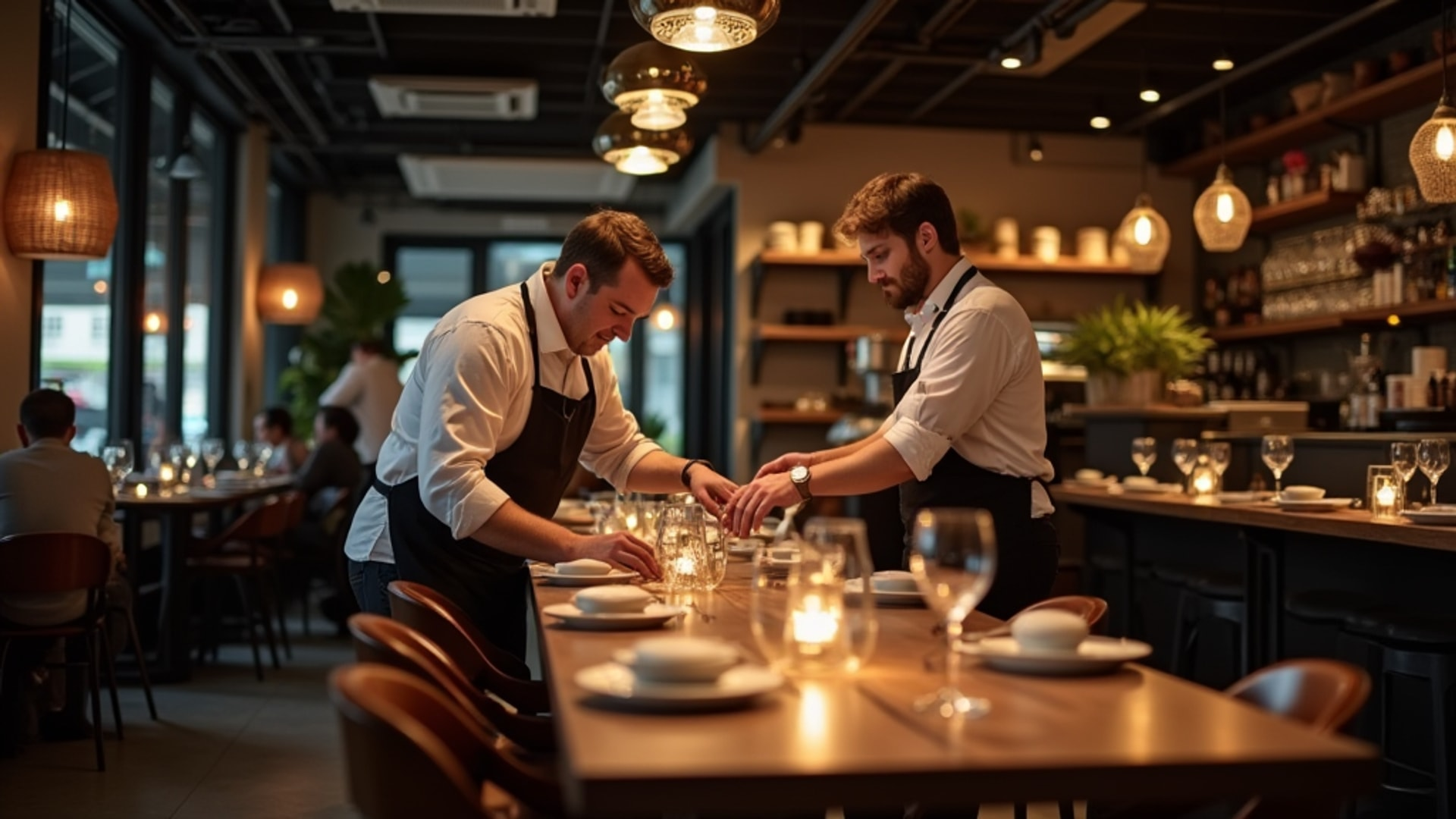
Table setup should be complete and consistent before opening. Furniture arranged according to the floor plan, complete settings with properly positioned utensils and napkins, condiment containers filled and clean, promotional materials or special menu cards in place. Inconsistencies in table setup signal to guests that standards are not rigorously maintained — a subtle but real impression that precedes every interaction with staff.
Supplies must be restocked: napkins, condiments, sugar caddies, and all other table essentials. Server stations need to be stocked with everything needed for service — pens, check presenters, and side work supplies — so servers are not hunting for materials mid-service. According to Lightspeed, each checklist should include restocking duties alongside cleaning tasks and safety checks.
The restrooms require a specific opening check: toilet paper, hand soap, paper towels, trash can emptied, floors clean, and any maintenance issues (dripping faucets, non-functioning fixtures) documented for repair. A guest who encounters an inadequately stocked or dirty restroom in the first five minutes of a visit has their experience anchored downward from that moment forward.
The POS system startup and cash drawer verification happen in parallel with dining room setup. According to TouchBistro, confirming cash drawer starting amounts match reports prevents end-of-day reconciliation issues that can consume significant management time. Reservation review confirms the floor plan configuration makes sense for the day’s expected volume and identifies any large parties, VIP guests, or special requests requiring preparation.
Staff Briefing: The Communication Hub
Approximately 20 to 30 minutes before opening, the opening manager should conduct a brief but structured pre-service meeting with all front-of-house staff.
According to MarketMan, a final staff briefing should communicate the day’s priorities, specials, and any operational notes. This typically covers: the reservation situation and expected volume, any menu changes or 86’d items from last night, the day’s specials with brief descriptions that servers should be able to communicate naturally, any VIP guests or special occasion celebrations requiring preparation, staffing assignments and any adjustments from the scheduled configuration, and any operational or facility information affecting service.
This briefing serves two purposes beyond information transfer. It is the moment when the team becomes a team for that service — aligned, informed, and ready to operate together. And it is the moment when the manager can assess whether everyone is present, in proper uniform, and mentally prepared for service.
According to MarketMan, ensuring all scheduled employees have arrived on time, are in proper uniform, and understand their assigned stations sets the standard for professionalism from the moment doors open. If someone is missing, the manager needs to know before service begins, not after a section is understaffed for an hour.
The Checklist: Making Consistency Systematic
Opening checklists codify all of this into a repeatable, accountable system. According to Lightspeed, clients who implement structured opening and closing checklists report labor cost reductions of 3 to 4 percent simply from holding teams accountable to daily standard operating procedures. The financial case is clear: consistency saves money.
Separate checklists for BOH, FOH, and management roles ensure that each role’s responsibilities are clearly defined and verifiable. Digital checklists add the accountability layer that paper cannot provide: time-stamped completion records, photo verification of completed tasks, and automatic escalation when items are missed.
According to TouchBistro, implementing these checklists digitally enables management oversight without requiring physical presence at every task. A manager can verify from the office that refrigeration logs have been completed and that all table setup tasks are checked off before walking the floor.
The opening routine is not a formality to execute as quickly as possible before the real work begins. It is itself real work — the foundational operational investment that determines whether each service day starts from a position of strength or scrambles to catch up from behind. Restaurants that treat opening procedures with the same seriousness as service execution consistently outperform those that do not.
→ Read more: Restaurant Closing Procedures: The End-of-Night System That Protects Tomorrow’s Open → Read more: Daily Restaurant Operations: The Workflow That Keeps Everything Running → Read more: Restaurant SOPs: How to Build Standard Operating Procedures That Actually Get Followed