Ghost Kitchen Design: Layout and Infrastructure for Delivery-Only Concepts
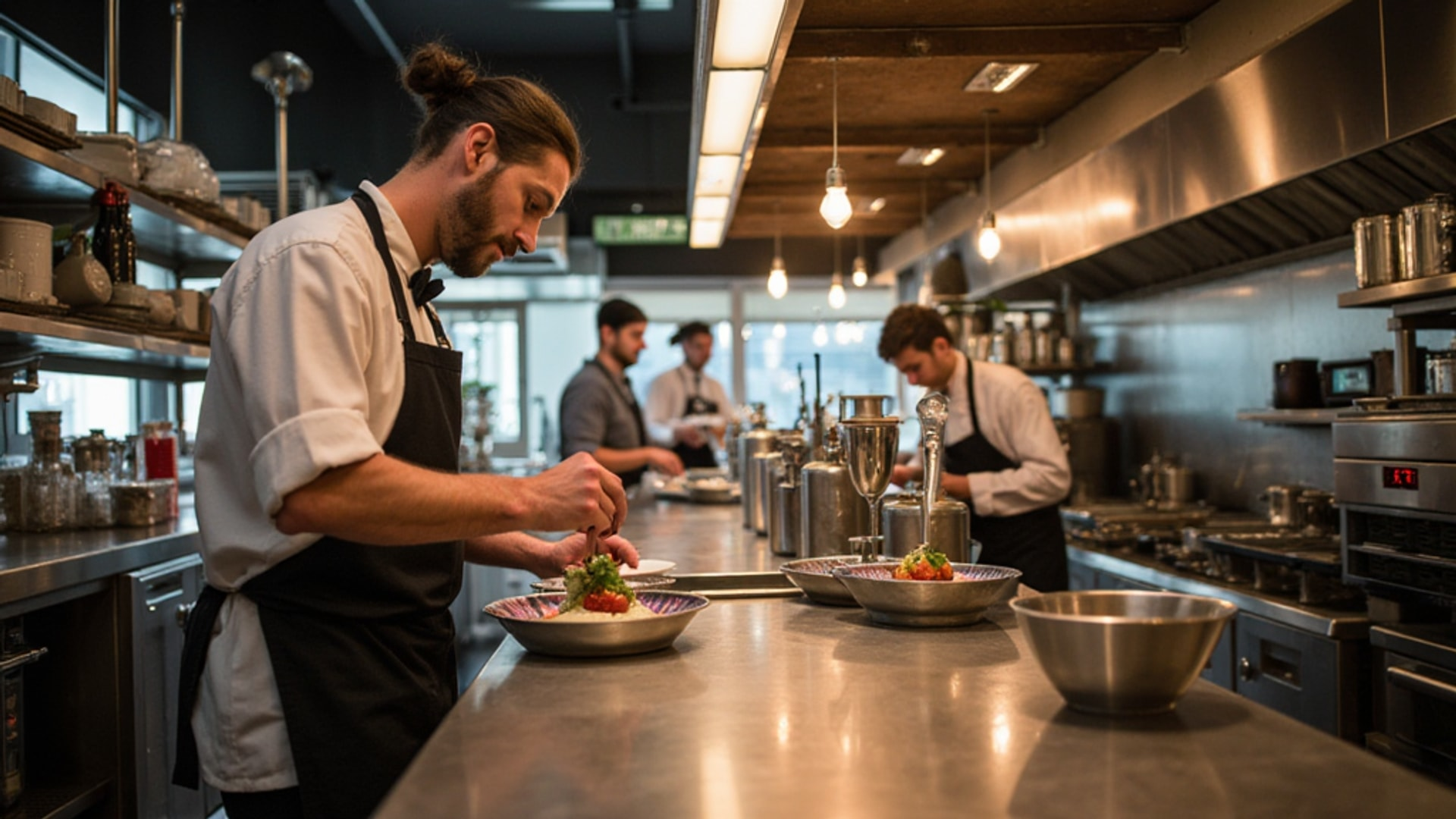
Ghost kitchens eliminate the dining room entirely — every square foot and every dollar goes to production, so the design decisions are radically different.

Ghost kitchens eliminate the dining room entirely — every square foot and every dollar goes to production, so the design decisions are radically different.

Not every successful restaurant needs venture funding or a growth strategy. Worker cooperatives, multi-generational family businesses, and rural community restaurants offer proven alternatives that prioritize people over scale.
How to treat burns and cuts immediately, what a compliant first aid kit requires, and how to build a kitchen emergency action plan that prepares your team for real incidents.

How restaurants use pop-up concepts as a marketing and revenue strategy — to test new ideas, reach new audiences, and generate the kind of buzz that a permanent location cannot manufacture.
Generic messaging apps were not built for restaurant environments — here is how purpose-built communication platforms eliminate shift chaos and keep your entire team aligned.

A six-step method for accurately costing cocktails — from calculating per-ounce spirit costs to applying shrinkage variance and setting prices that hit your target pour cost.

Ghost kitchens strip restaurant operations to their production core — no dining room, no servers, no storefront — and the model is projected to reach $157 billion globally by 2030.
Water filtration is one of the most underrated investments in a restaurant kitchen — here is how the systems work, what they cost, and why scale buildup alone justifies them.

A restaurant bathroom is the only space every guest visits that has nothing to do with food — and it shapes their final impression of your entire operation.

Silo, FREA, and Amass have proven that restaurants can operate with virtually no landfill waste. Here is what their operations teach operators at every scale.
How to implement an integrated pest management program in a commercial kitchen, with specific protocols for prevention, monitoring, and treatment that minimize chemical use near food.

Experiential dining grew 27% in 2024, driven by consumers who want meals that are worth talking about — and the marketing opportunity that creates is significant.