· Case Studies · 12 min read
Food Trucks, Pop-Ups, and Ghost Kitchens: The Alternative Paths to Restaurant Ownership
Seoul Taco started with $18,000 and grew to five restaurants. PopUp Bagels went from weekend preorders to 13 locations. A Texas food truck hit $22,000/week in 7 months. Here are the alternative paths to restaurant ownership that are actually working.
The traditional path to restaurant ownership — raise $500,000 or more, sign a long-term lease, build out a space, and hope customers show up — is not the only path. It is not even the best one for most first-time operators.
Food trucks, pop-ups, and ghost kitchens each offer a fundamentally different risk profile than the traditional brick-and-mortar model. They let you validate your concept with real customers, build a following, and learn the business before betting everything on a permanent location. Or, as many operators are proving, they can be profitable end states in their own right.
This article examines real case studies across all three models, breaks down the economics, and helps you determine which alternative path fits your concept, your capital, and your goals.
This article is part of the Restaurant Case Studies collection on NineGuides.
Food Trucks: The $18,000 Proving Ground
The food truck model’s most compelling feature is its startup cost. According to Starter Story, successful food truck businesses have launched for as little as $41,000. According to UpFlip’s documented case studies, total startup costs as low as $41,000-$43,000 are achievable through trailer financing with as little as $1,000 down.
Compare that to six figures or more for a conventional restaurant, and the risk equation changes fundamentally.
Seoul Taco: From $18,000 to Five Restaurants
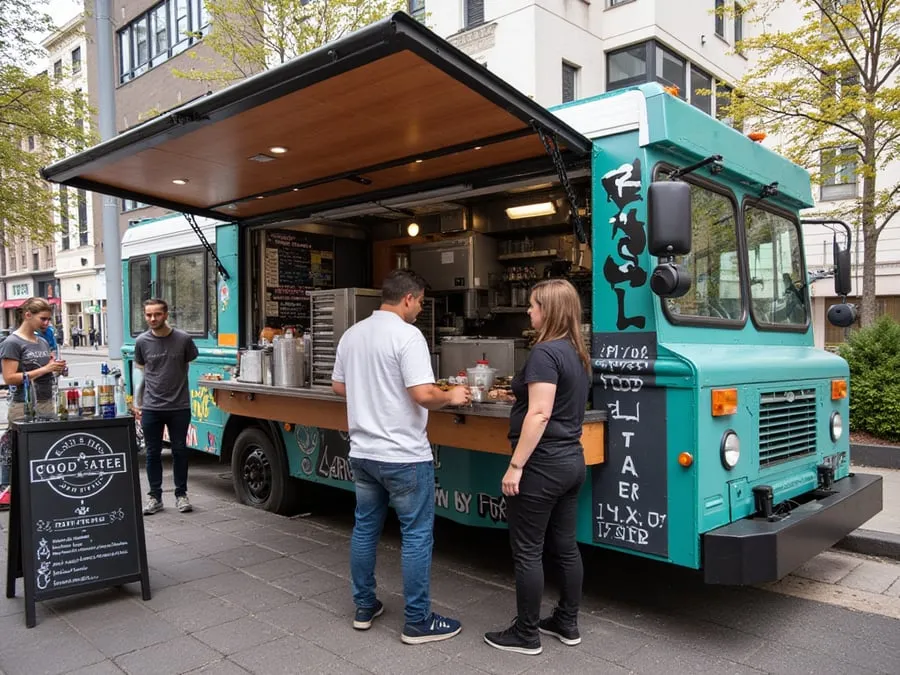
David Choi’s story, documented by Food Truck Operator, is one of the most instructive food truck case studies in the industry. The son of a Korean immigrant pastor, Choi graduated from Central Bible College with a degree in youth ministry and spent years working multiple minimum-wage jobs. By age 26, he had saved $18,000.
He used that money to buy a used 14-foot food truck from Philadelphia. His insight: St. Louis had no Korean cuisine options. His solution: Korean-Mexican fusion, combining family recipes with the taco and burrito formats already familiar to local customers.
On his first day operating at a park event in 2011, Choi served approximately 200 customers in four hours and sold out completely. He quickly pivoted to targeting office parks during lunch hours, using Facebook and Twitter to announce daily locations.
Within one year, he opened his first brick-and-mortar restaurant that doubled as a commissary kitchen for the truck. The business eventually grew to five restaurant locations and multiple trucks, employing approximately 50 full-time equivalent staff.
The Seoul Taco trajectory:
| Stage | Timeline | Investment |
|---|---|---|
| Food truck launch | Day 1 | $18,000 |
| Market validation | First day | 200 customers in 4 hours |
| First brick-and-mortar (commissary + dine-in) | Year 1 | Revenue from truck operations |
| Multi-location expansion | Years 2-5+ | Five restaurants + multiple trucks |
Kogi BBQ: The Social Media Pioneer
According to Starter Story, Kogi BBQ reportedly generated over $2 million in revenue during its first year. The Korean-Mexican fusion truck succeeded through an innovative menu, a social media strategy that used Twitter to announce locations and build anticipation, and strategic positioning where demand was highest.
Kogi demonstrated that food trucks could deliver a premium, sought-after dining experience — not just cheap street food.
The Halal Guys: Cart to $100 Million Franchise
The ultimate food truck scaling story: three Egyptian immigrants started with a simple hot dog cart in New York City in 1990. According to Starter Story, The Halal Guys grew into a global franchise generating over $100 million annually. That trajectory — from street cart to global brand — took decades, but it started with the lowest possible capital investment.
Goody Soul Kitchen: $22,000/Week in Seven Months
According to UpFlip’s documentation, Goody Soul Kitchen in Texas reached $22,000 per week in revenue just seven months after launch — with an owner who had no prior food industry experience and works only 10 hours per week.
The key decisions that drove this result:
- Niche positioning. Late-night soul food after midnight, a category with zero competition in the market.
- Deliberately limited menu. Four proteins, four sides, and cornbread, enabling consistent 5-minute service times.
- Content creator marketing. Before opening, the team hosted a tasting event for influencers who generated social media buzz. The first day produced $2,600 in sales.
- Prep kitchen separation. Approximately 90% of food preparation happens at a commercial prep kitchen ($3,000/month), with only final assembly at the truck.
The startup was remarkably lean: $1,000 down on a $43,000 trailer through financing, plus a $5,000 food service credit line for initial inventory.
Food Truck Economics
According to UpFlip’s case studies, here are the key financial benchmarks:
| Metric | Benchmark |
|---|---|
| Startup cost (trailer model) | $41,000-$50,000 |
| Food cost target | 30-34% |
| Prep kitchen rent | ~$3,000/month |
| Weekly food costs | $3,000-$4,000 |
| Revenue potential (established truck) | $417,000-$1M+ annually |
| Time to profitability | 12-18 months typical |
The food truck industry grew nearly 7% annually from 2014-2019, according to UpFlip, as operators increasingly used trucks to incubate concepts before committing to brick-and-mortar.
→ Read more: Food Truck to Empire: Real Stories of Mobile Dining Success
The Practical Food Truck Blueprint
Based on documented case studies, here is the operational playbook:
- Start with a trailer, not a truck. Significantly cheaper and can be towed with an existing vehicle.
- Begin permitting six months before planned opening. Food truck permits vary dramatically by city and can take months to process.
- Target 5-minute service times. According to UpFlip, speed is the defining competitive advantage. Customers will not wait 20 minutes at a truck window.
- Use a commercial prep kitchen for 90% of preparation. Only final assembly and service should happen at the truck.
- Maintain 6-7 months of expense reserves. The first full year is often unprofitable while building reputation.
- Leverage social media aggressively. For a mobile operation, social media is not optional marketing — it is how customers find you.
- Target guaranteed foot traffic first. Festivals, churches, corporate events, and office parks provide initial customer volume while you build your following.
Pop-Ups: Market Research That Pays You
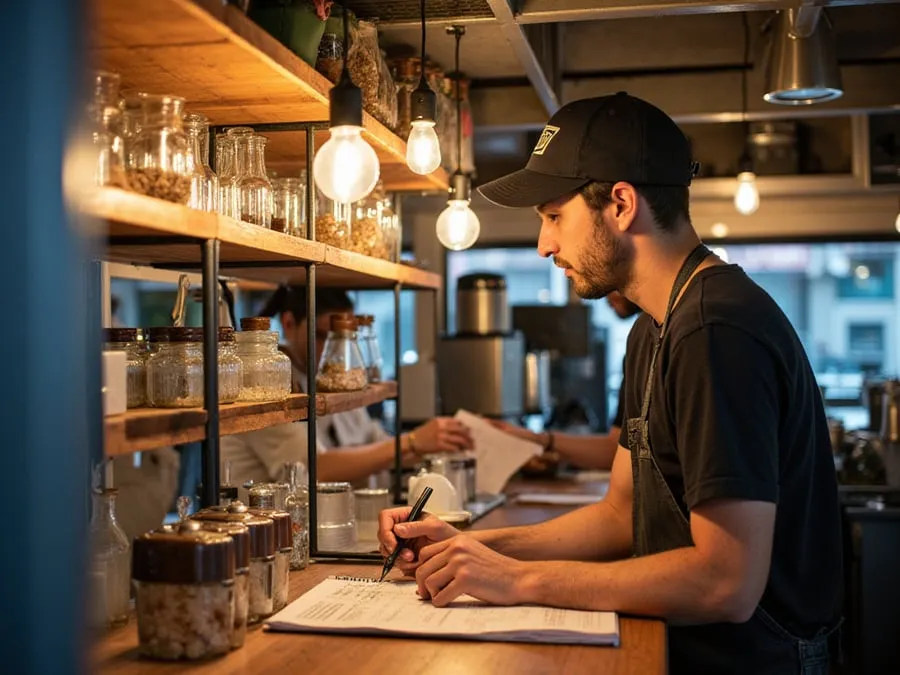
Traditional market research costs money and gives you hypothetical data. A pop-up restaurant gives you real customers, real revenue, and real feedback — and builds your brand in the process.
According to Horeca Webzine, the pop-up restaurant market is projected at $1.2 billion in growth, driven by their ability to build audience, test concepts, and generate buzz before committing to a permanent lease.
Maiz de la Vida: From Instagram to James Beard Nomination
Julio Hernandez launched Maiz de la Vida as a pop-up featuring hand-pressed tortillas and quesabirria tacos. His entire initial marketing budget: an Instagram account, created in 2023. According to Horeca Webzine, the concept went viral, earned a James Beard nomination, and appeared on Phil Rosenthal’s Netflix show. In 2024, Maiz de la Vida opened its first brick-and-mortar location in Nashville’s Gulch neighborhood — entering the market with an established audience and proven demand.
Consider what this pop-up approach saved Hernandez: months of unproven operation, expensive marketing to build awareness from zero, and the risk of committing to a lease before knowing whether the concept resonated.
PopUp Bagels: 0 to 13 Locations
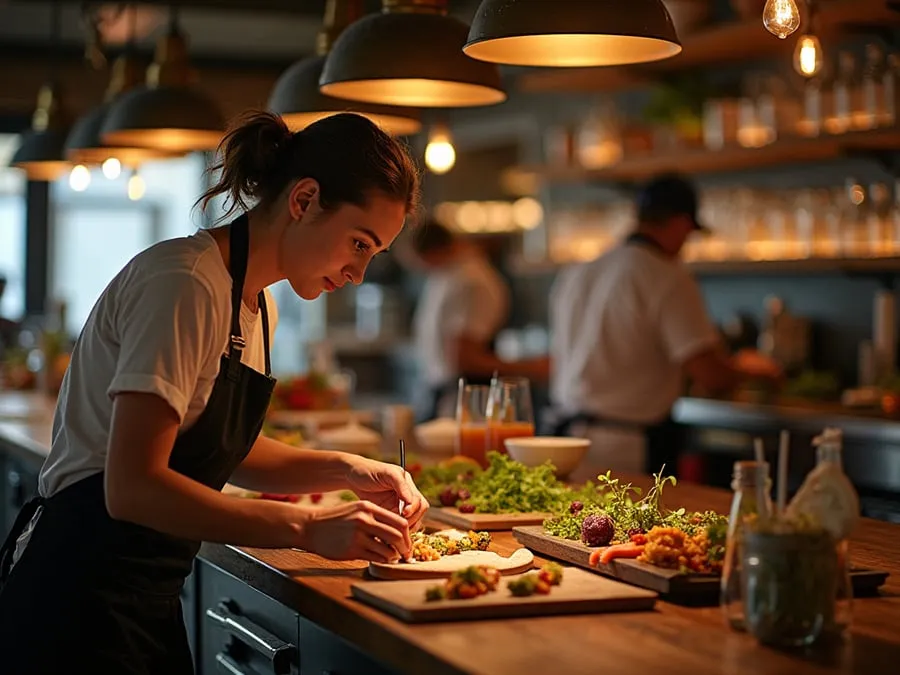
Originally launched as a preorder pop-up in 2020, PopUp Bagels refined its sourdough bagel product, built customer loyalty, and generated media attention through the scarcity and urgency of the pop-up format. By 2025, the concept had grown to 13 permanent locations. The pop-up was not a compromise — it was a growth strategy.
Sixby Cafe: Farmer’s Market as Launchpad
Natasha Gaskill operated a stall at Savannah’s Forsyth Farmer’s Market before opening a permanent all-day cafe in 2024. The farmer’s market served as both a revenue source and a customer acquisition channel. When the cafe opened, Gaskill already knew her customers, her bestsellers, and her local market.
Astral: Pop-Up to National Recognition
Starting as a pop-up taco and pastry concept, Astral gained enough acclaim to land a residency at Duality Brewing in Portland. According to Horeca Webzine, the concept was recognized as one of the 12 best new U.S. restaurants — while still operating in its pop-up format.
Why Pop-Ups Work as Business Strategy
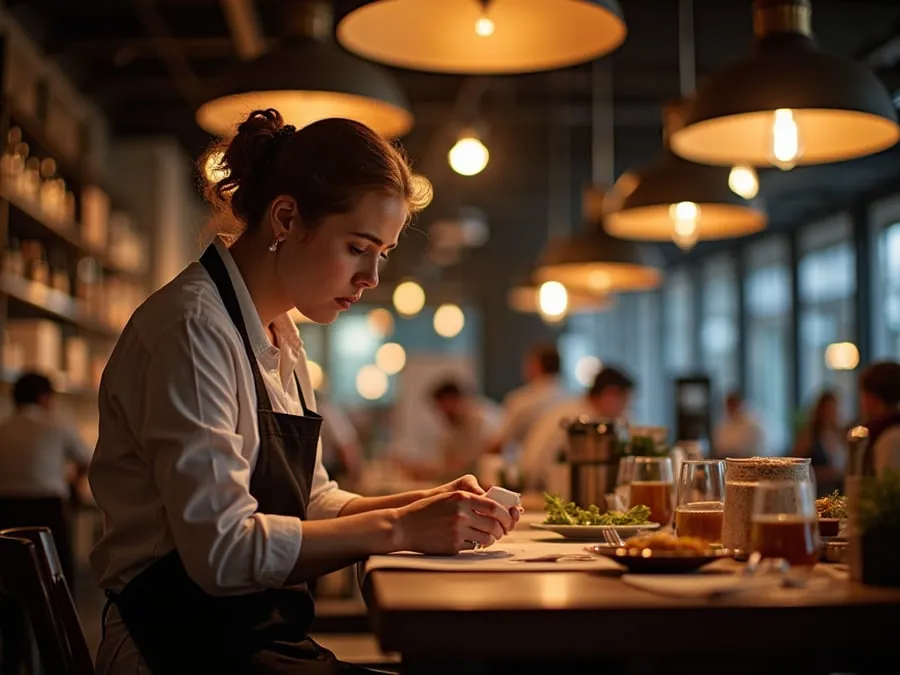
The pop-up model provides advantages that traditional launches cannot replicate:
- Instant market research. You learn what sells, what does not, and what customers wish you would add — while generating revenue.
- Organic audience building. The temporary nature of a pop-up creates urgency. Social media amplifies the exclusivity. Customers share their experiences because the opportunity is limited.
- Recipe and pricing refinement. You can test five different price points in five weekends and optimize before signing a lease.
- Operational systems development. Build your prep procedures, order flow, and team coordination at low scale before scaling up.
- Zero lease commitment. No rent, no long-term equipment financing, no buildout costs.
→ Read more: Pop-Up to Permanent: How Temporary Concepts Become Lasting Restaurants
The Pop-Up to Permanent Transition
The transition from pop-up to permanent is not automatic. According to Horeca Webzine, successful transitions require careful planning around:
- Lease negotiation. Negotiate terms that reflect your proven concept and existing customer base — you have leverage that a first-time operator without a track record does not.
- Permitting. Permanent restaurants require different (and typically more complex) permits than pop-up operations.
- Equipment investment. Your pop-up equipment probably will not support permanent, full-volume operations.
- Staffing. Moving from a solo or duo operation to a fully staffed restaurant is a management transition, not just a hiring process.
- Maintaining the energy. The scarcity and exclusivity that made the pop-up special can disappear in a permanent format. Preserve what made it distinctive.
Ghost Kitchens: The Delivery-First Option
Ghost kitchens — delivery-only operations with no dine-in space — offer the lowest startup cost of any restaurant model. According to CloudKitchens, a ghost kitchen can launch for approximately $30,000 and be operational within 6 weeks, compared to $1 million and 52+ weeks for a traditional restaurant.
The Financial Structure
| Factor | Ghost Kitchen | Traditional Restaurant |
|---|---|---|
| Startup cost | ~$30,000 | $1M+ |
| Space | 200-300 sq ft | 2,100+ sq ft |
| Staff | 3-5 | 25+ |
| Time to launch | ~6 weeks | 52+ weeks |
| Monthly rent | Low (industrial space) | High (customer-facing) |
But the savings come with a significant catch: delivery platform commissions of 15-30% per order. According to CloudKitchens, the approximately 30% commission rate makes profitability challenging without significant volume.
The Multi-Brand Advantage
The most distinctive feature of ghost kitchens is the ability to operate multiple virtual brands from a single kitchen. According to CloudKitchens, successful operators run five or more brands simultaneously, each targeting different cuisine categories. One kitchen can serve five different customer segments across five different delivery platform listings.
The Curry in a Hurry case study, documented by Best of Exports, illustrates the data-driven approach: analysis revealed high weekend demand for a la carte items, leading to a menu expansion that increased average order value by 40%, eventually scaling to three cloud kitchen locations.
The Trust Gap
According to CloudKitchens’ consumer research, 70% of diners prefer ordering from restaurants with publicly accessible physical locations. This trust gap is the ghost kitchen’s biggest structural weakness.
Without a physical presence, you are competing entirely on:
- Delivery platform visibility and search ranking
- Review scores and ratings
- Digital marketing and social media
- Food quality and packaging presentation
Best Use Cases for Ghost Kitchens
Based on documented cases, ghost kitchens work best as:
- Concept validation. Test whether a concept works in a specific market before committing to a full build-out.
- Revenue extension. Existing restaurants adding virtual brands to generate incremental delivery revenue from their existing kitchen.
- Market entry. Entering a new geographic market at low cost before deciding whether to build a physical presence.
- Cuisine testing. Testing whether a specific cuisine category has demand in your market without the full investment of a new restaurant.
Comparing the Three Models
Here is a side-by-side comparison to help you evaluate which alternative model fits your situation:
| Factor | Food Truck | Pop-Up | Ghost Kitchen |
|---|---|---|---|
| Startup cost | $18,000-$50,000 | $1,000-$10,000 | ~$30,000 |
| Time to launch | 3-6 months (with permitting) | 1-4 weeks | ~6 weeks |
| Customer interaction | High (face-to-face) | High (face-to-face) | None |
| Brand building | Strong (visual presence + social) | Very strong (scarcity + social) | Weak (digital only) |
| Revenue ceiling | $400K-$1M/year per truck | Variable (event-dependent) | Scalable with volume |
| Path to brick-and-mortar | Proven (high survival rates) | Proven (strong case studies) | Possible but less tested |
| Ongoing costs | Fuel, commissary, maintenance | Venue fees, variable costs | Platform commissions (15-30%) |
| Key risk | Weather, parking, permits | No consistency/permanence | Platform dependency |
| Best for | Direct customer concepts | Chef-driven/artisan concepts | Delivery-optimized concepts |
The Staged Approach to Restaurant Ownership
The most risk-managed path to restaurant ownership combines these models in sequence:
Stage 1: Validate (Months 1-6)
Start with a pop-up or farmer’s market stall. Test your concept with real customers at almost zero fixed cost. Refine your menu, pricing, and operations. Build your social media following.
Stage 2: Scale (Months 6-18)
Move to a food truck or ghost kitchen. Generate consistent revenue. Develop your operational systems. Build a customer base. Accumulate capital for eventual brick-and-mortar.
Stage 3: Establish (Months 18-36)
Open your brick-and-mortar restaurant with a proven concept, an existing customer base, refined operations, and the financial cushion that comes from having already built a profitable business.
→ Read more: Ghost Kitchen Operations: The Real Economics of Delivery-Only Restaurants
According to the National Restaurant Association, food trucks that transition to brick-and-mortar locations demonstrate notably higher survival rates, with very few closing within the first year. This staged approach is not just lower-risk — it produces better-prepared operators and more sustainable restaurants.
The Hybrid Option
Some operators never fully leave the alternative model behind. Seoul Taco maintains both food trucks and restaurants. The food trucks serve as mobile marketing vehicles reaching new neighborhoods while the permanent locations provide consistency. Other operators keep their pop-up running even after opening a restaurant, using it for seasonal concepts, menu testing, or brand events.
The most resilient food businesses are not locked into a single format. They use multiple channels — truck, pop-up, ghost kitchen, brick-and-mortar — to reach customers wherever they are.
Decision Framework: Which Model Is Right for You?
Choose a Food Truck If:
- You have $20,000-$50,000 in startup capital
- Your concept works as hand-held or easily portable food
- You want direct customer interaction and immediate feedback
- You are comfortable with the logistics of mobility (weather, parking, permits)
- Your long-term goal may include brick-and-mortar expansion
Choose a Pop-Up If:
- You have less than $10,000 in startup capital
- Your concept has visual appeal that works on social media
- You are building a personal or chef-driven brand
- You want to test market response before committing to anything
- You can generate buzz through scarcity and exclusivity
Choose a Ghost Kitchen If:
- You have ~$30,000 in startup capital
- Your food travels well in delivery packaging
- You are comfortable with digital-only marketing
- You want to test multiple concepts simultaneously
- You are focused on volume and data-driven optimization
Choose None of These If:
- Your concept depends on atmosphere, ambiance, or the dining room experience
- You require alcohol service as a significant revenue driver
- Your food does not travel or translate to portable formats
- You need face-to-face customer relationships for your brand
The Bottom Line
The alternative restaurant models are not consolation prizes for operators who cannot afford a real restaurant. They are legitimate business strategies that reduce risk, accelerate learning, and often produce better outcomes than the traditional all-in approach.
Seoul Taco turned $18,000 into a five-restaurant chain. PopUp Bagels grew from weekend preorders to 13 locations. Goody Soul Kitchen hit $22,000 per week in seven months with a first-time operator. The Halal Guys built a $100 million franchise from a hot dog cart.
These are not exceptions. They are a proven pattern: start small, validate with real customers, build systems and following, then expand when the data supports it.
The traditional advice is to go big or go home. The documented evidence says something different: start small, learn fast, and grow with confidence.
→ Read more: Restaurant Startup Costs: A Complete Breakdown