· Design & Ambiance · 8 min read
Restaurant Electrical Requirements: Power, Wiring, and Code Compliance
Restaurants are among the most electrically demanding commercial spaces — underpowering your operation during the design phase is a mistake you'll pay for every day after opening.

Electrical infrastructure is one of those restaurant design elements that’s invisible when done right and catastrophic when done wrong. You don’t notice it on a good service night. You absolutely notice it when a breaker trips during the dinner rush, when a piece of equipment underperforms because of insufficient voltage, or when a health inspection reveals unsafe wiring in a wet zone.
According to Kitchenall’s analysis of commercial kitchen power requirements, restaurants are among the most energy-intensive commercial spaces due to their extended operating hours and high-power equipment demands, with annual electricity consumption ranging from 80,000 to 300,000 kilowatt-hours depending on size and concept. That’s an enormous range, and where you land on it depends almost entirely on the electrical design decisions made during the build-out phase.
This guide covers what restaurant operators need to understand about electrical systems — not to become electricians, but to make informed decisions and ask the right questions of the professionals designing and installing the system.
Why Restaurants Need More Power Than You Expect
The fundamental difference between a restaurant and most other commercial spaces is the density and intensity of electrical loads concentrated in a relatively small area.
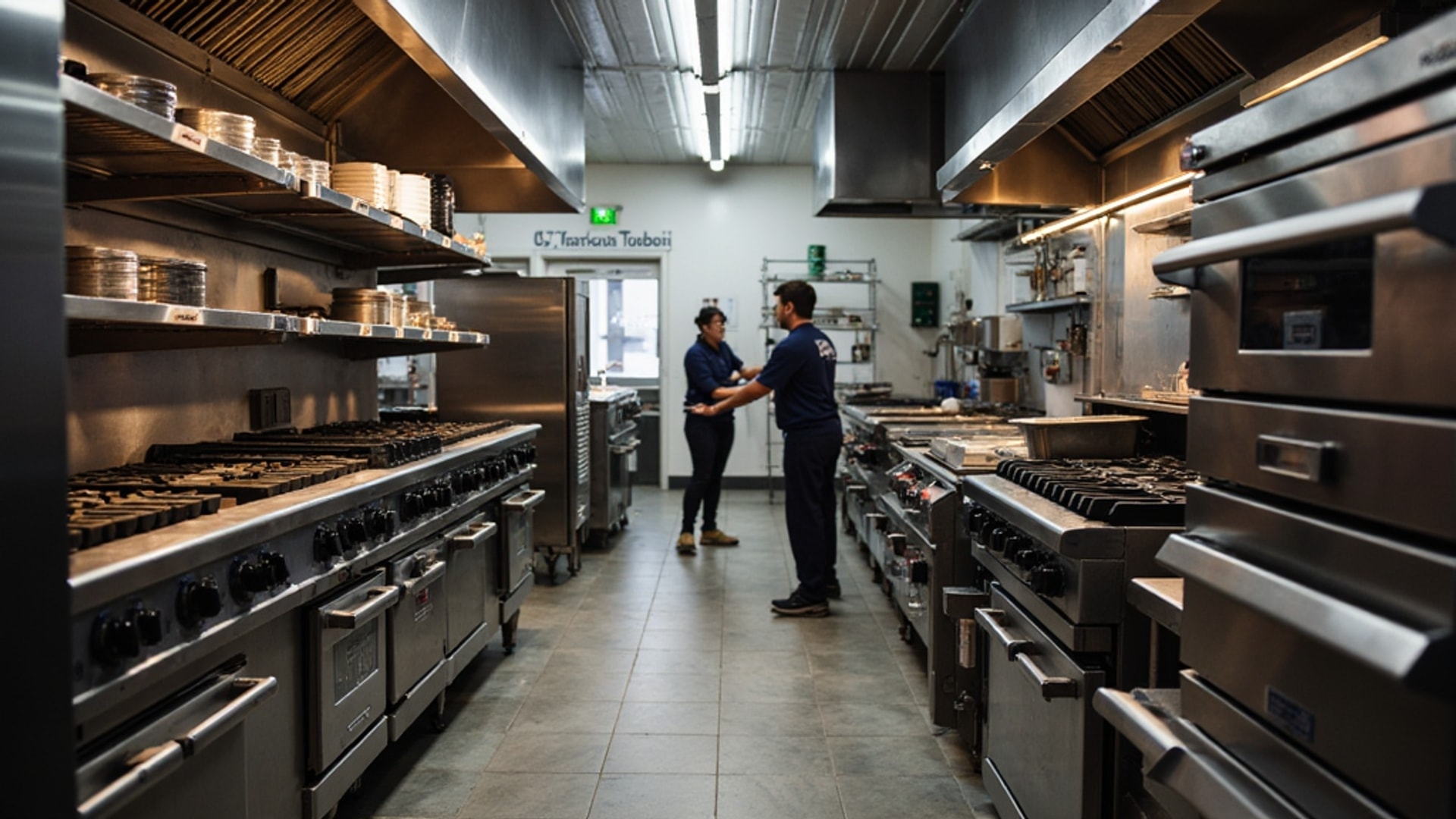
A typical office building might have lighting, HVAC, and computer equipment drawing consistent but moderate power across the entire floor plate. A restaurant kitchen concentrates commercial ovens, fryers, refrigeration systems, dishwashers, exhaust fans, and prep equipment in a few hundred square feet — all of them running simultaneously during service.
Kitchenall’s research is direct on the voltage requirements: commercial kitchens need 208 to 240 volts compared to the standard 120 volts in residential settings. Most commercial cooking equipment is designed for 208V or 240V operation, and attempting to run it on 120V circuits is both unsafe and functionally ineffective. Some high-capacity equipment — large convection ovens, commercial dishwashers, walk-in refrigeration compressors — requires three-phase power, which provides more efficient power delivery for heavy motors and is standard in industrial and commercial applications.
Single-Phase vs. Three-Phase Power
This distinction matters early in the design process, because the type of power service delivered to your building determines what equipment you can run.
Single-phase power is what most residential and small commercial buildings receive. It provides two hot legs and a neutral, delivering 120V between a hot leg and neutral, or 240V between the two hot legs. For smaller restaurants with modest equipment loads — a neighborhood café or small fast-casual operation — single-phase service at adequate amperage may be sufficient.
Three-phase power delivers power more efficiently for high-demand equipment. Large motors — the compressors in walk-in coolers, commercial dishwasher motors, large exhaust fans — operate more efficiently on three-phase power and often require it. If your building doesn’t have three-phase service and your equipment needs it, the utility company must upgrade the transformer and service entrance, which adds significant time and cost to the project.
Identify your three-phase power requirements before you sign a lease. Retrofitting three-phase service into a building that doesn’t have it is expensive and requires utility company involvement and timeline accommodations.
Sizing the Electrical Panel
The electrical panel is the distribution center for all circuits in the building. Panel sizing is expressed in amperes, and the calculation must account for every piece of equipment’s draw, running simultaneously during peak operation.
The standard mistake is sizing the panel for current equipment without reserve capacity. Kitchenall specifically notes that electrical panel capacity must account for future equipment additions and seasonal peak loads. Restaurant concepts evolve — you add a new piece of cooking equipment, you install a second reach-in cooler, you run holiday events that require additional lighting and portable equipment. If the panel is already operating near capacity, any addition creates risk.
The practical approach is to size the panel at 125 to 150 percent of the calculated load. This provides a meaningful buffer for operational flexibility without being wasteful.
Dedicated Circuits for Heavy Equipment
Every high-draw piece of equipment in the kitchen should have its own dedicated circuit. Kitchenall’s analysis is explicit: heavy-duty appliances require dedicated circuits to prevent overloading.
Sharing a circuit between multiple pieces of high-draw equipment creates two problems. First, you risk tripping the breaker when both items draw maximum power simultaneously — an occurrence that’s essentially guaranteed during busy service. Second, voltage drops on a shared circuit can cause equipment to operate below optimal temperature or damage motors over time.
Dedicated circuits should be specified for:
- Commercial convection ovens
- Fryers
- Charbroilers and griddles
- Commercial dishwashers
- Walk-in cooler and freezer compressors
- Ice machines
- Commercial mixers and food processors
Smaller equipment — countertop warming units, immersion circulators, portable induction burners — can share circuits, but the amperage should be calculated against realistic worst-case loads for each shared circuit.
Ground Fault Circuit Interrupters in Wet Zones
Water and electricity in close proximity are an obvious hazard, and the code addresses this directly. According to Kitchenall’s research, Ground Fault Circuit Interrupters (GFCIs) are required in zones prone to water exposure.
GFCI protection is mandatory in commercial kitchens at:
- Prep sink areas and dishwashing stations
- Any outlet within 6 feet of a water source
- Outdoor outlets and any outlet that may be exposed to weather
- Bathroom receptacles
A GFCI device monitors the current flowing in a circuit and trips instantly — within milliseconds — if it detects an imbalance that indicates current is flowing through an unintended path, such as a person’s body. This protection is not optional in areas where wet hands and electrical outlets coexist.
Emergency Lighting and Life Safety Circuits
Emergency lighting is a category that’s easy to overlook in the excitement of design and equipment selection, but it’s a code requirement with zero flexibility. Kitchenall notes that emergency lighting and exit sign circuits must be on independent power sources.
In practice, this means:
Illuminated exit signs must be powered continuously and remain lit even during a complete power outage. This requires either battery backup within the sign unit or a generator circuit. Most commercial installations use self-contained emergency exit signs with built-in batteries that activate automatically when main power is lost.
Emergency egress lighting must provide minimum illumination along paths of egress — corridors, stairways, exits — for a period sufficient to allow safe evacuation. The NEC and NFPA standards specify minimum footcandle levels and duration.
These systems must be tested regularly and maintained on a documented schedule. During health and fire inspections, non-functional emergency lights and exit signs are commonly cited violations.
Wiring Gauge and Heat Management
Wire gauge is not a place to economize. Kitchenall’s analysis notes that wiring must handle appliance loads without overheating, requiring proper gauge specification.
Undersized wire generates heat under load. Heat degrades insulation over time, increases fire risk, and can cause intermittent failures that are difficult to diagnose. The National Electrical Code specifies minimum wire gauges for various amperage levels, but the correct specification also accounts for the length of the run and the installation environment (wire in a conduit bundle runs hotter than wire in open air, which affects allowable current).
Commercial kitchen wiring should always be specified by a licensed electrician with restaurant experience, installed in metal conduit that protects against physical damage, and inspected by the local authority having jurisdiction before the space is occupied.
Energy Efficiency and Long-Term Cost
With annual electricity costs easily reaching tens of thousands of dollars for a midsize restaurant, energy efficiency decisions made during the design phase have compounding returns throughout the business’s life.
Toast’s 2025 restaurant design trend report found that sustainability practices including energy-efficient equipment selection can reduce energy costs by approximately 30 percent on average. That figure covers the full range of efficiency improvements — lighting, refrigeration, cooking equipment, HVAC — but the direction is consistent: investing in efficient equipment pays back in reduced operating costs.
Key efficiency design decisions include:
LED lighting throughout — LED fixtures consume 75 percent less energy than incandescent equivalents and last significantly longer, reducing both energy spend and maintenance labor.
ENERGY STAR-rated commercial kitchen equipment — Refrigeration and dishwashing equipment with ENERGY STAR certification typically consumes 20 to 30 percent less energy than standard commercial alternatives.
Demand-controlled ventilation — Commercial kitchen exhaust systems are major energy consumers. Systems that modulate exhaust fan speed based on actual cooking activity, rather than running at full capacity continuously, reduce energy use substantially.
Occupancy-controlled lighting in low-use areas — storage rooms, stairways, and secondary corridors don’t need continuous illumination. Occupancy sensors ensure lights run only when needed.
Working with the Right Professionals
Electrical design for restaurants is not a DIY project. Kitchenall’s guidance is clear: working with an electrical engineer experienced in restaurant design helps avoid costly mistakes and ensures code compliance across all applicable standards.
The ideal team includes a licensed electrical engineer who designs the system, a licensed electrical contractor who installs it, and the local building inspector who reviews and approves it at each required inspection milestone. The architect or designer coordinates between these parties to ensure electrical design integrates with the overall construction documents.
During the design process, the electrical engineer needs:
- A complete equipment list with voltage, amperage, and phase requirements for every piece of kitchen equipment
- The lighting plan from the interior designer
- HVAC equipment specifications from the mechanical engineer
- The plumbing plan, to coordinate GFCI requirements near water sources
Gathering this information early — before design development is complete — allows electrical design to proceed concurrently with other systems rather than as a late-stage addition that creates conflicts and change orders.
The investment in thorough electrical design pays dividends every service day for the life of your restaurant. The money saved by cutting corners on electrical capacity or wire specification typically costs far more to remedy after occupancy than it would have during construction.
→ Read more: Restaurant HVAC Systems
→ Read more: Fire Safety and Egress Design