· Kitchen · 8 min read
Kitchen Equipment Essentials: What to Buy, What to Skip, and How to Save
Equipment decisions made during buildout shape your operations for a decade. Here's how to plan purchases from your menu outward, evaluate total cost of ownership, and save thousands with energy-efficient choices.
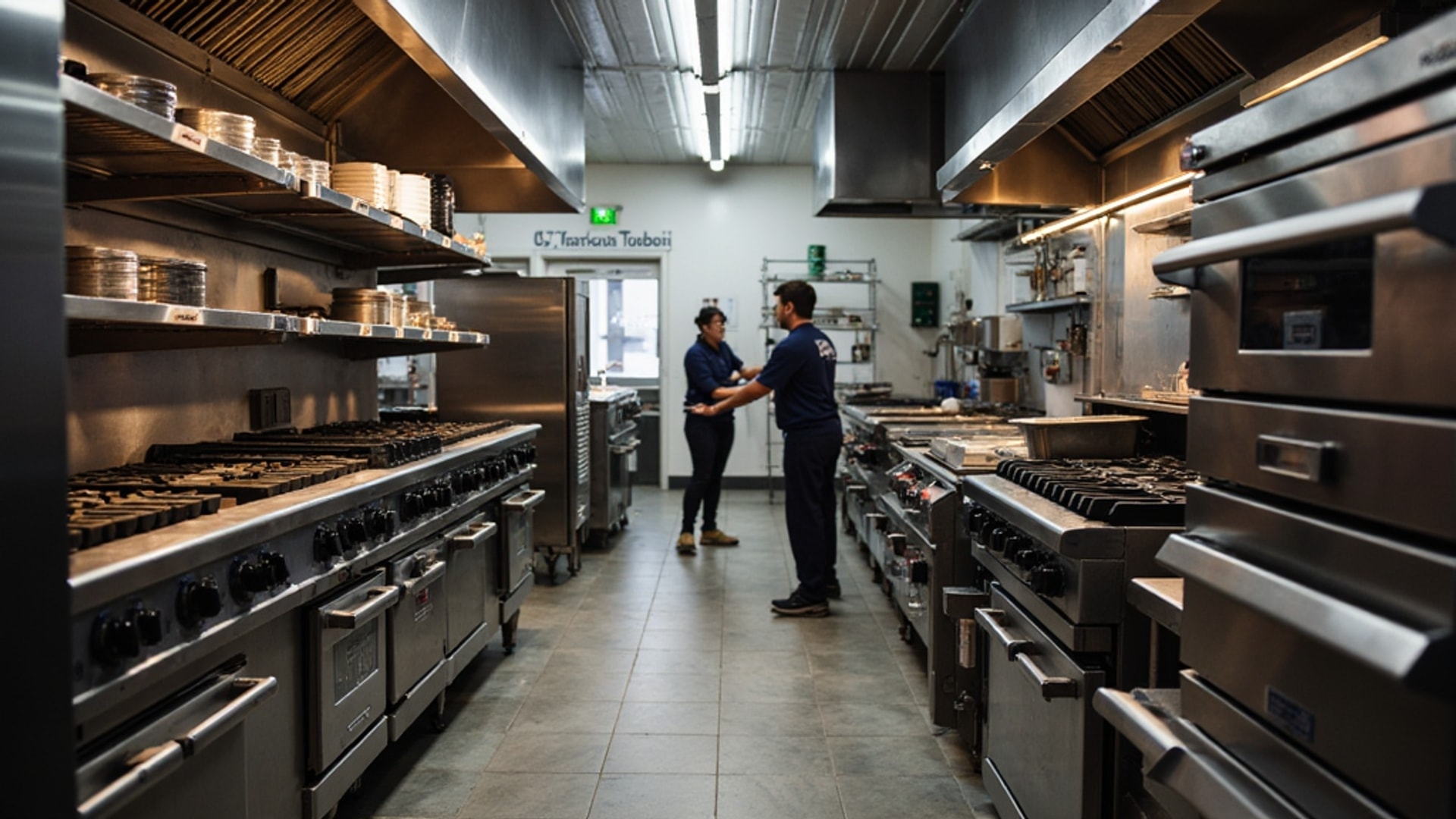
The equipment you buy when you open your restaurant will be with you for 10 to 20 years. A commercial range that works beautifully or one that burns unevenly. A walk-in cooler that holds temperature reliably or one that requires service calls every quarter. A dishwasher that processes racks efficiently or one that bottlenecks your entire closing routine.
These decisions compound. According to The Kitchen Spot, commercial kitchens consume five to seven times more energy per square foot than other commercial spaces, and restaurants typically allocate 3-10% of operating expenses to energy costs. The wrong equipment does not just cost you upfront — it costs you every day in energy, maintenance, and lost efficiency.
Start With Your Menu, Not a Catalog
The foundational principle of equipment purchasing is to plan from the menu outward. According to Restroworks, you should define your restaurant concept, analyze your menu requirements, and purchase only what the menu demands.
A pasta-heavy operation needs mixers, dough sheeters, and pasta machines. A burger concept prioritizes heavy-duty grills and fryers. A sushi restaurant needs specialized refrigeration and rice preparation equipment. A wood-fired pizza concept needs a pizza oven and heat-resistant workspace.
According to Restroworks, conducting a thorough menu analysis prevents over-investing in equipment that will see little use — one of the most common and expensive mistakes new operators make. A $15,000 combi oven is a great investment if you use it daily. It is a terrible investment if it sits idle because your menu does not demand it.
Evaluate Your Space First
According to Restroworks, kitchen space evaluation must precede equipment selection. Measure your layout, identify distinct cooking and storage zones, and use design software to optimize workflow before choosing equipment.
Buying a six-burner range that does not fit your line, or a walk-in cooler that blocks the delivery entrance, creates problems you will live with for years. Measure twice. Buy once.
Major Equipment Categories
Cooking Equipment
This is your production core. What you need depends entirely on your concept:
| Equipment | Best For | Typical Lifespan |
|---|---|---|
| Commercial range (gas or electric) | All-purpose cooking | 10-15 years |
| Convection oven | Baking, roasting, consistent heat | 10-15 years |
| Combination (combi) oven | Versatile: steam, convection, combination | 15-20 years |
| Pizza oven (deck or conveyor) | Pizza-focused concepts | 15-20 years |
| Commercial fryer | Fried items | 7-10 years |
| Flat-top griddle | Breakfast, burgers, versatile cooking | 10-15 years |
| Charbroiler / grill | Grilled proteins, steakhouse concepts | 10-15 years |
Refrigeration
Walk-in coolers, reach-in refrigerators, and freezers are non-negotiable for food safety. According to the topic synthesis, expected lifespans range from 10 to 20 years — making refrigeration one of your longest-lived investments. Buy quality here. A refrigeration failure means spoiled inventory, potential health code violations, and emergency repair costs.
→ Read more: Walk-In Cooler Organization: A System for Safety, Efficiency, and Waste Reduction
Preparation Equipment
Food processors, mixers, slicers, and prep counters. Match the capacity to your volume. A 60-quart mixer is overkill for a 30-seat cafe. A 20-quart mixer will bottleneck a bakery doing high-volume bread production.
Warewashing
According to the topic synthesis, commercial dishwashers have a 7-12 year lifespan. You also need multi-compartment sinks (required by code) and dedicated handwashing stations. Never underestimate the dishwasher — it is the piece of equipment that everything else depends on.
Ventilation and Safety
Exhaust hoods, fire suppression systems, and ventilation are non-negotiable regulatory requirements governed by codes such as NFPA 96. These are not optional purchases — they are code mandates that must be in place before you can pass inspection and open your doors.
→ Read more: Kitchen Exhaust Hood Cleaning: NFPA 96 Requirements and Practical Maintenance
Smallwares: The Operational Backbone
Smallwares get less attention than major equipment, but according to ChefEquipment.com, they are the portable, hand-held tools and cookware that staff interact with for every single order. Your cooks touch these items hundreds of times per shift.
Cutting and Preparation
According to ChefEquipment.com, a professional knife set serves as a chef’s most critical tools:
- Chef’s knife — chopping and dicing, the workhorse
- Paring knife — intricate peeling and trimming
- Serrated knife — bread and delicate items like tomatoes
Knives must be maintained with regular sharpening. Dull blades are not just slow — they are dangerous. A dull knife requires more force and is more likely to slip.
According to ChefEquipment.com, color-coded cutting boards following HACCP guidelines prevent cross-contamination. Each color designates a specific food category — red for raw meat, green for produce, blue for seafood — making misuse immediately visible.
Cookware
According to ChefEquipment.com:
- Stockpots — stocks, soups, boiling pasta in large batches
- Saute pans — wide flat bottom, sloped sides for searing and stir-frying
- Saucepans — smaller, deeper, straight sides for sauce reduction
- Sheet pans — multifunctional from roasting to holding prepped ingredients
- Cast iron skillets — superior heat retention for searing, stovetop to oven
Daily Utensils
Ladles, tongs, spatulas (solid and slotted), whisks, measuring cups and spoons, digital scales, mixing bowls in graduated sizes, food storage containers, squeeze bottles, and hotel pans. All of these see constant use.
NSF Certification
According to ChefEquipment.com, all smallwares should carry NSF certification, confirming they have been tested by the National Sanitation Foundation and meet commercial food safety standards. NSF-certified items are designed to withstand commercial kitchen conditions, clean easily, and resist bacterial harbor points.
Total Cost of Ownership: Beyond the Sticker Price
According to Restroworks, the cheapest equipment is rarely the most economical choice when total cost of ownership is considered. This calculation includes:
- Purchase price — the upfront cost
- Maintenance expenses — repairs, service calls, parts
- Energy consumption — monthly utility costs for the life of the equipment
- Expected lifespan — how many years before replacement
A $3,000 fryer that costs $800 per year in energy and needs $500 in annual repairs costs $16,000 over 10 years. A $5,000 energy-efficient fryer that costs $400 per year in energy and rarely needs service costs $9,000 over 10 years. The “expensive” fryer is actually $7,000 cheaper.
The Energy Efficiency Advantage
According to The Kitchen Spot, ENERGY STAR certified foodservice equipment delivers measurable savings across every category:
| Equipment | Efficiency Gain | Annual Savings | Lifetime Savings |
|---|---|---|---|
| Commercial dishwasher | 40% more efficient | ~$1,500/year | ~$19,000 |
| Steam cooker | 60% more efficient | ~$1,000/year | — |
| Electric convection oven | 20% more efficient | ~$680/year | — |
| Gas fryer | 30% more efficient | ~$410/year | — |
| Hot holding cabinet | 70% more efficient | ~$325/year | — |
| Ice maker | 10% more efficient | ~$145/year | — |
| Refrigerator/freezer | 20% more efficient | ~$100/unit/year | — |
According to The Kitchen Spot, a restaurant using one ENERGY STAR certified unit from each major category can expect combined savings of approximately $4,300 annually and around $50,000 over the lifetime of the equipment.
Those are real dollars that go straight to your bottom line, year after year.
Additional Energy Strategies
According to The Kitchen Spot:
- Strip curtains on walk-in cooler doorways reduce heat infiltration during frequent door openings
- LED lighting uses 70-90% less energy than incandescent bulbs and produces less waste heat
- Induction cooktops transfer approximately 90% of heat directly to cookware, compared to roughly 40% for gas burners
- Demand-controlled ventilation adjusts fan speeds based on actual cooking load, reducing ventilation energy costs by 30-50% during low-activity periods
New vs. Used Equipment
Used equipment offers significant cost savings through depreciation but carries risks. The archive sources recommend a pragmatic approach:
Buy new for critical, high-use items:
- Refrigeration (too important for food safety to risk unknown condition)
- Primary cooking equipment (range, oven — you depend on these every service)
- Dishwasher (a breakdown here stops everything)
Consider quality used for supplementary items:
- Prep tables and work surfaces
- Smallwares and hand tools
- Secondary storage and shelving
- Backup equipment
When buying used, inspect thoroughly. Check for signs of wear on moving parts, verify temperature accuracy on refrigeration, and test all burners and elements. Used equipment typically lacks warranty protection, so factor potential repair costs into your decision.
Maintenance: The Investment That Pays for Itself
According to The Kitchen Spot, equipment maintenance directly affects both energy consumption and lifespan. Establishing preventive maintenance schedules from day one extends equipment life significantly.
Maintenance Schedule
| Task | Frequency | Why It Matters |
|---|---|---|
| Clean refrigeration condenser coils | Quarterly | Maintains heat transfer efficiency |
| Inspect door gaskets | Monthly | Damaged seals force compressors to overwork |
| Clean or replace filters | Per schedule | Prevents fan and pump strain |
| Sharpen knives | Weekly | Safety and cutting efficiency |
| Calibrate thermometers | Monthly | Food safety accuracy |
| Deep clean fryers | Weekly | Oil quality and equipment lifespan |
| Service exhaust hood | Quarterly | Fire safety and ventilation efficiency |
According to The Kitchen Spot, training staff to disable equipment when not in use eliminates the energy wasted by idling machines. A six-burner range running at full flame with nothing on it costs money for every minute it idles.
Equipment Purchasing Checklist
- Complete menu analysis before looking at any equipment
- Measure kitchen layout and identify zones
- Calculate total cost of ownership, not just purchase price
- Prioritize ENERGY STAR certification for major equipment
- Verify NSF certification on all smallwares
- Buy critical items new, supplementary items can be used
- Check lead times — walk-in coolers and hoods can take 12-16 weeks
- Verify equipment fits the space with room for maintenance access
- Confirm electrical and gas capacity supports the equipment load
- Establish preventive maintenance schedule before installation
- Build relationships with reliable service technicians
The Bottom Line
Kitchen equipment is not a place to cut corners — but it is also not a place to buy based on impulse or catalog browsing. Every purchase should trace back to your menu and your operational requirements.
According to Restroworks, successful equipment investment requires balancing upfront costs with durability, energy efficiency, and operational scalability. Plan from the menu outward. Evaluate total cost of ownership. Prioritize energy efficiency. Maintain everything on schedule. The equipment decisions you make during buildout will shape your daily operations, your energy costs, and your food quality for the next decade or more. Make them intentionally.
→ Read more: Kitchen Smallwares: The Essential Tools Every Commercial Kitchen Needs
→ Read more: Restaurant Equipment Financing: SBA Loans, Leasing, and the Right Choice for Your Budget