· Finance · 8 min read
Pour Cost and Beverage Control: Maximizing Bar Profitability
Beverage operations can be your highest-margin revenue source or your most overlooked drain on profit — pour cost control is the discipline that determines which one it is.
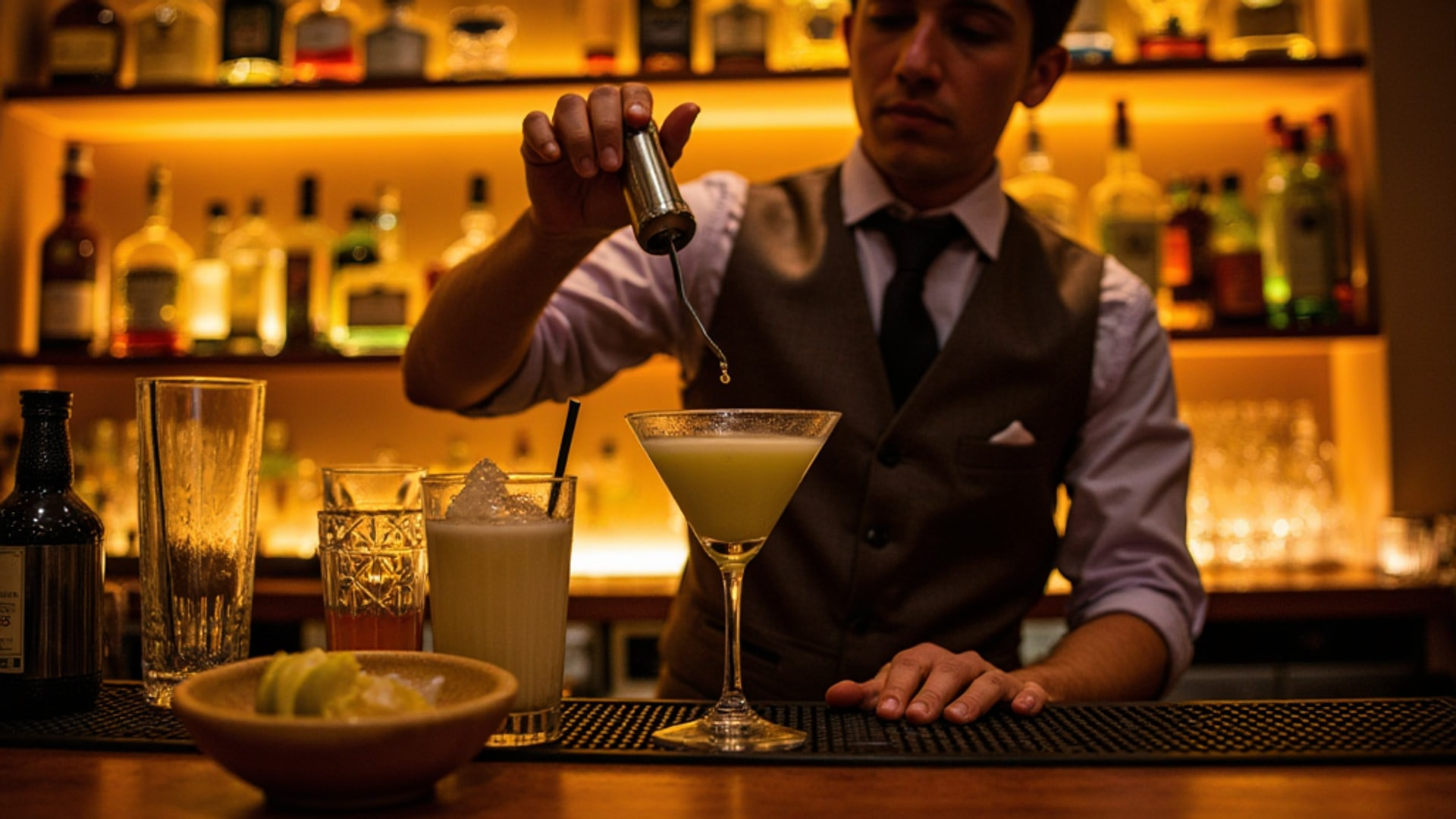
The bar is supposed to be where restaurants make their money. Beverage gross margins — typically 70-80% — are significantly higher than food margins. A cocktail priced at $14 with $2.80 in ingredients generates a better contribution margin than most menu items. The math is compelling in theory and often disappointing in practice, because beverage operations that are not actively managed find ways to consume their theoretical margin advantage through overpouring, waste, inconsistent pricing, and unrecorded sales.
Pour cost control is the operational discipline that closes the gap between theoretical and actual beverage margin. Understanding it — and applying it consistently — is what separates bar programs that drive profitability from those that operate at a perpetual mystery.
The Core Metric: Pour Cost Percentage
Pour cost (also called beverage cost percentage or liquor cost) measures the relationship between what alcohol costs and what it generates in sales. The formula is straightforward:
Pour Cost % = Total Beverage COGS ÷ Total Beverage Sales × 100
According to BackBar’s liquor cost guide, the target pour cost for most bars and restaurants is 18-24%, with 20% as the industry average. At 20% pour cost, beverages generate an 80% gross margin — meaning $0.80 of every dollar in beverage revenue flows to gross profit before labor, overhead, and other operating costs.
These targets vary significantly by beverage type, which is critical context for interpreting your overall pour cost:
- Liquor: ~15% pour cost target
- Draft beer: ~20% pour cost target
- Bottled beer: ~25% pour cost target
- Wine: 30-40% pour cost target
Your overall pour cost is a weighted average of these category-specific rates, determined by your sales mix. A bar that sells mostly premium cocktails should have a lower overall pour cost than one whose sales are primarily bottled beer. If your wine and bottled beer volume is high relative to liquor, running a 26% overall pour cost might represent good performance. Context matters.
Pricing by Category and Tier
Effective beverage pricing requires applying different pour cost targets to different product tiers and categories. WebstaurantStore’s beverage pricing guide establishes a four-tier framework for spirits:
| Tier | Pour Cost Target | Description |
|---|---|---|
| Well | ~30% | House spirits, cheapest options |
| Call | ~25% | Popular mid-range brands |
| Premium | ~20% | High-quality selections |
| Super-premium | ~15% | Top-shelf, luxury products |
The counterintuitive result: your most expensive spirits should have the lowest pour cost, because their higher price allows a lower percentage to represent a meaningful dollar markup. A premium bourbon sold at $18 per pour with a $2.70 ingredient cost runs a 15% pour cost. A well vodka sold at $8 per pour with a $2.00 ingredient cost runs a 25% pour cost. Both are appropriate — the tier targets reflect market expectations and margin optimization simultaneously.
By beverage category, WebstaurantStore’s benchmarks are: 22% for wine, 20% for beer, and 14% for liquor. Different multiplier strategies apply across categories: liquor is typically marked up 4-5 times cost, beer 3-4 times, and wine by the glass runs approximately 3-4 times the per-serving bottle cost.
Calculating Drink Prices
WISK’s cocktail costing methodology provides the foundational formulas used throughout the bar industry:
Step 1 — Liquor cost per ounce: Bottle Price ÷ Ounces in Bottle = Cost Per Ounce
A 750ml bottle (25.4 oz) purchased at $28 costs $1.10 per ounce.
Step 2 — Cost to make the drink: Sum all ingredient costs at cost per ounce × quantity for each ingredient in the recipe.
A cocktail with 1.5 oz of the above spirit plus $0.50 in mixers costs (1.5 × $1.10) + $0.50 = $2.15.
Step 3 — Calculate target price: Drink Liquor Cost ÷ Target Pour Cost % = Minimum Selling Price
At a target pour cost of 20%: $2.15 ÷ 0.20 = $10.75
Step 4 — Add garnish and waste: Garnish costs add $0.25-$1.00 depending on complexity. WISK recommends building in a 20% variance factor for spoilage and spillage, which adds approximately $2.15 to the base price. Final price before rounding: ~$13.25.
Step 5 — Round and market-test: WebstaurantStore recommends rounding to the nearest quarter for menu consistency and register efficiency. At $13.50 or $14.00, this cocktail generates approximately 22% pour cost — within the target range.
WISK notes that average cocktail prices range from $5 to $15, with optimal positioning between $7 and $10 for standard drinks and $15 or more for premium offerings. Market positioning — urban versus suburban, casual versus upscale — significantly influences what the market will bear above or below the formula-derived minimum.
The Overpouring Problem
BackBar identifies overpouring as the single largest controllable cost in beverage operations. Free-pouring — pouring without measuring tools — routinely adds 15-25% to the intended portion size. On a 1.5 oz pour, free-pouring typically delivers 1.7-2.0 oz. At scale, across hundreds of pours per service, this invisible variance erodes margin significantly.
The remedy is measured pouring. Jiggers for cocktail preparation enforce exact specifications. Calibrated pour spouts for wine deliver consistent glass weights. Shot glasses with visible fill lines work for straightforward spirit pours. These tools feel slow to bartenders trained on free-pouring, but the financial argument is simple: a 0.25 oz overpour on every drink, at a busy bar pouring 200 drinks per night, at $1.10 per ounce spirit cost, wastes $55 per night — roughly $20,000 per year in ingredient cost going to pour variance rather than revenue.
The solution is not eliminating bartender skill; it is channeling that skill into guest experience, cocktail quality, and speed of service while using measurement tools to enforce consistency. Bartenders who make this adjustment consistently find that their professional reputation improves because their drinks taste the same every time.
Inventory Management for Beverages
Beverage inventory control requires a different approach from food inventory because alcohol has a longer shelf life, higher per-unit value, and higher theft risk than most food items.
Weekly or bi-weekly bottle counts: Physical inventory counts of every item in your bar, compared against beginning inventory, purchases received, and theoretical consumption based on POS sales. BackBar recommends calculating pour cost monthly or weekly — more frequent than the typical monthly food cost calculation — because beverage inventory moves in predictable units (full bottles, open bottles by weight) that make accurate counting relatively straightforward.
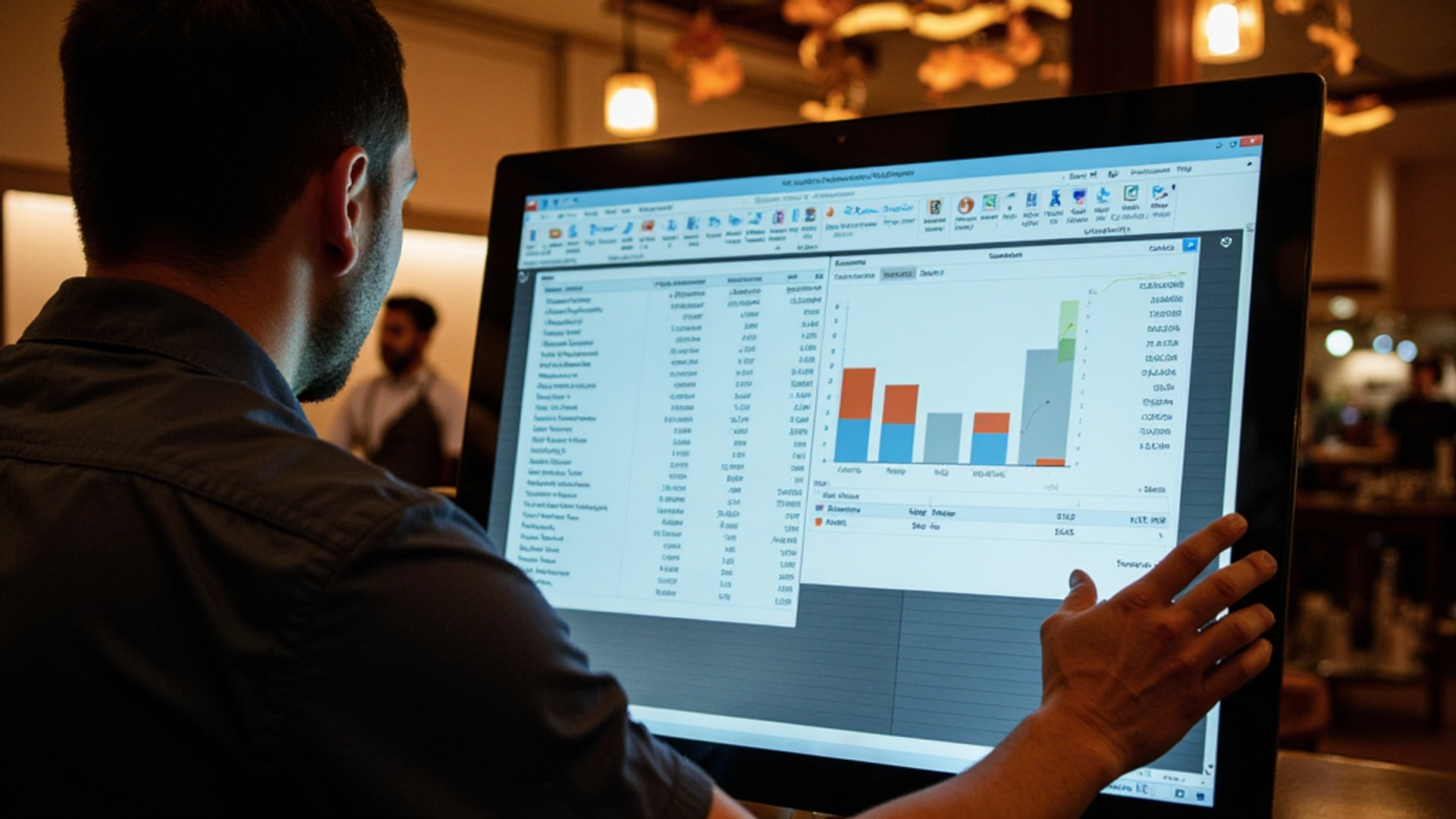
Theoretical versus actual comparison: Your POS system records exactly what was sold. Multiply the number of each menu item sold by its recipe’s ingredient quantities, and you can calculate the theoretical consumption of every beverage item. Compare that to actual inventory reduction. Significant discrepancy between theoretical and actual usage indicates overpouring, unrecorded pours, waste, or theft — each requiring different corrective action. Effective inventory management is critical for identifying the root cause.
Weight-based tracking for open bottles: Partially consumed bottles are estimated by weight. A standard pour scale converts the bottle weight to ounces remaining, enabling precise counts of open bottles rather than estimating by visual level. This level of precision is standard at well-managed bar operations and eliminates a significant source of inventory inaccuracy.
Variance thresholds: A 0.5-1.0% variance between theoretical and actual pour cost is typical and acceptable. Consistent variance above 2% indicates a systematic problem worth investigating. WISK recommends regular recalculation as spirit prices fluctuate seasonally and with supply chain changes — a pour cost that was accurately priced six months ago may need adjustment if your key ingredient costs have shifted.
The Menu Engineering Angle
Not all drinks are equally profitable, and not all popular drinks are equally marginal. The same menu engineering logic that applies to food menus applies to drink menus: identify which items combine high popularity with high contribution margin (your stars), which are popular but margin-challenged (prime candidates for price adjustment), and which are neither (candidates for removal or replacement).
WISK’s cocktail costing framework enables this analysis. Once you have costed every drink on your menu, you can calculate the contribution margin (selling price minus ingredient cost) for each item and cross-reference it with POS data on actual sales volume. This analysis typically reveals that 20-30% of bar menu items account for 60-70% of total beverage margin contribution.
Promoting your margin stars — featuring them prominently on the menu, training staff to suggest them, creating seasonal variations that maintain the same core recipe — directly improves beverage profitability without changing any pricing.
→ Read more: Menu Engineering Principles: Build a Menu That Sells What You Want to Sell
Setting Up the System
Effective beverage cost control does not require complicated technology. It requires consistent execution of a few core disciplines:
- Cost every drink on your menu at current ingredient prices
- Set prices using the formula, adjusted for market positioning
- Enforce measured pouring through tools and training
- Count inventory on a regular schedule (weekly for high-volume operations)
- Calculate actual versus theoretical pour cost each period
- Investigate and respond to variances above threshold
The discipline compounds quickly. An operation that moves from 28% actual pour cost to the 20% target on $500,000 in annual beverage revenue recovers $40,000 in gross profit annually — without adding a single customer or raising prices. That is the financial argument for taking beverage cost control as seriously as the best operators do.
→ Read more: Food and Labor Cost Control: Managing the Two Biggest Lines on Your P&L
→ Read more: Financial Benchmarks by Restaurant Concept: How QSR, Fast-Casual, Full-Service, and Fine Dining Compare