· Kitchen · 8 min read
Commercial Kitchen Lighting: Code Requirements and Best Practices
FDA Food Code minimum illumination levels, fixture certification standards, and practical design choices that keep your kitchen safe, compliant, and functional.

Kitchen lighting is not an aesthetic decision. It is a food safety requirement, a worker safety requirement, and a health code requirement — all rolled into one system that most operators underinvest in until an inspector flags a violation. Get it right from the design phase, and it costs almost nothing extra. Fix it after construction, and you are retrofitting fixtures into ceilings that were not designed for them.
What the FDA Food Code Requires
The FDA Food Code establishes tiered minimum illumination levels based on the type of work performed in each zone. The Cenza commercial kitchen lighting standards guide lays out the specific requirements:
| Zone | Minimum Illumination |
|---|---|
| Food preparation surfaces (knife work, garnishing, plating) | 50 foot-candles |
| Equipment and utensil cleaning areas | 20 foot-candles |
| Walk-in coolers, dry storage, and other storage areas | 10 foot-candles |
A foot-candle is a unit of illuminance equal to one lumen per square foot — essentially a measure of how much light lands on a surface. To put 50 foot-candles in practical terms: a well-lit office might have 30 to 50 foot-candles, and a surgical suite uses 100 or more. Prep surfaces need to be closer to the bright end of commercial lighting because the stakes of a missed bone in a fish fillet or an undetected contaminant on a cutting board are different from the stakes of reading a spreadsheet.
The FDA Food Code is not federal law — it is a model code adopted, with or without modification, by state, local, tribal, and territorial agencies. Most jurisdictions closely follow the FDA minimums, but your local health department may have additional requirements. Verify the specific code in your jurisdiction before finalizing any lighting plan.
Fixture Certification: What the Marks Mean
Not every light fixture belongs in a commercial kitchen. The environment — constant steam, grease vapor, high humidity, harsh cleaning chemicals, and pressure washing — destroys consumer-grade fixtures quickly and creates contamination risks.
NSF International Certification
NSF International certification is the primary standard for kitchen fixtures used in food handling environments. An NSF-certified fixture is designed around contamination prevention: smooth external surfaces without crevices where grease or bacteria can accumulate, sealed housings that prevent glass fragments from contaminating food if a lamp breaks, and materials that resist corrosion from kitchen humidity and chemical cleaners.
When you are purchasing fixtures, look for the NSF mark. If a supplier cannot tell you whether a fixture carries NSF certification, assume it does not.
IP Ratings
The Ingress Protection (IP) rating system classifies how well a fixture resists dust and moisture. An IP65 rating — the practical minimum for most kitchen areas — means the fixture is completely dust-tight and protected against water jets from any direction. This matters because kitchen cleaning involves pressure hoses, steam, and chemical sprays that would destroy an unrated fixture within months.
For areas directly above steam equipment, dishwashers, or open cooking surfaces, consider IP66 fixtures, which offer protection against powerful water jets. The cost difference is modest; the durability difference is significant.
Vapor-Tight Fixtures
The standard fixture design for commercial kitchens is a vapor-tight unit: typically a sealed polycarbonate housing over fluorescent or LED tubes, with a gasketed lens that prevents moisture and grease from entering the housing. These fixtures are designed specifically for wet, humid environments and are the default choice for most kitchen applications.
Fixture Selection and Mounting
Surface-Mounted vs. Hanging Fixtures
Hanging or pendant fixtures accumulate dust, grease, and debris on their top surfaces. In a kitchen, that means a steady reservoir of contamination sitting above your food. Surface-mounted or recessed fixtures eliminate this problem by presenting no horizontal surface for accumulation.
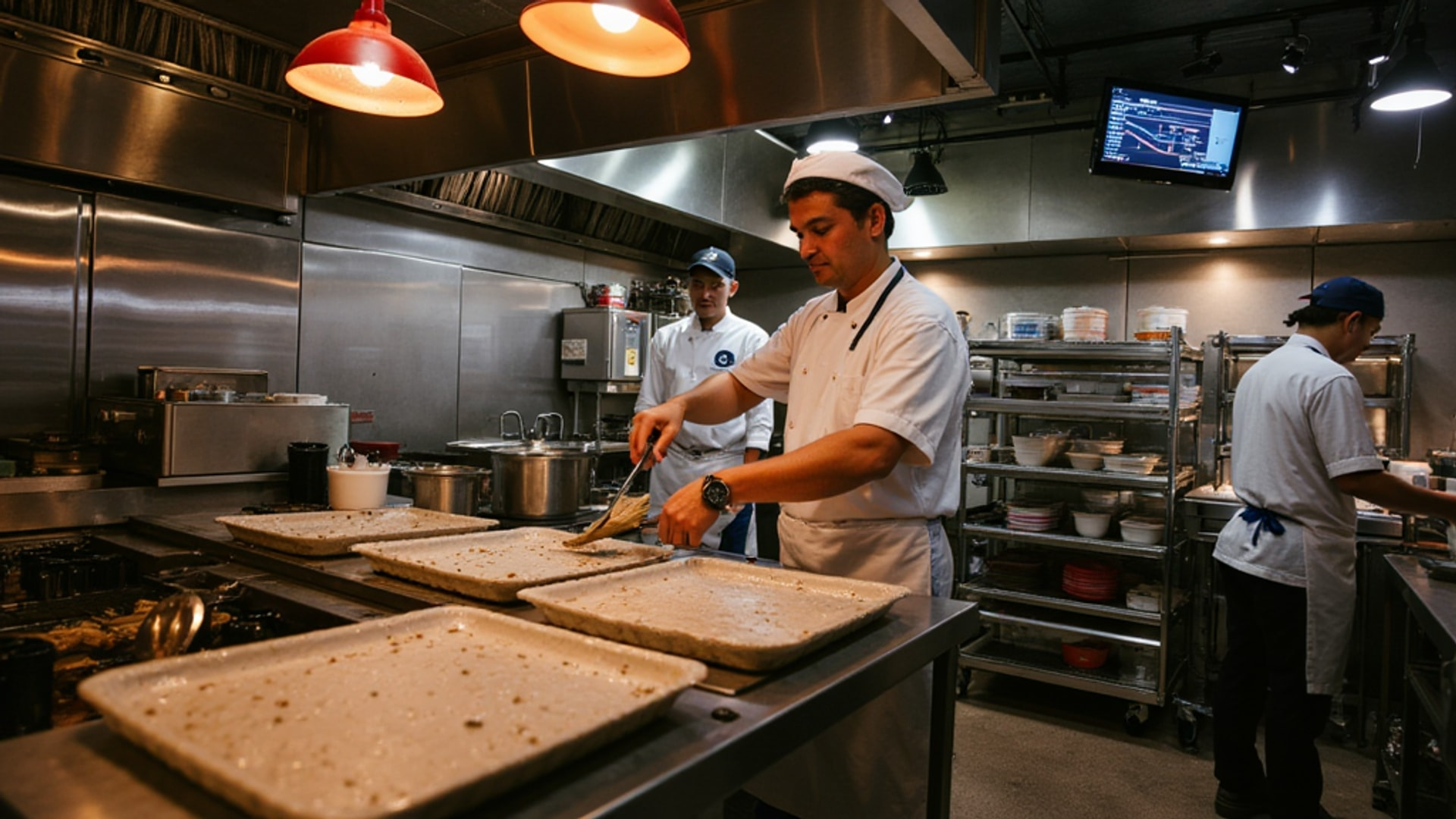
Where pendant fixtures are used in open kitchens visible to dining guests, they must be cleaned as frequently as other food-contact surfaces — which in practice means daily cleaning becomes part of the kitchen opening or closing checklist. Factor that labor into your decision before choosing exposed fixtures for aesthetic reasons.
Fluorescent vs. LED
LED is the current standard for new kitchen installations and retrofits. LED lighting uses 70 to 90 percent less energy than incandescent bulbs and produces significantly less waste heat. In a kitchen where temperature management is already a challenge, reducing the heat output from your lighting system has a compounding benefit on both comfort and HVAC load.
LED also offers longer lamp life — typically 50,000 hours or more versus 10,000 to 15,000 hours for fluorescent tubes. In a 16-hour-per-day operation, that translates to roughly 8 to 9 years before LED replacement versus 2 to 3 years for fluorescent. The maintenance labor savings alone justify the higher upfront cost of LED fixtures in most kitchens.
Color Temperature
Color temperature is measured in Kelvin and affects how food looks to your cooks. A warm color temperature (2700K to 3000K) makes food appear more appetizing but can make it harder to spot contamination or quality issues. A cool daylight temperature (5000K to 6500K) makes colors more accurate and makes it easier to see whether proteins have proper color or whether a surface is truly clean.
For prep and cooking areas, 4000K to 5000K is the practical range — neutral to cool white that renders colors accurately without the harshness of very high Kelvin sources. Warmer temperatures can be used in dining areas and service windows if you choose to integrate the aesthetics, but the production areas should prioritize accuracy.
Glare and Reflection Management
Stainless steel surfaces, wet floors, and shiny countertops create significant glare in commercial kitchens. Excessive reflections cause eye fatigue and can create safety hazards by temporarily blinding workers — a serious problem when someone is working near fryers or handling sharp knives.
Three design choices reduce glare:
Indirect lighting: Bouncing light off the ceiling and walls before it reaches the work surface creates a diffused, shadow-free illumination that is easier on the eyes than direct fixture-to-surface lighting.
Diffused fixtures: Frosted or prismatic lenses spread the light source over a larger area rather than concentrating it into bright spots.
Fixture placement angles: Fixtures positioned to illuminate work surfaces at an angle rather than directly overhead reduce specular reflections from shiny surfaces. This requires deliberate planning — a lighting consultant or experienced kitchen designer is worth engaging for this calculation.
Emergency Lighting
Emergency lighting must activate automatically during power outages. This is not just a fire code requirement — it is a practical safety necessity. A kitchen during a power failure contains active burners, hot surfaces, sharp tools, and staff in motion. Exit paths and primary work areas must remain lit enough for safe evacuation.
Emergency lighting is typically battery-backed and tested on a regular schedule. Include emergency fixture locations in your initial lighting plan rather than adding them as an afterthought.
Zone-by-Zone Lighting Plan
Working through a typical restaurant kitchen:
Prep area: 50 foot-candles minimum. Multiple fixtures positioned to eliminate shadows on cutting boards and work surfaces. LED with 4000K to 5000K color temperature. Vapor-tight, IP65-rated, NSF-certified.
Cooking line: 50 foot-candles minimum. Heat from cooking equipment rises, so fixtures must be installed with adequate clearance and heat-rated housing. Vapor-tight fixtures rated for higher temperatures near intense heat sources.
Pass and plating area: 50 foot-candles minimum for the work surface. Some operators add adjustable task lighting at the pass to give the expeditor better visibility for quality control checks.
Warewashing area: 20 foot-candles minimum. This area sees intense moisture and cleaning chemicals. IP65 or IP66 rated fixtures are essential. The focus here is on verifying that dishes and equipment are actually clean — adequate illumination makes a visible difference in compliance.
Walk-in coolers and freezers: 10 foot-candles minimum. Cold storage fixtures must be rated for low-temperature operation. Standard fluorescent lamps lose significant output below freezing; LED fixtures maintain performance in cold environments without requiring warm-up time.
Dry storage: 10 foot-candles minimum. Lower standard, but still sufficient to read labels and inspect packaging without strain. Consider motion-activated lighting in storage rooms to reduce energy consumption in areas used intermittently.
Maintenance Program
Even the best fixtures require a maintenance program:
- Monthly: Inspect all fixtures for moisture infiltration, damaged lenses, and failed lamps. Clean external surfaces as part of the regular kitchen cleaning schedule.
- Quarterly: Test emergency lighting systems for battery function and automatic activation.
- Annually: Audit illumination levels with a light meter to verify compliance. Lamp output degrades over time, and a fixture that met the 50 foot-candle standard at installation may fall below compliance after two or three years of use.
Keep a log of inspections, replacements, and readings. Health inspectors may ask for evidence of ongoing maintenance, and the log demonstrates diligence.
Building It Right from the Start
The best advice for new builds and major renovations: involve a lighting designer or kitchen design consultant in the early planning stages, not after the ceiling is framed. Fixture locations depend on ceiling height, equipment placement, hood positions, and the dimensions of each zone. Getting those positions wrong during construction means working around them — or paying to reroute electrical runs after the fact.
The investment in proper lighting is not large relative to total kitchen buildout costs. Vapor-tight NSF-certified LED fixtures cost more than standard commercial fixtures, but the difference measured against a $150,000 to $250,000 equipment package is minor. The compliance, safety, and operational benefits make it one of the most cost-effective decisions in the kitchen design process.
→ Read more: Restaurant Kitchen Layout: A Complete Guide to Getting It Right
→ Read more: Kitchen Safety Training: Burns, Cuts, Ergonomics, and Emergency Response
→ Read more: Restaurant Lighting and Ambiance: A Practical Design Guide