· Legal & Compliance · 10 min read
Fire Code and Occupancy Requirements for Restaurants
How occupancy limits are calculated, what fire suppression systems are required, egress rules, and the inspection obligations that determine whether your restaurant can legally stay open.

A fire marshal can shut your restaurant down in minutes. Not because of a fire — but because you are over your posted occupancy limit, your hood suppression system certification has lapsed, or your emergency exit is blocked by a delivery cart. Fire code compliance is one of the most visibly enforced areas of restaurant regulation, and violations are not negotiated at a desk. They happen in real time on your busiest Saturday night. Understanding the requirements before you open, and maintaining them operationally, is the difference between a thriving business and an emergency closure.
How Fire Code Regulation Works
Restaurant fire codes are governed primarily by the National Fire Protection Association (NFPA) standards, adopted and enforced by local fire marshals. The NFPA publishes model codes — NFPA 1 (Fire Code), NFPA 101 (Life Safety Code), and NFPA 96 (Standard for Ventilation Control and Fire Protection of Commercial Cooking Operations) — which individual jurisdictions adopt, sometimes with local amendments.
This means that the specific requirements you face depend on what version of which NFPA code your jurisdiction has adopted, what amendments your local fire marshal enforces, and what additional state-level requirements apply. The baseline principles are consistent nationally; the precise thresholds and details vary by location.
QRFS’s comprehensive analysis of restaurant fire safety regulations warns that non-compliance can result in immediate closure, substantial fines, and significant liability if a fire incident occurs. The liability exposure in a fire-related injury or death case, if non-compliance is a factor, can be catastrophic.
Occupancy Classification and What It Triggers
The occupancy limit posted in your restaurant is not an arbitrary number. It is a calculated figure based on fire code methodology, and the classification your restaurant falls into determines which tier of requirements applies to you.
QRFS explains that restaurants with an occupancy limit of 50 or more people are classified as assembly occupancies — specifically NFPA Assembly Group A-2 for restaurants and dining establishments. This classification subjects them to more stringent requirements for fire suppression, alarm systems, emergency lighting, and exit access. Smaller restaurants with occupancy under 50 fall under the mercantile category with generally less demanding requirements.
The assembly occupancy threshold of 50 people covers most full-service restaurants. A dining room that holds 80 guests plus kitchen and bar staff is well into assembly occupancy territory. If your concept is a 200-seat restaurant, you are operating under the most demanding tier of commercial occupancy requirements.
How Occupancy Limits Are Calculated
The occupancy limit is calculated from the net floor area using square-footage-per-person factors based on the type of use. QRFS identifies the key calculation parameters for restaurant spaces:
- Sit-down dining areas: 15 square feet per person
- Standing/cocktail lounge areas: 5 to 7 square feet per person
- Bar areas (with seating): A different calculation that accounts for both seated and standing capacity
A 1,500 square foot dining room at 15 square feet per person yields an occupancy of 100 people. Convert part of that space to a standing cocktail area at 5 square feet per person and the occupancy for that portion rises to 300. The blended calculation for mixed-use dining areas accounts for the different densities in different zones. These calculations directly affect your seating layout and floor plan.
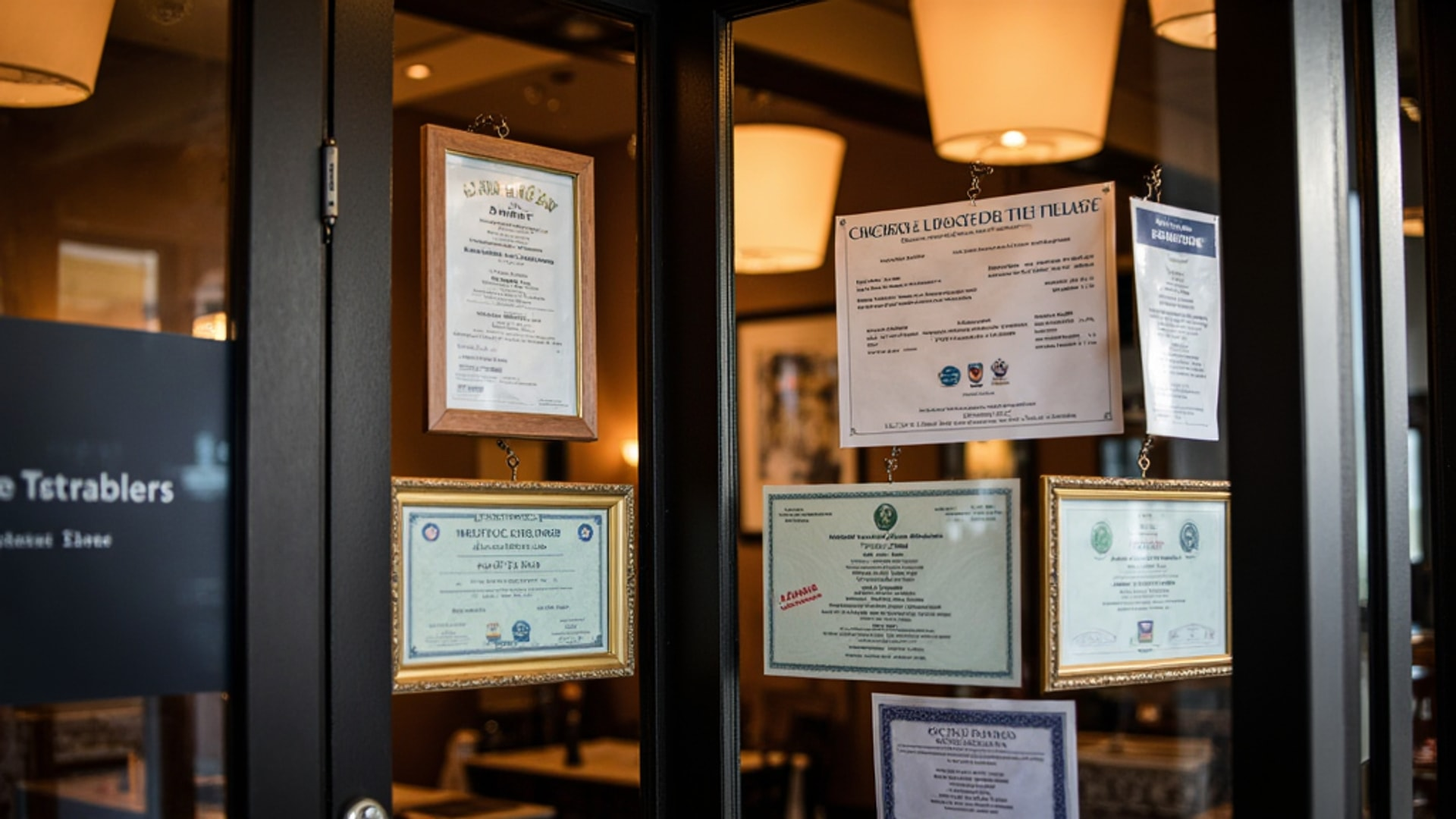
The occupancy certificate showing the maximum allowed number must be displayed prominently — in a visible location accessible to staff and fire marshals. QRFS emphasizes that exceeding the posted limit can result in immediate business shutdown by fire marshals. On a busy Friday night with a line out the door, it is tempting to add one more table or pack in a few more standees at the bar. That decision is a compliance violation with immediate enforcement consequences.
Kitchen Fire Suppression: The Non-Negotiable System
If there is a single fire safety requirement that restaurant operators must understand thoroughly, it is the kitchen hood suppression system.
QRFS identifies the commercial kitchen hood suppression system as arguably the most critical fire safety requirement for restaurants. Under NFPA 96, automatic fire suppression systems — typically UL 300 wet chemical systems — are required for all Type I exhaust hoods serving grease-producing cooking equipment. Type I hoods are used over equipment that produces grease-laden vapors: fryers, griddles, char-broilers, ranges, and similar equipment.
These systems must be:
- Directly connected to the cooking equipment and fuel supplies
- Designed to automatically shut off gas or electricity to cooking equipment upon activation
- Inspected and serviced by a certified contractor at regular intervals (typically every six months for high-volume operations)
- Tagged with the date of the last inspection, visible to fire marshals
→ Read more: Kitchen Fire Suppression Systems: Requirements, Costs, and Compliance
An untagged suppression system or a system whose inspection has lapsed is an immediate compliance violation during a fire marshal visit. An expired suppression system during an actual fire event is a liability scenario with no good outcomes.
Fire Sprinkler Systems: Thresholds That Matter
Fire sprinkler requirements are triggered by occupancy thresholds that capture most mid-to-large restaurant operations. According to QRFS, fire sprinkler systems are required for:
- Establishments with occupancy exceeding 300 people
- Establishments classified as nightclubs (regardless of occupancy, in most jurisdictions)
For high-volume restaurants approaching 300-person occupancy — large dining rooms, event spaces, rooftop venues — sprinkler installation may be required as part of the buildout. This is a capital cost that should be identified during the location selection and buildout planning process, not discovered during a fire inspection after opening.
Some jurisdictions have lower thresholds than the NFPA baseline, particularly for restaurants in buildings of a certain age or construction type. Check with your local fire marshal during the design phase.
Fire Alarm Systems
Fire alarm requirements have their own thresholds. QRFS notes that fire alarm systems are required for all restaurants with occupancy of 300 or more. Again, local jurisdiction may have lower thresholds.
For restaurants below the 300-person occupancy threshold that do not require a full alarm system, other detection requirements still apply — kitchen hood systems must have automatic detection, and NFPA 96 has its own detection requirements for commercial cooking environments.
Egress: Two Exits and What That Means in Practice
The life safety requirements around emergency exits are among the most practical and frequently violated. QRFS identifies the core egress requirements for restaurants:
Two distinct exit routes are required. The exits must be positioned such that a single fire event cannot block both simultaneously. In practice, this means exits on different walls of the building or separated by substantial distance. Two exits next to each other on the same wall do not meet the requirement.
Exit doors must swing outward. Exit doors in the direction of egress travel must swing in the direction of exit. This means they open outward from the interior of the restaurant toward the exterior. Inward-swinging exit doors are a life safety violation.
Exit doors cannot be locked from the inside during operating hours. The door must be openable from the inside without a key, code, or any special knowledge. Deadbolts that require a key to open from the inside are not compliant for egress doors during operating hours.
Exit signs must be illuminated. Exit signs must be visible from any point in the dining room and must be illuminated. Battery backup is required so they remain lit during a power failure.
Emergency lighting must maintain illumination for 90 minutes. In the event of a power failure, emergency lighting must illuminate exit paths for at least 90 minutes, according to QRFS. This allows evacuation even during extended power outages.
The practical implication of these requirements: your exit paths cannot be storage areas. A back-of-house hallway used as a shortcut to a receiving dock — with cases of product stacked on both sides — may fail the egress requirement if it is also the secondary emergency exit. The fire marshal is looking at whether a person could evacuate through that path in an emergency, not whether it technically leads to the outside.
Fire Extinguishers: Class K in the Kitchen
Standard ABC dry chemical fire extinguishers are not appropriate for kitchen grease fires. QRFS notes that Class K fire extinguishers are required near cooking equipment specifically because kitchen fires involve grease and oil that require a different suppression agent.
Class K extinguishers use a wet chemical agent that reacts with cooking oils to form a soap-like substance, cooling the fire and preventing re-ignition. Using a dry chemical extinguisher on a grease fire can cause the fire to flare dramatically. Having the correct extinguisher type, charged and properly mounted, within reach of cooking equipment is a code requirement.
Extinguishers throughout the restaurant must be mounted, accessible, and inspected annually by a certified contractor. Inspection tags must be current.
The Annual Fire Marshal Inspection
Most jurisdictions conduct annual fire inspections of restaurants. QRFS describes what fire marshals verify during inspections:
- Hood suppression systems inspected and currently tagged
- Exit paths clear and unobstructed
- Fire extinguishers properly rated, charged, and current
- Occupancy limits posted and observed
- Emergency lighting functional
- Exit signs illuminated
- Sprinkler systems (where required) inspected and current
- Alarm systems (where required) functional
The difference between a routine inspection and an immediate compliance order comes down to whether the violations the marshal finds are administrative (paperwork, expired tags) or physical (blocked exits, missing extinguishers). Administrative violations typically result in a correction timeline. Physical safety violations — a blocked exit door, a non-functional suppression system — can result in a conditional closure order until corrected.
The Buildout Phase: When to Get Fire Code Right
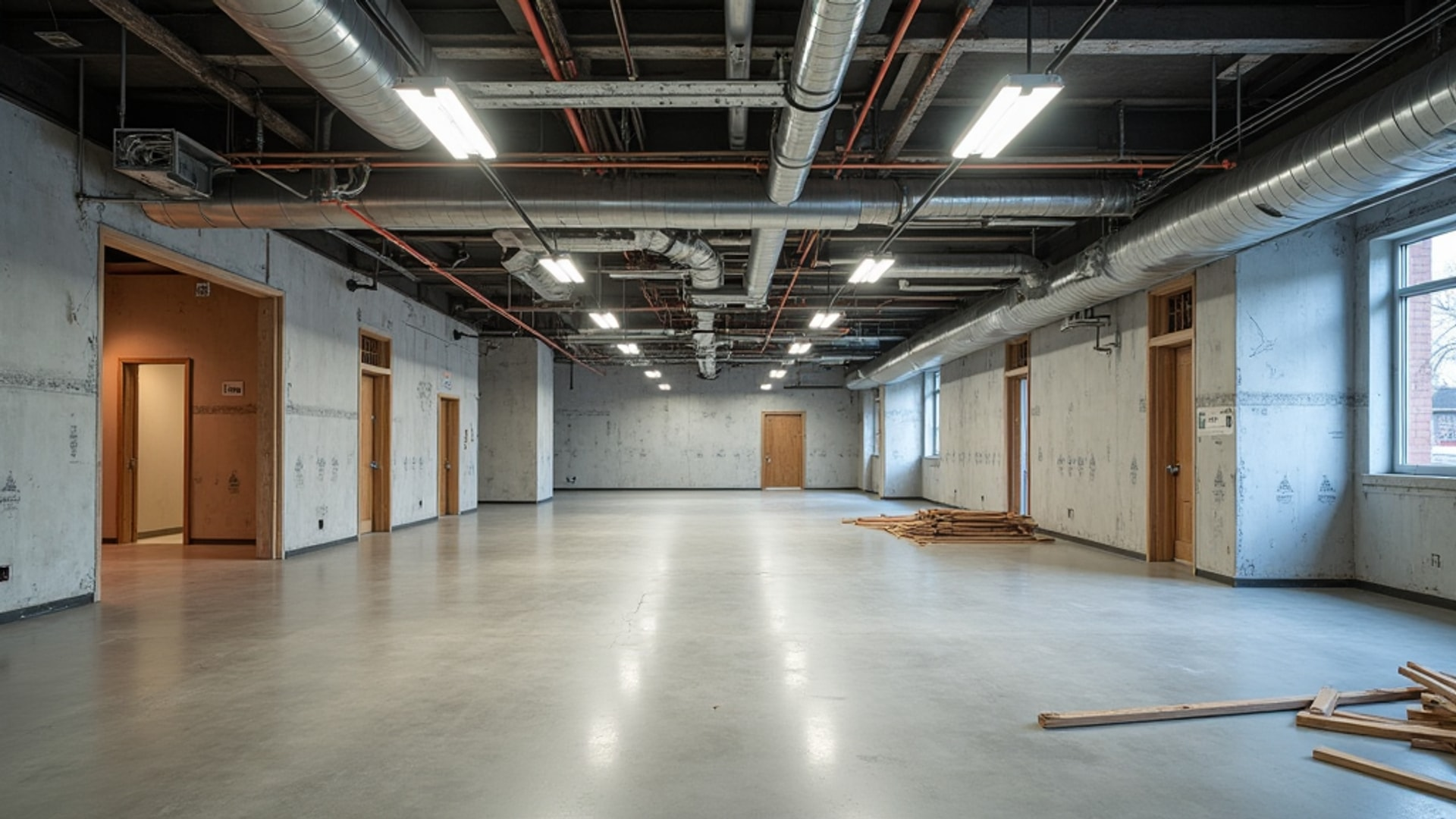
Fire code compliance is dramatically easier and cheaper to achieve during the buildout phase than after opening. Decisions about exit placement, suppression system coverage, sprinkler installation, and occupancy layout made during design are structural and cannot be easily changed after the restaurant is built.
The practical sequence: engage with your local fire marshal during the design phase, before construction plans are finalized. This should be integrated into your restaurant opening timeline.
→ Read more: Restaurant Licenses and Permits: Every Permit You Need and How to Get Them Understand which thresholds apply to your anticipated occupancy, what suppression system configuration is required for your kitchen equipment layout, and what egress requirements apply to your floor plan. Fire marshals are typically willing to review preliminary plans and provide guidance — they would rather help you build it correctly than cite you for violations after construction is complete.
A restaurant opened with fire code violations baked into its physical structure is in a perpetually difficult compliance position. One built to code from the start has a maintenance challenge, not a structural one.
Operational Discipline: The Daily Practice
Fire code compliance is not just an opening checklist. It is an ongoing operational practice. The most common fire code violations found during restaurant inspections are operational, not structural: blocked exits, expired extinguisher certifications, lapsed hood system inspection tags, and occupancy limits exceeded during peak business.
The simplest operational discipline: assign a designated person — a manager or shift lead — responsibility for a weekly fire safety walkthrough. Clear exit paths, verify that emergency lighting functions, confirm that the extinguisher access is unobstructed, and note any concerns that require a contractor visit. Document the walkthrough. When the fire marshal arrives for the annual inspection, this documentation demonstrates ongoing compliance rather than frantic correction.
The cost of that weekly five-minute walkthrough is trivial compared to the cost of a compliance closure, a fire-related liability claim, or a worst-case scenario that results in serious injury.
→ Read more: Restaurant Insurance and Risk Management: Every Coverage You Need and Why
→ Read more: Restaurant Fire Safety and Egress Design: Code Requirements and Best Practices