· Marketing · 7 min read
Restaurant Signage Strategy: How Your Storefront Wins Customers Before They Walk In
How to use exterior signage, window graphics, and storefront design as a continuous marketing channel that converts foot traffic into paying guests.
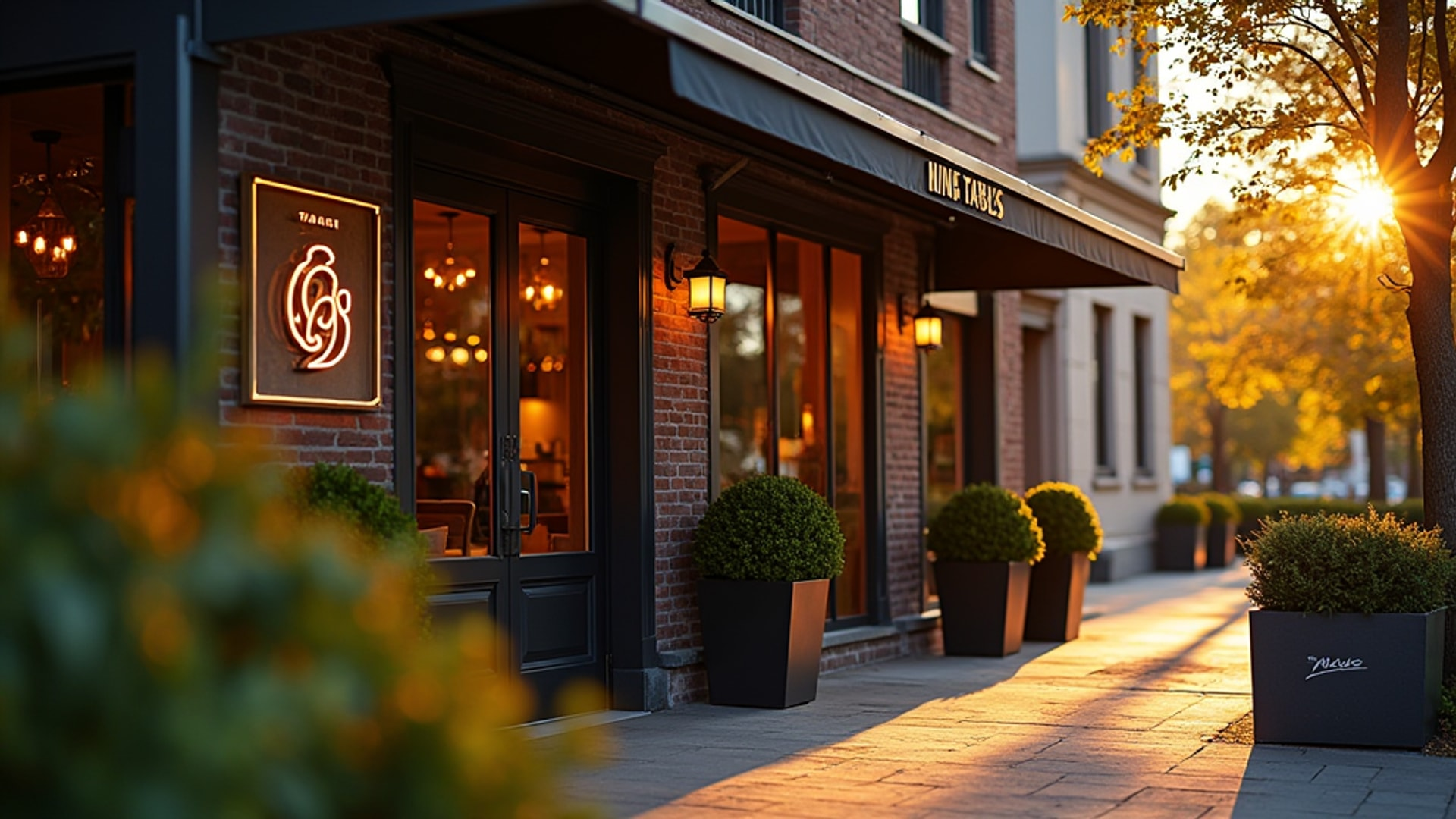
According to Blink Signs, 95% of consumers say a store’s external appearance influences their decision on where to shop. For restaurants, this statistic has direct revenue implications. Every person who walks or drives past your location is a potential customer — and your exterior is constantly making a first impression, whether you have designed it intentionally or not.
Most restaurant operators invest heavily in interior design, menu development, and digital marketing while treating the exterior as an afterthought. The operators who understand signage as a marketing channel gain an advantage that compounds over time: a continuous, 24-hour storefront presence that costs nothing per impression once installed.
Signage as a Marketing Channel
Blink Signs frames signage correctly when they describe it as a sales tool, a brand statement, and often the only chance to capture a customer in real-time. Unlike digital advertising that requires active engagement from a potential customer, exterior signage reaches everyone who passes — including people who were not looking for a restaurant and who would never have found you online.
The foot traffic conversion opportunity is significant. If your restaurant is located on a street with 2,000 pedestrians per day and your signage converts 1% of them into first-time visitors, that is 20 new customers per day purely from exterior presence. Improving that conversion rate from 1% to 2% through better signage is equivalent to doubling your organic reach.
Curb appeal combined with vivid graphics can bring as many customers as a well-planned marketing campaign. This is a marketing channel with zero recurring cost after installation.
The Signage Hierarchy: What You Need and Why
Not every restaurant needs every type of signage. Match your signage investment to your location characteristics and traffic patterns.
Storefront Signs (Primary Identification)
The main sign above your entrance or on your facade is non-negotiable. Storefront signs provide primary identification for street-level locations. This sign must:
- Clearly display the restaurant name
- Be readable from the typical approach distance (30-50 feet minimum for pedestrians; further for drivers)
- Be consistent with your brand typography, colors, and identity
- Be legible in both daylight and after dark
Illuminated vs. non-illuminated: If your restaurant serves dinner, illuminated signage is essential. An unlit sign at 8 PM tells passersby that you are closed or that you do not care. LED backlit channel letters are the current standard for durability and energy efficiency. Design tools like Canva can help with initial concept mockups, though professional sign fabricators handle the final production.
Pylon and Monument Signs (Highway and Parking Area Visibility)
Pylon signs are tall freestanding structures with illuminated panels visible from a distance. These are essential for restaurants located along highways, in strip malls with shared parking, or in locations where the building entrance is set back from the road.
A pylon sign visible at 200 feet from a 45 mph road gives approaching drivers approximately 9 seconds to make a stop decision. That is your marketing window. The sign must be:
- Readable in that 9-second window
- Compelling enough to motivate a stop
- Accurate (hours, open/closed status if applicable)
A-Frame Sidewalk Signs (Daily Specials and Local Conversion)
An A-frame board on the sidewalk targets pedestrians who are already in the consideration zone — close enough to see the entrance, moving slowly enough to read. A-frame sidewalk signs offer flexibility for promoting daily specials and limited-time offers.
This is your most dynamic signage format. Change it daily or weekly to feature:
- The lunch special and price
- Today’s cocktail or wine feature
- Seasonal limited items
- A compelling headline that stops pedestrians
The best A-frame messages are specific and appetizing: “Hand-made pasta, 12-2PM daily” outperforms “Lunch specials available.” Give people a reason to turn and look at your menu.
Window Graphics (Free Marketing Surface)
Window graphics displaying popular menu items entice passersby without additional advertising cost. Large windows are a valuable display surface that most restaurants use for ambient lighting and visibility into the dining room — a missed opportunity.
Window graphics work best when they feature:
- A single hero image of a signature dish (high-quality photography)
- A current seasonal promotion or new menu item
- The essential visit information (hours, website, social media)
Window graphics can be updated seasonally at relatively low cost, keeping the storefront presentation current. A spring garden salad featured in your window in April sends a different signal than a summer cocktail in July — both are relevant, both are fresh.
Awning Signage (Brand Extension)
Awning signage carries brand identity across the building facade while providing weather protection. Awnings with printed brand elements — logo, color, sometimes tagline — extend the restaurant’s visual footprint across the entire width of the building. Well-designed awnings are photographable and contribute to the street-level aesthetic that food photographers and social media users capture.
Design Principles for Effective Signage
Readability at Distance
The most common signage failure is using fonts that cannot be read quickly from the relevant viewing distance. Blink Signs emphasizes that balancing visibility with aesthetics matters more than most operators think. Signs must be readable from afar yet blend with exterior design.
Typography rules for exterior signage:
- Use bold, clean sans-serif or simple serif fonts (no script fonts for primary identification)
- Minimum letter height of 1 inch per 10 feet of viewing distance
- High contrast between text and background (white on dark or dark on light — not mid-tones)
- Limit to one or two typefaces maximum per sign
Brand Consistency
Blink Signs emphasizes that consistent signage design reinforces brand identity across all physical touchpoints. Your exterior signage typography, color palette, and logo treatment should match your menus, uniforms, website, and social media presence.
An operator who invests in a beautifully designed interior and menu but uses a generic “OPEN” sign and a hand-lettered A-frame is sending a mixed signal. Every touchpoint either builds or dilutes brand perception.
Lighting Strategy
Illuminated signage extends marketing impact into evening hours and improves nighttime discoverability, according to Blink Signs. Full options:
| Lighting Type | Best For |
|---|---|
| LED channel letters | Primary storefront sign — durable, energy-efficient, modern |
| Halo-lit letters | Premium, soft glow — suits fine dining positioning |
| LED light boxes | Menu boards, window inserts, promotional panels |
| Neon or LED neon | Statement pieces with retro aesthetic — highly photographable |
| Landscape lighting | Illuminates facade and entrance, extends atmosphere to street level |
Signage Audit: Evaluating Your Current Exterior
Walk outside your restaurant and conduct this assessment with fresh eyes — ideally after a month away so familiarity does not cloud your judgment:
Daytime checklist:
- Is the restaurant name clearly visible from 50 feet?
- Is the exterior visually consistent with the interior design and brand?
- Are hours posted and current?
- Is the window clean and the glass free of fading old promotions?
- Does the A-frame (if any) feature a current, compelling message?
- Is the entrance clearly defined and inviting?
Nighttime checklist:
- Is the primary sign illuminated?
- Are hours and the entrance clearly visible from the street?
- Does the exterior look “open” and welcoming, or dark and uncertain?
- Can someone reading the sign from a passing car identify the restaurant name and type?
Photography test:
- Take a photo of your exterior from the street. Would it stop your scroll on Instagram?
- Is there a visually interesting element that people would photograph?
- Does the photo communicate what kind of restaurant this is?
Investment and ROI Perspective
Quality exterior signage is a capital investment with an indefinite marketing life. A well-made illuminated storefront sign installed today generates impressions every hour the restaurant is open for 10-15 years or more. The per-impression cost over that lifetime is lower than virtually any other marketing channel.
The ROI calculation:
- Installation cost: $2,000-$15,000 depending on size, type, and complexity
- Daily impressions: Depends on foot traffic (100 to 10,000+ depending on location)
- Conversion rate improvement: Even a 0.5% increase in foot traffic conversion
- Revenue impact: At 100 daily pedestrians, 0.5% = 0.5 new customers per day = 182 new customers per year
At an average check of $40, 182 new customers per year = $7,280 additional revenue annually. A $5,000 signage investment pays for itself in under 8 months through incremental foot traffic alone — before counting the branding value that extends for a decade.
Your exterior is your highest-reach, lowest-cost-per-impression marketing channel. Invest in it accordingly.
→ Read more: Restaurant Rebranding: How to Refresh Your Identity Without Losing What Made You Great → Read more: Grand Opening and Launch Marketing for Restaurants → Read more: Brand Identity Creation for Restaurants: Building a Visual Identity That Lasts