· Suppliers · 9 min read
Commercial Ice Machine Selection: Types, Capacity, and Supplier Options
How to calculate the right ice machine capacity, choose the correct ice type, and decide between buying and leasing for your restaurant.
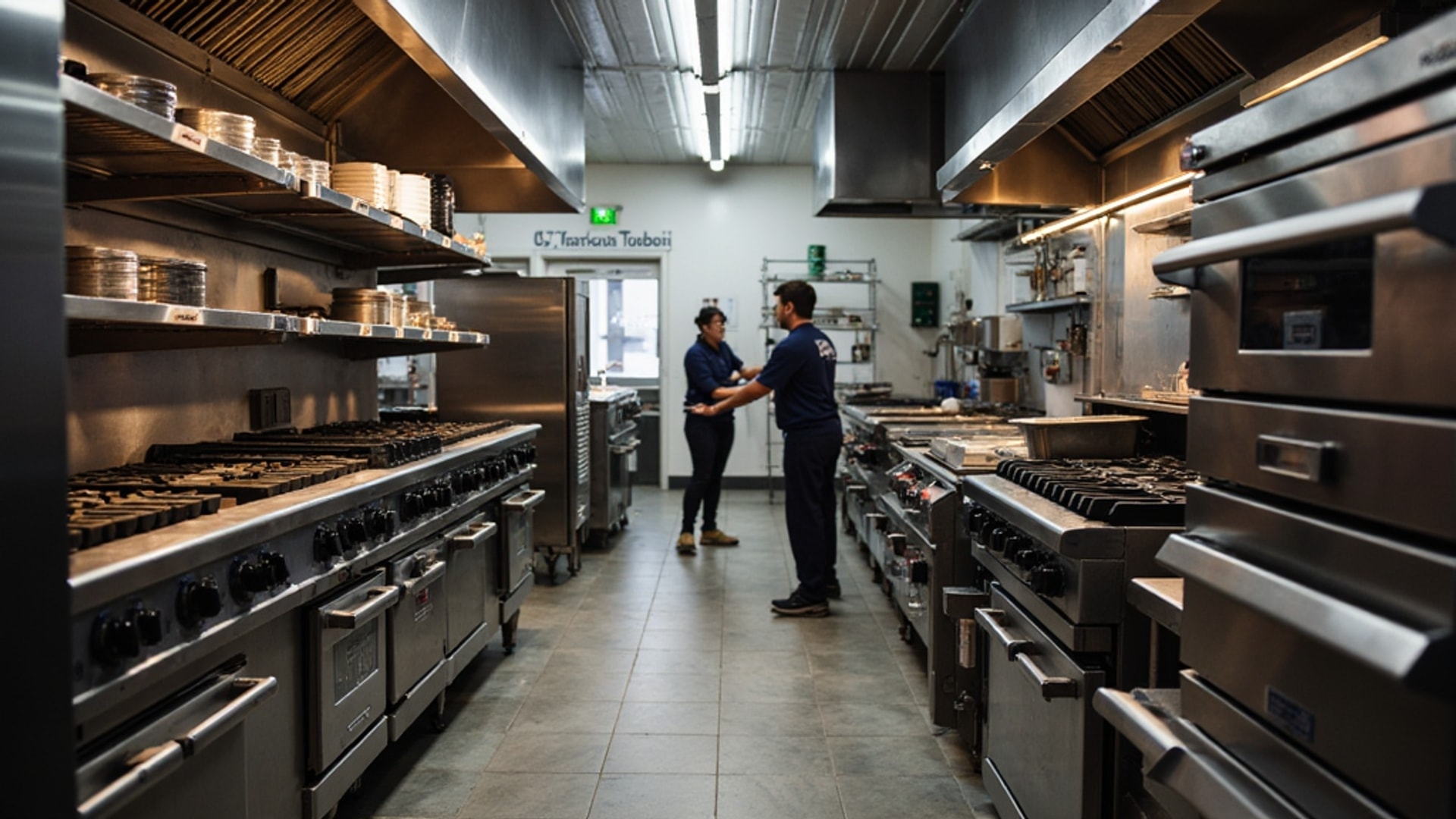
Ice machines are infrastructure, not accessories. When your ice machine goes down, you’re scrambling — bagging ice from a convenience store, rationing for the bar, apologizing to customers waiting for properly chilled drinks. Getting the selection right from the start means years of uninterrupted service. Getting it wrong means ongoing headaches that accumulate quietly until they become a crisis.
The selection process has three layers: choosing the right ice type for your application, calculating the capacity your operation actually needs, and deciding between machine formats and acquisition models. Each layer has real operational and financial implications.
Ice Types: Match the Ice to the Application
Not all ice is interchangeable. The type of ice your machine produces should match how you’re actually using it — and mixing applications with the wrong ice type creates frustration in both the kitchen and the dining room.
Full cube (square) ice is the workhorse for most restaurant and bar applications. Dense, slow-melting, and visually clean, full cube ice is ideal for sodas, water service, and any cocktail where you want minimal dilution. Spirit-forward drinks — an Old Fashioned, a Negroni, a pour of scotch on the rocks — benefit from ice that chills without watering down the product quickly. Your bar program and concept dictate the primary ice type. If you run a full-service restaurant with a bar program, full cube is typically your primary machine.
Nugget ice (also called chewable ice or pellet ice) is soft, porous, and absorbs flavors. It cools beverages very rapidly due to its high surface area. Nugget ice is particularly popular in fast-casual concepts, hospitals, and any operation serving a lot of blended drinks or frozen beverages. It’s also the preferred ice for fountain drink stations in high-volume quick-service environments. Customers who love nugget ice really love it — it has a dedicated following.
Flake ice is soft and moldable, with the highest surface area of any commercial ice type. It doesn’t freeze items solid, which makes it ideal for seafood displays on crushed ice, salad bars, raw bar presentations, and any application where you want items to be kept cold and visually appealing without freezing. Flake ice is also widely used in food processing and for keeping prepped ingredients cold during service. If you run a seafood-focused concept or an elaborate cold display, a dedicated flake ice machine may be necessary.
Most full-service restaurants need primarily full cube ice, potentially supplemented by flake ice for display or kitchen applications. Before buying, walk through every ice use case in your operation and confirm a single machine type covers them, or budget for multiple machines if you have genuinely different needs.
Calculating the Capacity You Actually Need
Ice machine capacity is measured in pounds of ice produced per 24-hour period under standard ambient conditions (typically 70°F air, 50°F water). The catch: real-world production varies with temperature. A machine rated at 500 pounds per day in ideal conditions may produce 20 to 30 percent less in a hot kitchen environment. Factor this in.
The industry standard starting point is 1.5 pounds of ice per meal served. A restaurant running 200 covers per day needs at minimum 300 pounds of daily ice production capacity. Add your bar usage on top of this — each cocktail uses roughly 6 to 8 ounces of ice, and a busy bar can move significant volumes independently of food service.
Then add a buffer. The standard recommendation is a 20 to 30 percent safety margin above your calculated baseline to account for peak days, hot summer weather (when both demand and machine efficiency degrade), and planned downtime for cleaning and maintenance. Running a machine at 100 percent of rated capacity without buffer means any deviation from normal conditions creates a shortage.
For a 200-cover restaurant with a moderate bar program, the math might look like this:
- Food service ice: 300 lbs/day
- Bar ice: 100 lbs/day
- Subtotal: 400 lbs/day
- 25% buffer: 100 lbs/day
- Target machine capacity: 500 lbs/day minimum
Pair machine capacity with adequate storage bin size. A machine that produces 500 pounds per day but has a 200-pound bin requires constant attention to avoid running empty during service. Storage should be sufficient to handle your peak demand period without the machine needing to catch up in real time.
Machine Formats: What Goes Where
Modular ice machine heads are production units that sit on top of a separate ice storage bin. They offer the highest production capacities — often 1,000 pounds per day or more — and allow you to size the production and storage components independently. This is the standard configuration for high-volume restaurants and bars. The trade-off is space: head plus bin requires significant floor or counter space, and installation must account for adequate airflow and drainage.
Under-counter ice machines combine production and storage in a single compact unit, typically producing 50 to 300 pounds per day. They fit under a standard counter and are the right choice for bars with limited space, service stations, and secondary ice needs in a smaller restaurant. Capacity limitations make them unsuitable as a primary ice source for a full-service restaurant doing significant covers.
Countertop ice dispensers are designed for front-of-house self-service stations. They typically produce nugget or small cubed ice and dispense it directly into cups. Fast-casual and quick-service operations use these extensively at beverage stations. They are not designed for back-of-house production.
For most full-service restaurants, the primary setup is a modular head-and-bin configuration for the kitchen and bar, possibly supplemented by an under-counter unit at the bar or a service station where access to a central machine is inconvenient.
Condenser Type: Air vs. Water
This is a specification detail that has real operational implications. Air-cooled machines use ambient air to dissipate heat and require adequate ventilation. They are more common and generally less expensive to operate. Water-cooled machines use water to dissipate heat, making them more efficient in hot environments but consuming significantly more water — relevant both for operating costs and water supply planning. Remote condensers place the heat-generating component outside the kitchen, reducing ambient kitchen temperature but requiring additional installation cost and a longer refrigerant line run.
For most restaurant applications, air-cooled machines are the appropriate choice, but verify that your kitchen ventilation design can support adequate airflow around the unit.
The Buy vs. Lease Decision
This question comes up for nearly every major piece of restaurant equipment, and the honest answer is that it depends on your capital position and risk tolerance.
Buying outright has higher upfront cost but lower long-term expense. Once the asset is paid for, your only ongoing costs are maintenance and eventual replacement. You own the equipment and can account for it as a depreciable asset. For established restaurants with stable cash flow and a clear sense of long-term needs, buying typically provides better total-cost economics over the equipment’s lifespan.
Leasing or subscription models require little or no upfront cost and convert what would be a capital expense into a predictable monthly operating expense. More importantly, many lease agreements for commercial ice machines include full maintenance and repair coverage — meaning when something breaks, the vendor handles it at no additional charge. This dramatically simplifies the ownership experience and eliminates the risk of a large unexpected repair bill.
For new restaurants with limited capital, leasing preserves cash flow for other startup expenses. Ice machine subscription services from brands like Hoshizaki and Manitowoc have become increasingly popular precisely because they remove the maintenance burden from operators who are already managing enough complexity. The monthly cost is higher than an amortized purchase, but the predictability and included service can be worth it.
Equipment financing (a loan secured by the equipment itself) is a middle path: you own the equipment eventually, with monthly payments that are lower than outright purchase and no commission-sharing with a leasing company. Several equipment financing options are available through bank lenders and fintech alternatives — the equipment itself is the collateral, which tends to make approval more accessible than unsecured loans.
→ Read more: Kitchen Equipment Leasing vs. Buying
Water Quality: The Hidden Variable
Commercial ice machine longevity is significantly affected by water quality. Hard water — water with high mineral content — causes scale buildup on evaporators and water distribution systems, reducing ice production efficiency and eventually damaging components. Operations with hard water need to budget for water treatment systems (typically a filtration and softening setup installed on the water supply line to the machine) and more frequent descaling service.
Many equipment failures that operators attribute to machine quality issues are actually water quality issues. If you’re replacing ice machines more frequently than the 7 to 10 year typical commercial lifespan, test your water and invest in appropriate filtration.
Maintenance Schedule
Regardless of machine type or acquisition model, commercial ice machines require regular maintenance:
- Monthly: Clean and sanitize the ice-making area and storage bin. Most manufacturers specify this minimum frequency; high-volume operations may need more frequent sanitation.
- Every 6 months: Replace water filters, inspect and clean scale buildup from evaporator plates and water distribution components.
- Annually: Schedule professional preventive maintenance service for refrigerant system inspection, electrical checks, and comprehensive cleaning.
Neglected maintenance leads in a predictable sequence to reduced ice production, then contamination risk from mold or bacteria growth in a poorly sanitized machine, then premature equipment failure. The health department inspection that finds organic buildup in your ice machine is a scenario you want to avoid entirely.
If you buy rather than lease, build the maintenance schedule into your service calendar from day one. If you lease with a maintenance agreement, confirm exactly what the agreement covers and what response times are guaranteed.
Energy Efficiency
→ Read more: Kitchen Equipment Essentials
→ Read more: Operational Supplies Guide
Energy Star certified ice machines use significantly less energy and water than non-certified alternatives. For a machine running 24 hours a day, 365 days a year, the energy savings compound meaningfully. Energy Star certification is particularly worth prioritizing for high-capacity machines where the energy consumption difference between certified and non-certified models is largest. Check the Energy Star database before finalizing your selection.