· Culture & Sustainability · 10 min read
Social Media and Food Culture: How Instagram and TikTok Are Reshaping the Restaurant Industry
72% of people use social media to research restaurants, and social-first brands see 14.1% higher revenue. Here's how to build a social media strategy that drives real traffic and revenue.
Social media is no longer a marketing channel for restaurants. It is the primary way your customers discover you, decide whether to visit, and determine if you are worth returning to. Understanding this shift is not optional. It is the difference between a restaurant that fills seats and one that wonders why the dining room is empty on a Friday night.
The numbers tell the story clearly. According to Deloitte Digital’s research, 72 percent of people use social media to research restaurants, and 74 percent use it to decide where to eat. Restaurants with strong social media strategies reported an average 9.9 percent increase in B2C revenue in 2024. Social-first brands, those that treat social media as a core business function rather than an afterthought, saw an even greater average revenue increase of 14.1 percent.
That revenue gap between average social media users and social-first brands is your opportunity.
How Consumers Actually Find Restaurants Now
The traditional path from advertising to restaurant visit has been replaced by a social media-driven discovery loop. According to Restaurant Business Online reporting, nearly 40 percent of Gen Z use social media platforms as their primary search engine for food, travel, and experiences, bypassing Google entirely.
According to Deloitte Digital’s data, the consumer journey now looks like this:
| Touchpoint | Data |
|---|---|
| Use social media to research restaurants | 72% |
| Check social media before visiting | 68% |
| Use social media to decide where to eat | 74% |
| Share positive dining experiences on social media | 85% |
| Have tried a new restaurant after seeing food photos | 40% |
| Millennials and Gen Z who let social media guide choices | 73% |
That last number is the one to circle. Nearly three-quarters of your most valuable emerging customer segments are making dining decisions based on what they see on Instagram and TikTok. If your social presence is weak, you are invisible to this audience regardless of how good your food is.
Instagram vs. TikTok: Different Platforms, Different Strategies
Instagram and TikTok serve distinct but complementary roles in food culture. Understanding the difference determines whether your content reaches the right audience.
Instagram: The Curated Showcase
According to Restaurant Business Online, Instagram remains the destination for polished food photography. Restaurants design menus and plating specifically for visual appeal on this platform. Instagram rewards:
- Aesthetic consistency across your feed
- Professional-quality imagery
- Curated brand narratives
- Aspirational lifestyle positioning
Instagram is where you build your brand identity. Your grid should tell a cohesive visual story about your restaurant’s personality, quality, and atmosphere.
TikTok: The Discovery Engine
TikTok operates on fundamentally different principles. According to Restaurant Business Online’s analysis, TikTok’s short-form video format and algorithmic reach allow creators to translate complex recipes and high-end culinary techniques into relatable content for mass audiences.
TikTok’s unique power is algorithmic amplification. Organic reach is not constrained by existing follower counts. A single viral video can transform an unknown restaurant into a destination overnight. This means:
- A restaurant with 200 followers can reach 2 million viewers
- Behind-the-scenes kitchen content outperforms polished production
- Authenticity and personality matter more than production quality
- Trends move fast and demand rapid response
Platform Strategy Matrix
| Element | TikTok | |
|---|---|---|
| Content style | Polished, curated | Raw, authentic |
| Best format | Photos, Reels, Stories | Short-form video |
| Audience | Broad, slightly older | Skews Gen Z, discovery-driven |
| Brand building | Strong | Moderate |
| Viral potential | Moderate | Very high |
| Posting frequency | 3-5 times per week | Daily if possible |
The Revenue Impact of Online Reviews
Social media presence works hand-in-hand with online reviews. According to Toast’s analysis, 71 percent of diners read reviews before deciding where to eat, and 94 percent choose restaurants based on online reviews.
The financial impact is measurable and significant:
- Each additional star on Yelp or Google can increase revenue by 5 to 9 percent
- 46 percent check Google Reviews first; 23 percent start with Yelp
- 43 percent will not visit a restaurant rated below 3 to 3.5 stars
That last statistic bears repeating. Nearly half of your potential customers will eliminate you from consideration if your rating drops below 3.5 stars. Your online reputation is not a vanity metric. It is a revenue driver.
Review Management Essentials
- Verify and optimize your business listings on Google, Yelp, and TripAdvisor
- Monitor incoming reviews daily
- Respond to every review, positive and negative, professionally
- Use review analytics to identify recurring operational issues
- Encourage satisfied customers to leave reviews through gentle, non-pushy prompts
Designing for Shareability
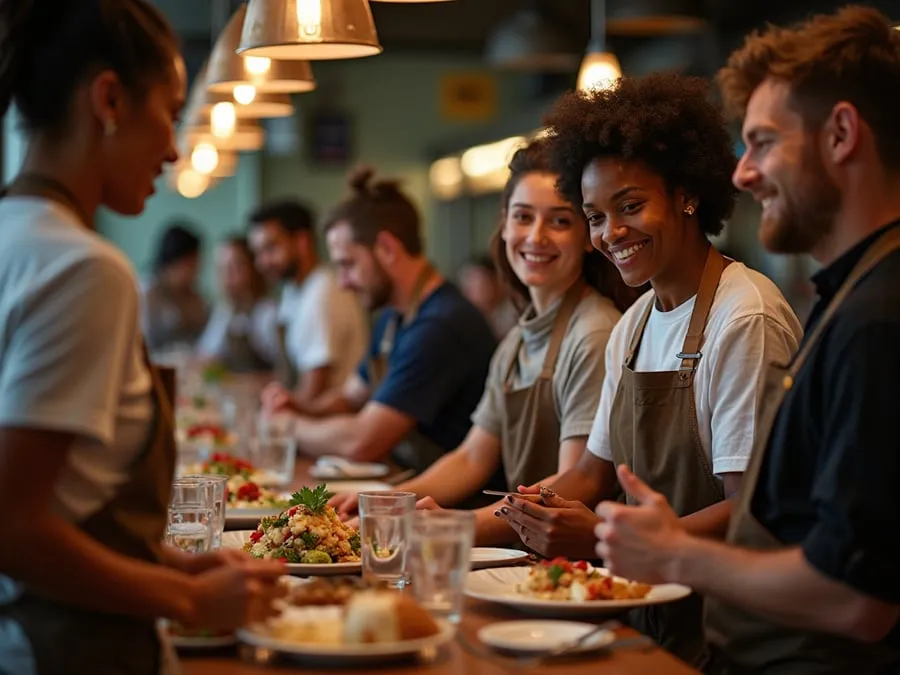
According to the research archive, 68 percent of consumers prefer restaurants that offer unique experiences, even if the food is not necessarily better than a competitor’s. Social media amplifies this preference by turning every shareable moment into free marketing, fueling the rise of experiential and immersive dining.
What Makes Content Shareable
According to Deloitte Digital, food photos influence 57 percent of people’s dining decisions. The visual nature of food makes restaurants uniquely suited to social media marketing. Here is what drives sharing:
Physical Space:
- Eye-catching wall murals or distinctive design elements
- Dramatic lighting that photographs well (natural light is your best friend)
- A signature visual element that identifies your restaurant instantly
Food Presentation:
- Dramatic tableside preparations (finishing sauces, flambe, smoke)
- Distinctive plating that stands out in a feed
- Unexpected visual elements (edible flowers, unusual colors, dramatic portion presentation)
Experiential Moments:
- A signature ritual in your service (a special greeting, a complimentary amuse-bouche presentation)
- Seasonal decorations or themed events
- Interactive elements where diners participate in preparation
The investment in shareable moments generates ongoing organic marketing value. According to Deloitte Digital, 85 percent of customers share positive dining experiences on social media. Every satisfied diner is a potential marketing channel.
The Influencer Economy
Food influencers have become a significant force in restaurant marketing. According to Deloitte Digital’s research, 83 percent of consumers view influencers and creators as trusted information sources. Consumers follow an average of 13 creators versus only 7 brands, meaning influencer content reaches audiences that brand accounts cannot.
According to Deloitte Digital, 40 percent of diners base their restaurant choice on influencer reviews.
Working with Influencers Effectively
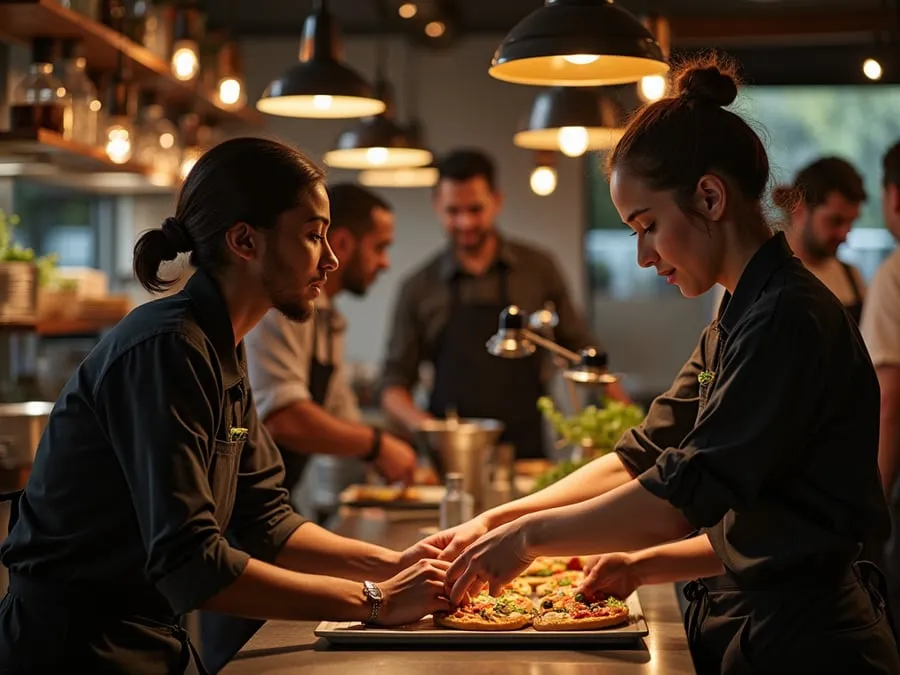
Not all influencers deliver equal value. Here is how to evaluate partnerships:
What to look for:
- Engagement rate matters more than follower count (aim for 3 percent or higher)
- Local audience alignment with your market
- Content quality that matches your brand aesthetic
- Authentic enthusiasm for your type of cuisine
What to avoid:
- Inflated follower counts with low engagement
- Influencers who post about every restaurant indiscriminately
- Partnerships without clear deliverables and timelines
- Expectations of free meals without measurable return
Structuring partnerships:
- Start with a complimentary meal in exchange for honest content
- Graduate to paid partnerships for creators who deliver results
- Track reservation codes or unique URLs to measure direct impact
- Build long-term relationships rather than one-off visits
The Celebrity Chef Effect
Celebrity chefs amplify social media dynamics at scale. According to Toast’s industry analysis, celebrity chef endorsements can increase specific ingredient sales by 25 percent, and 50 percent of consumers say their dining choices are influenced by celebrity chefs. Gordon Ramsay alone has 18.4 million social media followers.
For most restaurant operators, you will not become a celebrity chef. But the dynamics of celebrity chef influence reveal important principles:
- Personality sells. Diners connect with people, not brands.
- Education creates demand. When chefs teach techniques and cuisines, they create informed consumers who want to experience those foods professionally.
- Advocacy builds loyalty. Celebrity chefs who advocate for sustainability, fair labor, and food quality create consumer expectations that benefit restaurants aligned with those values.
Consider making your chef or owner the face of your social media presence. A personality-driven account outperforms a generic brand account for engagement and connection.
-> Read more: Celebrity Chef Influence on Restaurant Culture
Menu Innovation at Social Speed
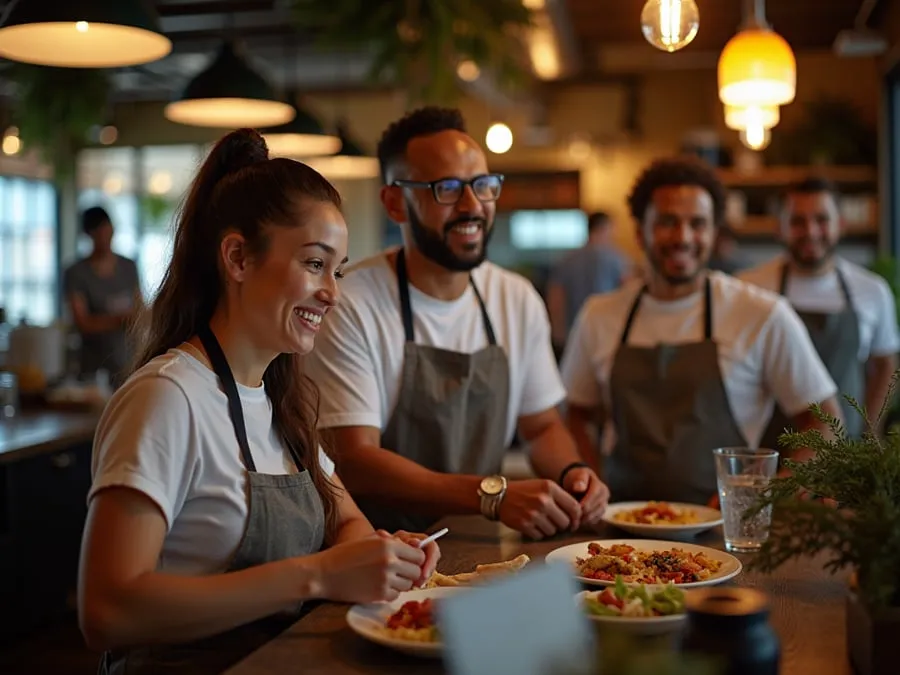
According to Restaurant Business Online, social media has compressed the traditional menu development cycle from months to days. Cooking and eating videos provide real-time insight into what ingredients and preparations consumers are excited about, creating a feedback loop between social content and restaurant menus.
How to Monitor and Respond to Social Trends
- Track trending food hashtags on both Instagram and TikTok weekly
- Follow food creators in your cuisine category for early trend signals
- Test trends as limited-time specials before committing to permanent menu additions
- Create your own trend content by documenting unique preparations or signature dishes
- Move fast but stay authentic to your concept. Not every trend belongs on your menu
The Informed Consumer Challenge
Social media has fueled a parallel trend of home cooking inspired by restaurant techniques. According to Restaurant Business Online, viral tutorials make professional methods accessible to home cooks, creating diners who arrive with higher expectations and deeper food knowledge. Understanding these evolving consumer behavior trends is essential for staying competitive.
This dynamic pushes you to differentiate through quality, creativity, and experiences that cannot be replicated at home. The bar for what impresses a diner has risen. Your cooking needs to exceed what they can achieve in their own kitchen, and your experience needs to offer something their dining room cannot.
Building Your Social Media Strategy: A Practical Framework
Phase 1: Foundation (Week 1-2)
- Audit your current social presence across all platforms
- Verify and optimize Google Business, Yelp, and TripAdvisor listings
- Establish a consistent visual style for your brand
- Identify 3 to 5 shareable moments in your current restaurant experience
- Set up a review monitoring system
Phase 2: Content System (Week 3-4)
- Create a content calendar with 3 to 5 posts per week
- Assign social media responsibility to a specific team member
- Develop content categories (food close-ups, behind-the-scenes, staff spotlights, customer moments)
- Start documenting daily operations for authentic behind-the-scenes content
- Engage with local food accounts and community pages
Phase 3: Growth (Month 2-3)
- Identify and reach out to 5 to 10 local food influencers
- Launch your first influencer partnership with clear deliverables
- Experiment with TikTok content if you have not already
- Create a signature hashtag for your restaurant
- Begin tracking which content types drive the most engagement and reservations
Phase 4: Optimization (Ongoing)
- Analyze which posts correlate with reservation spikes
- Refine your content mix based on performance data
- Build a library of user-generated content from customers
- Develop seasonal content strategies tied to menu changes
- Test paid promotion on your highest-performing organic content
-> Read more: Restaurant Marketing: Building Your Brand
Common Mistakes to Avoid
Treating social media as an afterthought. The 14.1 percent revenue difference between social-first brands and average users, according to Deloitte Digital, proves that commitment level matters.
Prioritizing polish over authenticity. Gen Z can detect manufactured authenticity instantly. Behind-the-scenes kitchen chaos often outperforms professionally staged photography.
Ignoring negative reviews. A thoughtful, professional response to a negative review can convert a detractor into an advocate and demonstrates to every potential customer reading reviews that you care about the dining experience.
Chasing every trend. Not every viral TikTok food trend belongs on your menu. The most effective approach integrates social media thinking into your operations and menu development rather than treating it as a separate marketing exercise.
Posting without a strategy. Random posting is noise. Consistent posting with clear objectives, whether driving weeknight traffic, promoting a new menu item, or building brand awareness, delivers measurable results.
The Bottom Line
Social media has not just changed how restaurants market themselves. It has changed what restaurants are. Your physical space is now a content studio. Your plates are now visual compositions. Your staff are now brand ambassadors. And your customers are now your marketing team.
The restaurants that thrive in this environment are the ones that embrace this reality, not as a burden, but as an opportunity to connect with customers in ways that were impossible a decade ago. The data is clear: strong social media strategy drives measurable revenue growth. The only question is whether you will invest in it strategically or continue to treat it as something the new server does between shifts.